Description
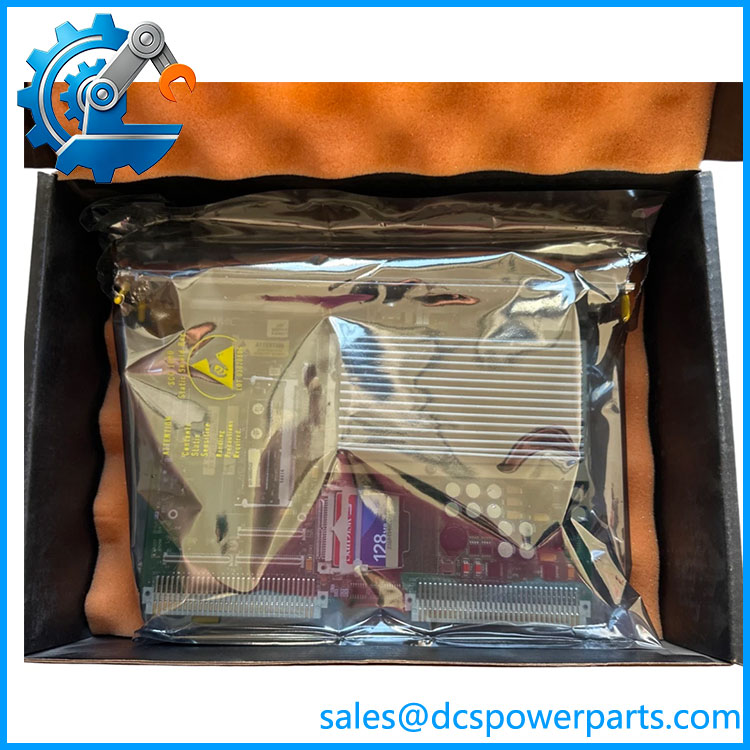
GE IS215UCVFH2A Mark VI UCVF Controller Board
Product Overview
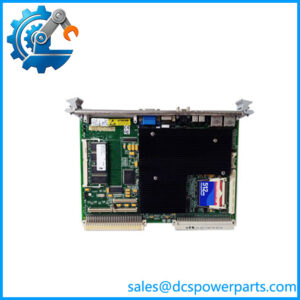
The GE IS215UCVFH2A is a UCVF controller board for the GE Mark VI Speedtronic turbine control platform. It uses an 850 MHz Intel Pentium III processor and a double-slot VME board format, providing the computing resources required for turbine control applications running under the Mark VI architecture. GE documentation identifies the UCVF as one of the high-performance UCV controller variants, with 32 MB of DRAM, 16 MB or 128 MB of Compact Flash depending configuration, battery-backed SRAM allocated for controller functions, and QNX as the operating system.
From a system standpoint, the GE IS215UCVFH2A sits above the Mark VI field I/O hardware rather than functioning as an individual analog or digital I/O module. The controller communicates with Mark VI I/O through the VME architecture while its Ethernet interfaces handle higher-level controller, toolbox, HMI, and expansion-I/O communications. Ethernet 1 supports TCP/IP communication with the toolbox and can support EGD and Ethernet Modbus functions; Ethernet 2 provides a separate logical subnet for expansion I/O and supported Ethernet Modbus communication. Two serial interfaces are provided, with COM1 intended for diagnostics/setup and COM2 supporting serial Modbus communication at documented baud rates.
For a turbine retrofit, the GE IS215UCVFH2A should be treated as a controller-level replacement rather than a board that can be selected by physical dimensions alone. The application software, controller configuration, VME rack arrangement, Ethernet addressing, installed memory configuration, and Mark VI software/toolbox environment all matter. GE’s documentation also distinguishes the UCVF from later or different UCV controller generations, so an apparent cross-reference is not enough to establish a direct replacement.
Product Introduction
When a Mark VI controller fails, the difficult part is rarely identifying the board shape. The real issue is preserving the controller architecture, application configuration, communications, and startup behavior. The IS215UCVFH2A is a double-slot UCVF controller built around an 850 MHz Pentium III processor, dual 10/100 Ethernet, and the Mark VI VME backplane.
For a Mark VI DCS system upgrade, legacy controller replacement, or turbine-control spare strategy, the complete part number and installed controller configuration should be checked before shipment. Do not substitute a different UCV family member simply because it physically fits the rack.
Key Technical Specifications
| Parameter | Specification |
|---|---|
| Product Model | IS215UCVFH2A |
| Manufacturer | General Electric |
| Product Series | Mark VI Speedtronic / Innovation Series |
| Product Type | UCVF VME Controller Board |
| Controller Architecture | Double-slot VME |
| Processor | Intel Pentium III, 850 MHz |
| DRAM | 32 MB |
| Flash / Compact Flash | 16 MB or 128 MB, configuration dependent |
| Operating System | QNX |
| Primary Ethernet | 10BaseT/100BaseTX, RJ-45 |
| Secondary Ethernet | 10BaseT/100BaseTX, RJ-45 |
| COM1 | RS-232C, diagnostics/setup, 9600 baud |
| COM2 | RS-232C serial communication, 9600 or 19200 baud |
| Primary Communication | TCP/IP, EGD, Ethernet Modbus as supported by Mark VI configuration |
| VME Interface | VME backplane controller interface |
| Power — +5 VDC | 6 A typical, 7 A maximum |
| Power — +12 VDC | 200 mA typical, 400 mA maximum |
| Power — −12 VDC | 2.5 mA typical |
| Application Environment | GE Mark VI turbine control |
| Typical Applications | Gas turbine, steam turbine, BOP and related turbine-control systems |
The electrical figures above are taken from the UCVFH2 controller documentation. They should not be confused with a 24 VDC field supply; the controller receives its specified rails through the Mark VI/VME system architecture.
Major Features / Practical Advantages
1. High-performance UCVF controller architecture
The UCVF was designed as a higher-performance Mark VI controller variant using an 850 MHz Intel Pentium III processor. Its double-slot format differentiates it from smaller UCV configurations, so rack compatibility must be checked before procurement.
IS215UCVFH2A
2. Direct integration with Mark VI VME architecture
The board operates as a controller within the Mark VI VME platform and communicates with the associated I/O hardware through the backplane. This makes it fundamentally different from an Ethernet-only industrial PC or a conventional PLC CPU.
3. Dual Ethernet connectivity
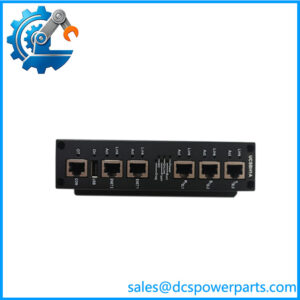
Two 10BaseT/100BaseTX RJ-45 interfaces are provided. Ethernet 1 is associated with Unit Data Highway/toolbox communication, while Ethernet 2 is intended for a separate logical subnet used for expansion I/O and supported Ethernet Modbus functions. GE documentation specifically notes that the second interface is configured through the toolbox.
4. Mark VI-oriented software environment
The controller runs QNX and supports Mark VI control programming using analog and discrete control blocks, with Boolean logic represented through relay-ladder-style programming. Supported data types include Boolean, 16-bit and 32-bit integers, 32-bit floating point, and 64-bit floating point.
5. Useful serial service interfaces
COM1 is documented for initial controller setup/diagnostics, while COM2 provides serial communication capability and supports serial Modbus operation. These ports can be important during commissioning and troubleshooting of an older Mark VI installation.
6. Conformal-coated board variant
The H2A assembly is identified as a conformal-coated Mark VI special assembly. This matters when comparing it with visually similar UCV controller variants because the suffix is part of the procurement identity, not merely a cosmetic revision.
7. Replacement requires configuration discipline
A replacement controller is not simply a matter of moving a PCB into the rack. Before installation, preserve the existing controller application, toolbox configuration, network parameters, I/O assignments, and any relevant nonvolatile configuration. If the failed controller cannot be interrogated, the project backup becomes especially important.
8. Legacy hardware requires revision control
The UCVF belongs to an older Mark VI generation. Public documentation identifies several UCV controller families with substantially different processor, memory, network, and mechanical characteristics. A later controller may provide a migration path, but that does not establish that it is a direct replacement for the .
Related Products
- IS215UCVFH2B — UCVF controller variant with a different functional revision. Do not treat the B revision as automatically interchangeable without checking the installed Mark VI configuration.
- IS215UCVEH2A — UCVE controller family with different processor architecture and controller characteristics; useful for architecture comparison rather than automatic substitution.
- IS215UCVGH1A — UCVG controller variant using a different controller implementation and slot arrangement.
- IS215UCVEM01A — UCV controller variant with additional communication capability compared with the basic UCV configurations.
- IS215UCVEM02A — Multi-Ethernet UCV controller configuration for Mark VI applications.
- IS215UCVEM06A — UCV controller variant associated with additional bus/channel functionality.
- IS200VCMIH2B — Mark VI VCMI communications hardware used within the controller/I/O communication architecture; verify the exact rack architecture before pairing.
- IS200VCCCH1A — Mark VI control/communication hardware used in related turbine-control configurations.
- Mark VI Control Module — The VME rack-level platform in which the UCV controller operates.
FAQ
Can I hot-swap the ?
Do not assume so. This is a controller board carrying the turbine-control application, not a routine field I/O replacement. Follow the site’s approved Mark VI shutdown, isolation, controller replacement, and restart procedure.
What processor does the use?
GE documentation identifies an Intel Pentium III running at 850 MHz. The UCVF is specifically described as a double-slot controller.
Does the use 24 VDC?
Not as its primary controller-board input. The documented UCVFH2 power requirements are +5 VDC at 6 A typical / 7 A maximum, plus +12 VDC and −12 VDC auxiliary rails supplied by the Mark VI/VME system. A supplier listing showing 24 VDC for this part should therefore be treated cautiously.
Does it support Ethernet Modbus?
Yes, the UCVF documentation identifies Ethernet Modbus support for communication with third-party DCS equipment. Ethernet 1 also supports TCP/IP communication with the toolbox and EGD communication, while Ethernet 2 supports EGD and Ethernet Modbus.
Does the support firmware v3.1?
That should not be assumed from the part number. The available model documentation establishes the UCVF hardware and QNX environment but does not provide enough evidence to assign a specific firmware version to an individual . Verify the installed controller image and Mark VI software/toolbox release.
Can I replace an older Mark VI controller with this board?
Only after checking the controller architecture, rack/backplane, application software, communications configuration, and required controller generation. GE documentation distinguishes UCVB, UCVG, UCVF, UCVE and UCVEM implementations. A physical fit is not sufficient evidence of compatibility.
Will the turbine logic remain on a replacement board?
Do not assume it will. The controller executes application-specific software, and replacement planning should include recovery of the Mark VI application and configuration from the site’s engineering/toolbox backup. A New Surplus board is hardware inventory; it is not proof that your plant-specific application is already installed.
What should procurement verify before ordering?
Match the , functional revision, conformal-coating configuration, controller type, installed memory configuration where relevant, board condition, and physical connectors. For a live turbine-control replacement, also confirm the Mark VI rack architecture and application/software environment before approving the spare.
Procurement Note
The is a legacy turbine controller, so condition and configuration matter more than a simple “new” or “used” label. For New Surplus inventory, inspect the PCB coating, connector condition, memory/storage configuration, battery/NVRAM condition where applicable, and evidence of previous powered operation.
For a replacement project, preserve the original controller’s application and toolbox configuration before removing hardware whenever the existing controller remains accessible. Record Ethernet settings and controller identification, and confirm the Mark VI rack’s VME and I/O architecture.
One important distinction: should not be purchased solely because it is described as a “GE Mark VI CPU.” The UCVF double-slot architecture, H2 configuration, and controller-level role are part of the actual compatibility requirement. GE documentation supports the 850 MHz UCVF architecture and its specific power, memory, Ethernet, and serial characteristics.