Description
Product Overview
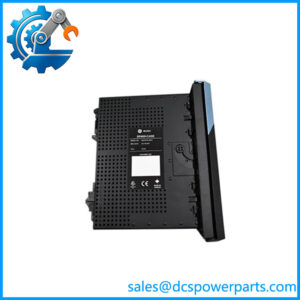
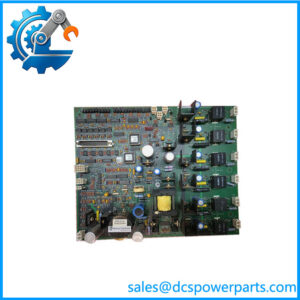
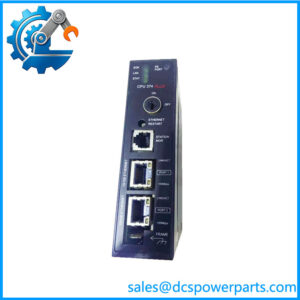
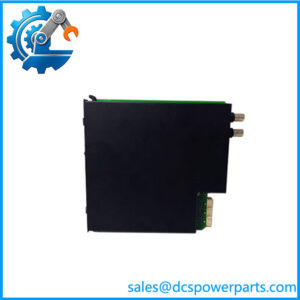
In a turbine control rack, a controller fault can interrupt application execution, communication with operator interfaces, or data exchange with I/O hardware. Replacing the controller requires matching the original hardware configuration and application environment, not simply fitting another board into the rack. The GE IS215UCVEM06A is a UCVE controller assembly associated with the Mark VI Speedtronic turbine control system. It operates within the VME-based control architecture, where controller software executes turbine application logic and exchanges data with other system components.
The GE IS215UCVEM06A is identified in product records as a two-IS-bus-channel controller board with Ethernet connectivity. The wider UCVE controller family uses the QNX real-time operating system and provides Ethernet and serial interfaces for system communication and configuration. Published specifications for related UCVE variants should not automatically be treated as exact specifications for the M06A revision. Before replacement, verify the processor and memory configuration, Ethernet port arrangement, firmware, application compatibility, and rack configuration against the installed board and the GEH-6421M Mark VI controller documentation.
Key Technical Specifications
| Parameter | Specification |
|---|---|
| Product Model | IS215UCVEM06A |
| Manufacturer | General Electric (GE) |
| Control System | Mark VI Speedtronic |
| Functional Acronym | UCVE |
| Product Type | Controller board / PC board assembly |
| Controller Role | Turbine application execution and system communication |
| Bus Architecture | VME-based Mark VI control rack |
| IS Bus Channels | Two, according to product records |
| Processor | Intel Celeron, 300 MHz reported for this model family |
| Operating System | QNX, as documented for the UCVE controller family |
| Memory | 128 MB flash reported by supplier records; confirm the installed configuration |
| Ethernet | 10/100Base-TX RJ-45 connectivity reported; verify exact port configuration |
| Serial Interface | RS-232C interfaces documented for the UCVE family; confirm front-panel configuration |
| Communication Protocols | TCP/IP and Ethernet Global Data (EGD) are documented for the controller family; application-specific support must be checked |
| Working Voltage | Controller-family documentation specifies a VME rack supply; exact M06A power requirements should be confirmed |
| Operating Temperature | Some listings report -30°C to +65°C; verify against the exact board documentation |
| Installation Method | Compatible Mark VI VME control rack |
| Protection Rating | No independent IP enclosure rating established |
| Operating Accuracy | Not applicable as a standalone measurement instrument |
| Lifecycle Status | Listed as discontinued in supplier records |
The processor, memory, and temperature entries above should be treated as reported values, not guaranteed specifications for every board carrying this part number. The Mark VI controller manual distinguishes multiple UCVE variants with different hardware and communication options.
Major Features and Advantages
Turbine application processing
The UCVE controller family executes application software for Mark VI turbine control systems. Application logic, configuration, and the installed controller hardware work together to manage turbine operation. A replacement therefore needs to match the site’s approved controller configuration and application software.
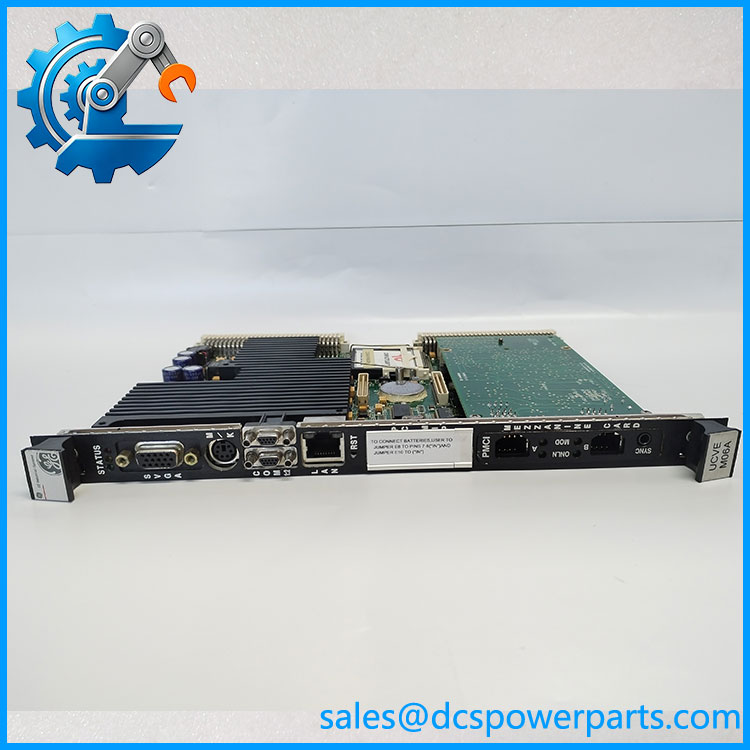
IS215UCVEM06A
Two IS bus channels
Product records identify the IS215UCVEM06A as a two-IS-bus-channel controller. These channels are part of the board’s system-specific communication arrangement. Engineers should confirm the role of each channel in the original installation and verify the associated cabling and configuration before commissioning.
Ethernet communication
The UCVE controller family uses Ethernet for communication with the Unit Data Highway and other supported system components. Depending on the controller variant and configured application, documented functions include toolbox communication, EGD data exchange, and Ethernet Modbus communication with supported third-party systems. Confirm which interfaces and protocols are enabled on the installed M06A configuration.
Serial setup and communication interfaces
The UCVE family documentation identifies RS-232C ports for controller setup and serial communication. These interfaces can be important during maintenance, diagnostics, or integration with supported control-system components. Port assignments and supported communication settings should be checked in the relevant manual before connecting service equipment.
Retention of legacy Mark VI architecture
Keeping the same controller model can reduce the scope of a retrofit compared with changing controller generations. It does not remove the need to verify the application, firmware, rack configuration, network addressing, and system-level compatibility. A matching part number is an important first check, not a substitute for commissioning validation.
Application Scenarios and Common Pain Points
- Gas turbine control: Supports controller functions in compatible Mark VI gas turbine installations.
- Steam turbine control: Used in turbine control architectures where the installed application and hardware configuration call for this UCVE variant.
- Power generation equipment: Supports control-system processing and communication in compatible generation facilities.
- Legacy control-system maintenance: Provides a potential replacement path when the original controller assembly needs repair or replacement.
- Control rack refurbishment: May help preserve an existing VME-based Mark VI installation when the replacement matches the original hardware and software requirements.
Common maintenance issues include controller boot failures, unexpected VMEbus status indications, Ethernet communication loss, serial setup problems, and configuration mismatches after a board swap. These symptoms can also arise from power supplies, cabling, network settings, or application configuration, so the controller should not be assumed to be the root cause without diagnostics.
Related Products and Components
These models are related to the Mark VI control architecture. They are not automatically interchangeable with IS215UCVEM06A.
| Model | General role | Replacement consideration |
|---|---|---|
| IS215UCVEH2A | UCVE controller variant | Compare controller generation, interfaces, and system configuration |
| IS215UCVEM01 | UCVE controller variant | Verify Ethernet and other interface options |
| IS215UCVEM02 | UCVE controller variant with additional Ethernet interfaces | Port arrangement differs by variant |
| IS215UCVEM05 | UCVE controller variant with documented communication options | Check interface and application requirements |
| IS215UCVEM08 | Mark VI controller variant | Confirm hardware and software compatibility |
| IS215UCVEM09B | Mark VI PC control module | Different part number; validate intended function |
| IS215VCMIH2C | VCMI bus master controller | Different system role; not a direct controller replacement |
| IS200WPACG1A | I/O Pack chassis base | Associated with a different I/O Pack hardware arrangement |
The Mark VI controller manual describes multiple UCV variants, while the VCMI serves a distinct bus-master role. Use the original equipment bill of materials and system drawings to establish the correct related component.
Engineer’s Guide: Three Checks Before Replacement
1. Verify the full part number and revision. Confirm IS215UCVEM06A from the board label, including any additional assembly markings. Do not substitute another UCVE model based only on the shared controller-family name.
2. Confirm rack, network, and application configuration. Check the VME rack position, IS bus connections, Ethernet port assignments, firmware, application software, and controller configuration. Preserve site-approved settings and follow the approved turbine shutdown and replacement procedure.
3. Request documented functional testing. For a used or refurbished board, ask for evidence of controller startup, interface checks, and testing under an appropriate compatible setup. Confirm the warranty terms and whether the board is supplied with the required firmware or configuration support.
Safety warning: Do not remove or install the controller in an energized rack unless the exact hardware documentation and approved site procedure explicitly permit it. An incorrect controller swap or configuration can interrupt turbine control functions.
Frequently Asked Questions
1. What is the GE used for?
It is a UCVE controller board associated with GE’s Mark VI Speedtronic turbine control system. Product records identify it as a two-IS-bus-channel controller assembly with Ethernet connectivity.
2. Is a VME controller board?
Yes. It is associated with the VME-based Mark VI control rack architecture. Mechanical fit alone, however, does not establish compatibility with another controller or rack configuration.
3. What processor and memory does use?
Supplier records report a 300 MHz Intel Celeron processor and 128 MB flash memory. Because variant-level records can differ, confirm these details against the actual board and the applicable controller manual before relying on them for a replacement decision.
4. Which communication protocols does it support?
The UCVE controller family documentation describes Ethernet communication, including TCP/IP and EGD, as well as Ethernet Modbus support in documented configurations. Exact protocol availability depends on the installed controller variant and application configuration.
5. Can replace IS215UCVEH2A or another UCVE controller?
Not automatically. The models belong to the same general controller family, but hardware interfaces, memory, configuration, and application requirements can differ. Check the Mark VI documentation and the site’s approved replacement matrix before ordering.
6. Is still manufactured?
Supplier records list the model as discontinued by the manufacturer. Current availability may depend on remaining inventory, unused stock, or refurbished units. Confirm stock status and testing scope directly before scheduling maintenance around a replacement.
7. What should buyers verify before purchasing a used ?
Request photographs of the model and revision labels, confirmation of the board’s condition, a description of the functional tests performed, and written warranty terms. For a critical turbine application, also verify firmware and configuration requirements with the responsible controls engineer before installation.
Procurement recommendation: Match the complete part number and board revision, verify the two-IS-bus configuration, and confirm the required controller software and network setup. Treat unverified electrical or environmental specifications as open checks rather than assumptions.