Description
Product Overview
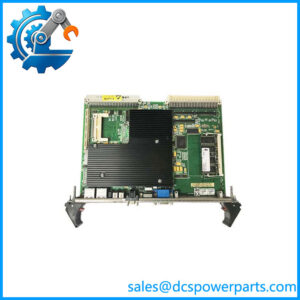
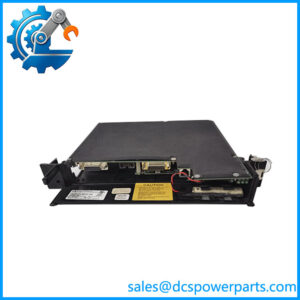
The GE IS215UCVEH2AB is a standard controller board used in the GE Mark VI turbine control system, built around a VME-based single-board-computer architecture. Its primary job is to execute turbine application code and exchange control data with other Mark VI boards through the VME backplane. Available technical references identify the UCVEH2 configuration with a 300 MHz Intel Celeron processor, 32 MB DRAM, 16 MB Flash, QNX operating system, and a single RJ-45 Ethernet port. The board is associated with a 6U VME form factor and can be installed in Mark VI control racks using 13- or 21-slot backplanes.
For GE IS215UCVEH2AB, the processor specification is only part of the replacement equation. In an operating Mark VI installation, the controller participates in the VME control architecture and communicates with turbine I/O hardware, while its software environment determines how application logic, diagnostics, communications, and system services are executed. The UCVEH2 family is documented for turbine applications including steam, gas, balance-of-plant, and LM configurations. Some technical references also associate the board with the VMIVME-7614-132 / 350-007614-132C identification, although procurement should always be based on the exact GE board label and revision rather than assuming every related VME number is interchangeable.
A particularly important point with GE IS215UCVEH2AB is that similar UCVE controllers can look nearly identical while having different memory, interface, firmware, or application configurations. The available technical documentation specifically identifies the H2 variant as a standard Mark VI controller and notes the need to consider the VME backplane when replacing earlier controller arrangements. For a plant spare, I would therefore match the complete board number, revision, memory configuration, boot environment, Ethernet arrangement, and existing controller architecture before approving substitution.
Product Introduction
When a Mark VI controller fails, the critical issue is not simply restoring a VME slot; the replacement must execute the expected turbine application environment. GE IS215UCVEH2AB combines a 300 MHz Intel Celeron processor with 32 MB of DRAM and 16 MB of Flash for this controller role.
Its VME backplane connection places the board directly in the Mark VI controller architecture, where it exchanges data with turbine I/O hardware. That makes it relevant to Mark VI system upgrades, legacy controller replacement, and turbine control maintenance where the existing application environment must be preserved.
Key Technical Specifications
| Parameter | Value |
|---|---|
| Manufacturer | General Electric (GE) |
| Model | IS215UCVEH2AB |
| Product Family | Mark VI / UCVEH2 |
| Product Type | Standard VME Controller / Single-Board Computer |
| Controller Function | Turbine application processing |
| Processor | Intel Celeron |
| Processor Speed | 300 MHz |
| DRAM | 32 MB |
| Flash Memory | 16 MB |
| Operating System | QNX |
| Ethernet | 1 × RJ-45 |
| Ethernet Speed | 10/100 Mbps |
| Backplane | VME |
| Form Factor | 6U VME, single/dual-slot configuration reported |
| Monitor Interface | SVGA |
| Power Requirement | +5 VDC; approximately 6 A typical, 8 A maximum |
| Application | Mark VI gas, steam, BOP, and LM turbine systems |
| Associated VME Identification | VMIVME-7614-132 reported |
| Condition | New Surplus, subject to inspection and functional testing |
The processor, memory, QNX, Ethernet, monitor interface, power, and VME characteristics above are supported by available UCVEH2 technical references.
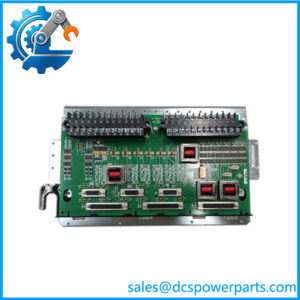
Procurement note: Some secondary listings incorrectly describe the IS215UCVEH2AB as an analog, RTD, or generic I/O module. Those descriptions conflict with the more specific UCVEH2 controller documentation. The board should be treated as a Mark VI VME controller, not an RTD input card.
Related Products
- IS215UCVEH2A — Base UCVEH2 controller designation. It belongs to the same controller family and is useful when tracing revisions, but the complete suffix should be matched before replacement.
- IS215UCVEH2AF — Closely related variant. Hardware architecture is similar, but the final revision suffix can affect compatibility, firmware, or board configuration.
- IS215UCVEH2AE — Another controller variant used in Mark VI installations. It should be treated as an alternative candidate only after comparing the complete hardware configuration.
- IS215UCVEM01A — UCVE controller variant with a different configuration. It belongs to the same general controller architecture but should not be treated as a blind substitute.
- VMIVME-7614-132 — VME single-board-computer identification associated with the configuration. Useful for cross-referencing legacy hardware documentation.
- 350-007614-132C — Related VME board identification reported alongside VMIVME-7614-132. Match the physical board and GE part number before using this number for procurement.
- IS215VCMIH2C — Mark VI VME communication board. It performs a communications role and complements the controller rather than replacing the processor.
- IS215VPROH2B — Mark VI VME protection-related controller hardware. Its function is different from the application processor.
- IS200VAICH1D — Mark VI analog input hardware. It handles field measurement acquisition and operates at the I/O layer rather than the controller-processing layer.
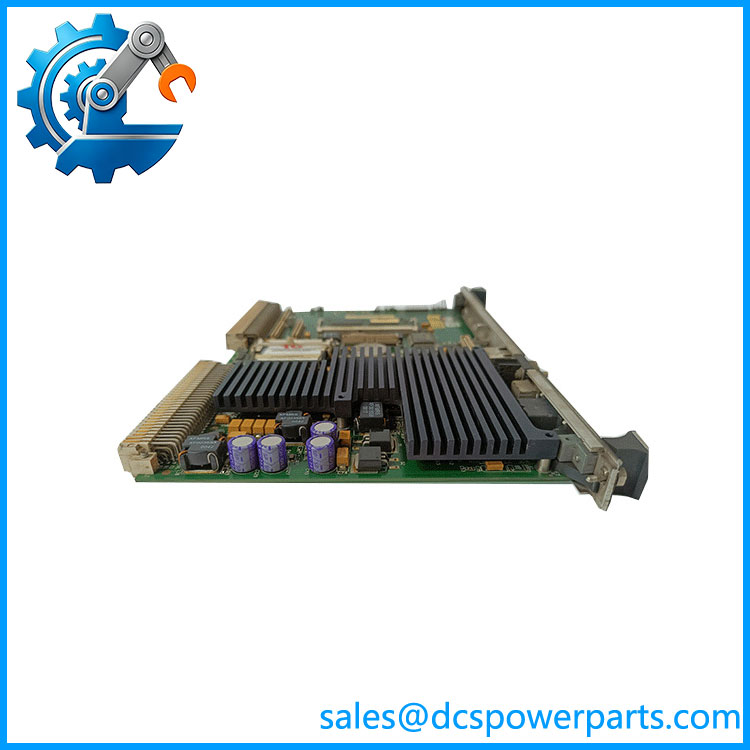
IS215UCVEH2AB
Frequently Asked Questions
What is GE used for?
The is a standard Mark VI VME controller. It provides the computing platform for turbine application code and communicates with other Mark VI control and I/O boards through the VME backplane.
It is therefore a controller CPU board, not a conventional analog or digital input module.
What processor and memory does use?
The documented configuration uses:
- 300 MHz Intel Celeron
- 32 MB DRAM
- 16 MB Flash
- 8 KB battery-backed SRAM is reported for the broader configuration.
The exact installed memory devices should still be confirmed from the physical board before procurement.
Is the same as IS215UCVEH2AF?
No. They are closely related , but the final two-letter suffix identifies the specific hardware revision/configuration.
For a turbine controller, I would use the same complete part number whenever possible. If an H2AB board is being replaced with an H2AF, compare:
- PCB revision.
- Processor configuration.
- DRAM and Flash.
- Ethernet hardware.
- Firmware/boot environment.
- VME configuration.
- Mark VI application compatibility.
A physically compatible board is not automatically a software-compatible board.
Can I hot-swap the ?
Do not assume that it can be hot-swapped.
This board executes turbine application software and communicates through the VME control backplane. Removing it from an energized controller rack can interrupt controller execution and system communications.
Unless the specific Mark VI architecture and plant maintenance procedure explicitly authorize online replacement, isolate the equipment before removing the controller.
Does use QNX?
Yes. Available technical documentation identifies QNX as the operating system for the configuration.
That matters during replacement because the controller is not simply a hardware CPU. The boot environment, Flash contents, application files, and system configuration all need to correspond with the existing Mark VI installation.
Will I lose my Mark VI control logic when replacing ?
Replacing the physical controller does not inherently erase the turbine control strategy. The practical risk is configuration and software mismatch.
Before removing the original board, preserve or document:
- Controller configuration
- Firmware/software revision
- Flash or CompactFlash contents, where applicable
- Ethernet settings
- VME configuration
- Application files
- NVRAM-dependent parameters
- Diagnostic settings
A replacement that successfully boots but lacks the correct application environment is not ready for plant service.
How should I verify a New Surplus ?
For a Mark VI controller, incoming inspection should include more than a visual check.
Recommended verification:
- Confirm exact label.
- Record PCB revision and serial information.
- Verify 300 MHz processor configuration.
- Verify DRAM/Flash configuration.
- Inspect VME connectors and front-panel hardware.
- Check battery-backed memory where fitted.
- Confirm Ethernet port operation.
- Perform controlled power-up testing.
- Verify VMEbus recognition.
- Check boot/firmware information.
- Run an appropriate controller diagnostic test.
- Provide a test report before shipment.
One caution worth emphasizing: available secondary listings contain conflicting descriptions of this exact part, including incorrect claims that it is an RTD or generic I/O card. The more specific documentation identifies it as a standard Mark VI controller with a 300 MHz Celeron, 32 MB DRAM, 16 MB Flash, QNX, and VME backplane connectivity. For procurement, the physical board identification and functional test report should take priority over a generic catalog description.