Description
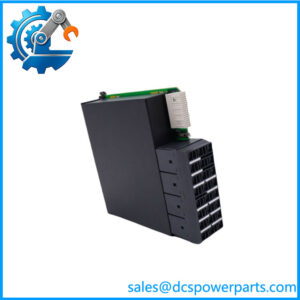
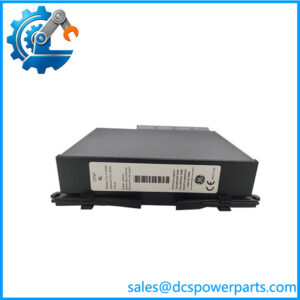
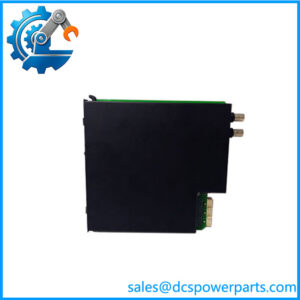
GE IS200TBAIH1CCC | TBAI Analog I/O Terminal Board | Mark VI
Key Technical Specifications
| Parameter | Specification |
|---|---|
| Manufacturer | General Electric |
| Part Number | IS200TBAIH1CCC |
| Ordering Family | IS200TBAIH1C |
| Product Family | Mark VI |
| Product Type | Analog Input/Output Terminal Board |
| Board Designation | TBAI |
| Analog Inputs | 10 |
| Analog Outputs | 2 |
| Input Configuration | Current or voltage, jumper selectable |
| Voltage Input | ±5 VDC / ±10 VDC |
| Current Input | Configurable current input ranges |
| Output 1 | 4–20 mA / 0–20 mA class |
| Output 2 | 4–20 mA or higher-current configuration |
| I/O Processor Interface | 3 × DC-37 connectors |
| Field Termination | Two high-density terminal blocks |
| Mounting | Cabinet/DIN-rail carrier arrangement |
| System Application | GE Mark VI turbine control |
| Redundancy | Simplex or TMR system architecture |
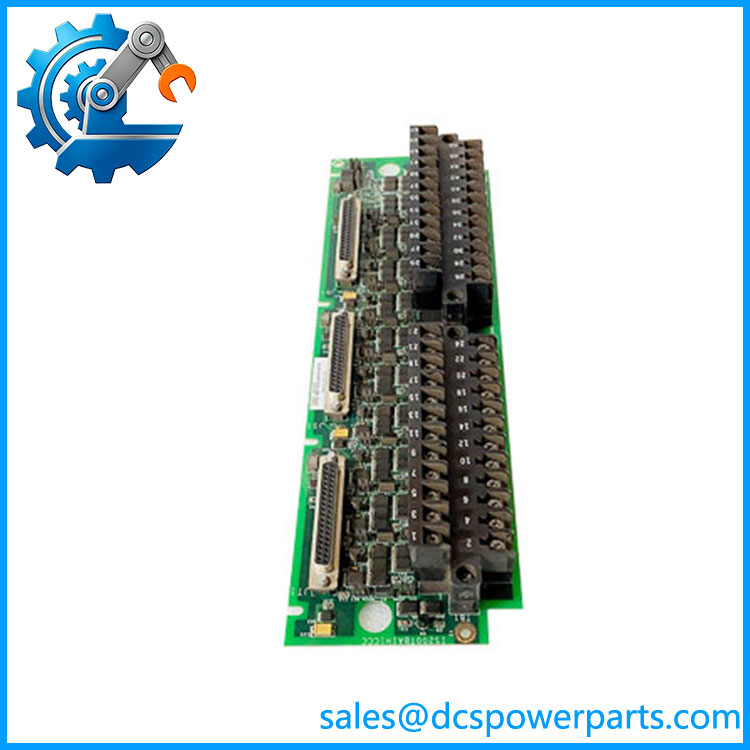
GE cross-reference material identifies as a TBAI analog terminal board. Technical descriptions of the TBAI family identify three DC-37 connectors for the I/O processor, jumper-configurable analog inputs, and two analog output circuits.
Product Introduction
The is a TBAI analog input/output terminal board used in GE Mark VI turbine control systems. It provides the field termination and signal-conditioning interface between analog transmitters or other field devices and the Mark VI I/O processing hardware. The board supports 10 analog inputs and 2 analog outputs, allowing a single terminal board to handle both measurement and control signals in the turbine control cabinet.
The should not be treated as a standalone analog input module. The TBAI relies on the associated Mark VI I/O processor for signal acquisition and control processing. In Mark VI applications, the TBAI interfaces with the VAIC processor, while the corresponding Mark VIe architecture uses the PAIC I/O assembly. This distinction is important when replacing legacy turbine-control hardware.
IS200TBAIH1CCC
Application Scenarios & Field Pitfalls — The Engineer’s Perspective
Engineering Pain Point
Analog problems in a Mark VI cabinet are frequently blamed on the I/O processor when the actual fault is in the field termination path. A loose terminal, incorrect jumper configuration, damaged DC-37 connection, wiring fault, or incorrect transmitter arrangement can produce an apparently failed analog channel. With the , the terminal board and processor should therefore be diagnosed as one signal path.
Typical Applications
1. Turbine analog measurement
The TBAI board accepts analog signals from transmitters and sensors used throughout GE gas- and steam-turbine control applications.
2. Process-variable acquisition
The 10 analog input channels can accommodate supported current and voltage transmitter arrangements, including two-wire, three-wire, four-wire, and externally powered transmitter configurations.
3. Analog control outputs
The two analog output circuits can provide current signals for compatible control devices. One output circuit is configurable for the higher-current application documented for the TBAI family.
4. Mark VI redundant control architectures
The TBAI family can be used in simplex or TMR arrangements depending on the associated I/O processor and system design. In TMR applications, the three DC-37 connections provide the interface required by the redundant processing architecture.
Technical Pitfalls
Do not confuse TBAI with VAIC or PAIC.
The , while VAIC and PAIC are I/O processing hardware. Replacing a processor with a TBAI board, or vice versa, is not a valid substitution.
Verify the exact jumper configuration.
The TBAI uses jumpers to configure analog input circuits for current or voltage operation. Incorrect jumper settings can make a healthy transmitter appear defective or produce an incorrect process value.
Check the transmitter wiring.
The board supports multiple transmitter arrangements, but the correct wiring depends on the actual field device. Two-wire, three-wire, four-wire, and externally powered transmitters should not be treated as interchangeable connections.
Inspect all three DC-37 connectors.
The TBAI provides three DC-37 interfaces to the I/O processor. Connector seating, pin condition, cable integrity, and correct redundancy arrangement are important when troubleshooting intermittent analog faults.
Check analog output configuration.
The two analog outputs do not necessarily have identical electrical configurations. The TBAI documentation identifies one output as supporting a higher-current configuration, so the specific output and jumper arrangement should be checked before connecting a field load.
Do not rely on generic voltage specifications from reseller listings.
Several online listings incorrectly assign unrelated power-supply or I/O specifications to this board. For procurement, the suffix and the installed Mark VI system documentation should take priority over generic descriptions.
Mark VI versus Mark VIe requires attention.
Although the TBAI concept appears in both architectures, the associated processor differs. Mark VI uses the VAIC arrangement, while Mark VIe uses the PAIC I/O assembly. Confirm the host architecture before accepting a supposed replacement.
Inspect for field-induced damage.
Analog terminal boards are exposed to wiring faults, transmitter overvoltage, incorrect loop connections, and transient conditions. Used boards should be checked for damaged terminal blocks, burned components, cracked solder joints, and corrosion before installation.
Related Products
- GE IS200VAICH1D — Mark VI analog I/O processor associated with TBAI applications.
- GE IS220PAICH1A — Mark VIe analog I/O pack for compatible analog terminal-board architectures.
- GE IS200TBAIH1CDC — related TBAI analog terminal-board variant; suffix must be matched carefully.
- GE IS200TBAIH1C — TBAI analog terminal-board family designation.
- GE IS200TBAIH1CED — related TBAI family variant.
- GE IS200TBCIH1BBC — Mark VI contact input terminal-board family, functionally different from TBAI.
- GE IS200TBTCH1BAA — Mark VI thermocouple terminal board for temperature inputs.
- GE IS200TVIBH2BBB — Mark VI vibration input terminal-board family.
- GE IS200TBCAH1B — related contact/terminal-board hardware.
Procurement Note
For an , verify the complete part number rather than purchasing simply by the description “GE analog input board.” The H1CCC hardware suffix is part of the identification and should be matched against the existing Mark VI cabinet configuration.
Before installing a used or surplus board, check the terminal blocks, three DC-37 connectors, jumper positions, board revision, field wiring, and associated VAIC/Mark VI I/O processor. If the replacement is intended for a TMR application, confirm that the complete three-channel architecture is being preserved.
A useful bench or cabinet test should verify representative analog input signals, output current, jumper-dependent configurations, and processor communication. Do not judge the board solely by whether its status indicators illuminate.
Engineering classification: GE — Mark VI TBAI Analog Input/Output Terminal Board, supporting 10 analog inputs and 2 analog outputs and interfacing with the Mark VI I/O processor.