Description
Product Introduction (Non-Templated)
Older control architectures often rely on robust, legacy serial networks to tie remote valve racks back to the main CPU. When an aging bus controller drops off the backplane, troubleshooting sporadic I/O freezing becomes an urgent plant-floor priority.
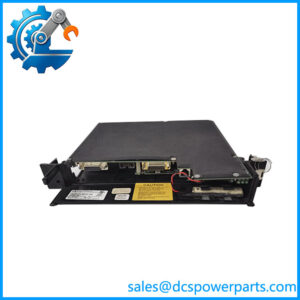
The IC086SLM082 drops directly into Series 90-30 PLC racks to restore deterministic communication over the proprietary Genius bus. Integrating this module preserves existing field wiring during legacy PLC replacement projects without forcing an expensive wholesale control system overhaul.
Key Technical Specifications
- Module Type: Genius Bus Controller (GBC)
- Backplane Current Consumption: 500 mA at +5 Vdc
- Communication Rate: 31.25 KBaud, 57.6 KBaud, or 153.6 KBaud (selectable)
- Maximum Bus Length: 450 meters at 153.6 KBaud up to 2000 meters at 31.25 KBaud
- Maximum Slaves per Bus: Up to 31 devices
- Operating Temperature: 0°C to 60°C (32°F to 140°F)
- Mounting Style: Series 90-30 CPU Baseplate or Expansion Rack Slot
- Diagnostics: On-board OK LED and bus status indicators
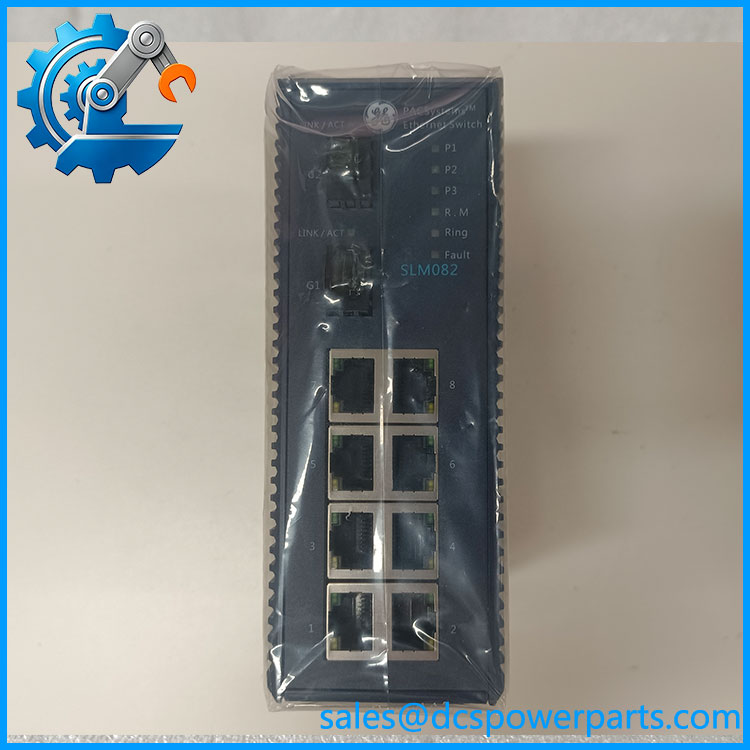
IC086SLM082
Application Scenarios & Pain Points
Unexpected communication halts on a legacy network can stall continuous manufacturing lines, racking up thousands of dollars in downtime penalties per hour.
- Packaging Plants: Coordinating high-speed conveyor sorting gates distributed across a sprawling facility floor where packet latency causes sorting errors.
- Water Filtration: Polling remote chemical dosing skids tied together across long serial cable runs exposed to electrical noise.
- Cement Manufacturing: Operating reliable I/O drops near high-vibration kiln drives where modern Ethernet physical layers frequently fail.
A municipal water treatment facility in the Midwest experienced intermittent watchdog faults on an aging Series 90-30 rack. Swapping out the degraded bus controller for a verified surplus IC086SLM082 immediately stabilized the polling loop.
Related Products
- IC693CPU374: High-performance CPU for the Series 90-30 line; acts as the central processor communicating directly with the bus module across the rack backplane.
- IC086SLM055: Earlier generation Genius communications module; features lower transmission buffering capabilities and differs in firmware revision compatibility.
- IC693PWR321: Standard 120/240 Vac power supply module; provides the necessary backplane power rails required to drive the communication card and adjacent I/O slots.
- IC693MDL645: 24 Vdc discrete input module; frequently wired downstream on the Genius network to collect field sensor data managed by the bus controller.
- IC693DSM302: Motion controller module for Series 90-30; pairs alongside communication cards in multi-slot automation racks requiring coordinated axis control.
The Engineer’s Guide: Field Pitfalls to Avoid
- Baud Rate Mismatch: Setting a transmission speed on the module that differs from the rest of the connected Genius devices will instantly collapse network traffic. How to avoid: Match the hardware jumper settings and configuration software parameters exactly to the existing bus speed before powering up the rack.
- Shield Grounding Errors: Tying the RS-485 cable shield to ground at both ends creates ground loops that inject severe noise into data packets. How to avoid: Terminate the shield strictly at a single reference point (typically the master end) and keep floating shields isolated elsewhere.
- Backplane Slot Limitations: Placing the module into an unsupported expansion slot type can starve the board of required voltage rails (watch out for physical slot limitations on CPU baseplates versus remote expansion racks—refer to your specific chassis manual to prevent slot addressing conflicts).
Frequently Asked Questions (FAQ)
- Can I replace the IC086SLM082 while the PLC rack is powered on? No, Series 90-30 backplanes are not hot-swappable; you must power down the entire rack before inserting or removing any I/O or communication modules to prevent electrical arcing.
- How many Genius devices can a single bus controller manage? A single module supports up to 31 distinct drop addresses along the serial bus network, provided the cable length rules for your chosen baud rate are respected.
- What software is used to configure this communication module? Programming and configuration are typically handled via GE’s Logicmaster 90-30 or VersaPro software suites depending on your programming environment vintage.
- Are factory-sealed units superior to refurbished alternatives? Factory-sealed units offer zero operational hours and pristine component aging, though fully tested surplus units undergo rigorous bench validation to ensure component reliability.
- Why is the Genius bus status LED flashing red? A flashing red indicator usually signals a configuration mismatch, a dropped slave device address, or bad line termination resistors on the RS-485 trunk.
- What is the maximum cable distance for the Genius network? Depending on the baud rate configuration, distances can stretch up to 2,000 meters when operating at the lower 31.25 KBaud setting.