Description
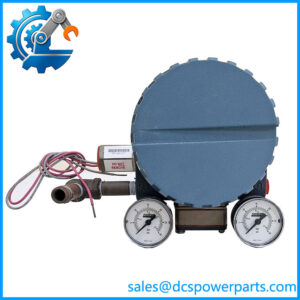
Foxboro E69F-T12-JRS
Key Technical Specifications
| Parameter | Specification |
|---|---|
| Product Model | E69F-T12-JRS |
| Manufacturer | Foxboro / Schneider Electric |
| Product Series | E69F |
| Product Type | Field-mounted I/P converter |
| Conversion | Current-to-pneumatic |
| Input Signal | 4–20 mA DC |
| Input Impedance | Approx. 170 Ω |
| Output Signal | 3–15 psi |
| Equivalent Output | 20–100 kPa / 0.2–1.0 bar |
| Action | Direct or reverse |
| Enclosure Code | T — threaded-cover explosionproof enclosure |
| J Option | Integral explosionproof junction box |
| R Option | Adjustable filter regulator without gauge |
| S Option | Supply/output gauges |
| Approx. Weight | 2.3 kg |
| Mounting | Field/surface mounting; mounting arrangements should be verified against the installation |
The T12-JRS suffix matters. The T identifies the threaded-cover enclosure, while J, R, and S identify the integral junction-box, filter-regulator, and gauge options respectively.
Product Introduction
The Foxboro E69F-T12-JRS is a field-mounted I/P converter used to translate an electrical control signal from a DCS, PLC, or controller into a pneumatic pressure signal for downstream pneumatic equipment. Its documented 4–20 mA input and 3–15 psi output make it suitable for conventional pneumatic valve and actuator control loops.
The practical value of this configuration is its integration of signal conversion with field pneumatic hardware. The JRS option combination includes an explosionproof junction-box arrangement, adjustable filter regulator, and gauges, reducing the number of separate components around the field loop. The actual hazardous-area approval, air-quality requirements, and installation classification still need to be checked against the project documentation and nameplate.
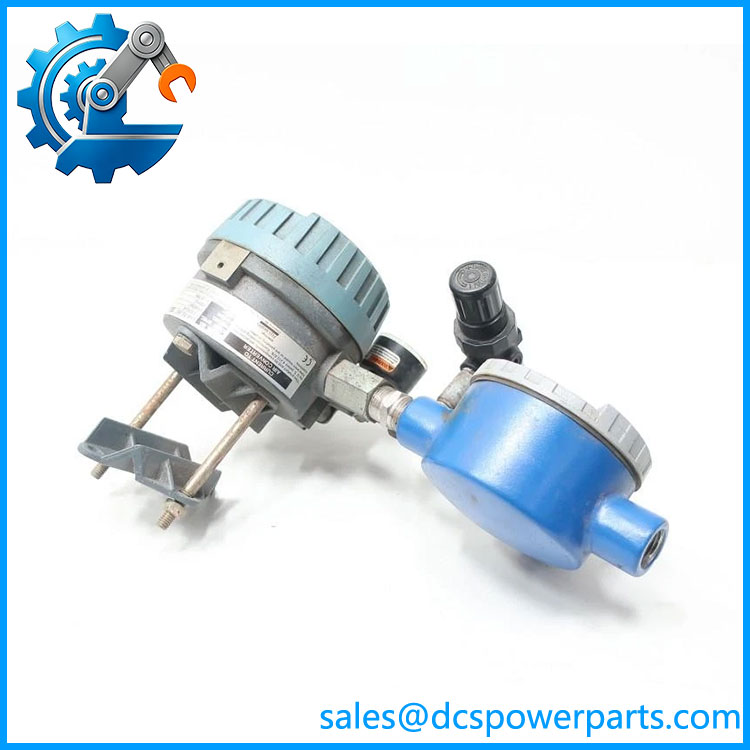
E69F-T12-JRS
Engineering Pain Point
The common mistake with an E69F-T12-JRS is treating it as a generic 4–20 mA-to-3–15 psi converter. The pneumatic supply pressure, regulator setting, signal action, loop resistance, air cleanliness, and hazardous-area installation all affect actual control performance. A replacement can produce the correct pressure at 12 mA on a workbench yet behave incorrectly when installed on a valve positioner or actuator because the original loop used reverse action, different air supply conditions, or a different calibration.
Typical Applications
- Pneumatic control-valve positioning from a DCS or PLC analog output.
- Pneumatic actuator control where a 4–20 mA electrical command must be converted to proportional air pressure.
- Field-mounted process-control loops in oil, gas, chemical, power, and other process plants.
- Hazardous-area installations where the explosionproof enclosure configuration is required.
- Legacy pneumatic control systems being retained while electrical control systems are upgraded.
Technical Pitfalls to Avoid
- Verify the output range, not just the input.
E69F-T12-JRS is documented for 4–20 mA input and 3–15 psi output. Do not substitute an E69F variant with another pneumatic output range without checking the downstream actuator or positioner. - Check direct versus reverse action.
The family supports direct and reverse action. If the original unit was reverse acting, installing a direct-acting replacement can reverse the relationship between the DCS output and valve movement. - Do not ignore instrument air quality.
The integrated filter regulator does not eliminate the need for properly conditioned instrument air. Moisture, oil, particulates, or unstable supply pressure can cause sluggish response, calibration drift, or restricted pneumatic flow. - Verify the complete JRS configuration.
J, R, and S are not cosmetic suffixes. They identify field hardware options. Match the installed junction-box, regulator, and gauge arrangement before approving a replacement. - Confirm hazardous-area requirements from the actual certification.
The threaded-cover T configuration is intended for explosionproof applications, but the permitted area classification and installation method must be verified from the applicable OEM certification and plant hazardous-area drawings. Do not infer certification solely from the word “explosionproof.”
Related Products
- Foxboro series — same basic field-mounted I/P converter family with different input, output, action, enclosure, and accessory combinations.
- Foxboro -T12-JRN — closely related configuration; the suffix difference must be checked against the applicable hazardous-area and accessory requirements.
- Foxboro -BI2-RS — another configuration with a different enclosure/input-output code; not automatically interchangeabith -JRS.
- Foxboro -TH2-S — family variant associated with a different input/output configuration; verify calibration range before substitution.
- — base configuration reference for evaluating the additional JRS field-accessory package.
- Foxboro I/P converter assemblies — useful as a functional comparison category, but replacement should be based on exact input, output, action, hazardous-area, and pneumatic specifications rather than generic I/P compatibility.
Procurement check: For , verify 4–20 mA input, 3–15 psi output, direct/reverse action, threaded explosionproof enclosure, J/R/S accessory configuration, instrument-air requirements, and hazardous-area certification against the installed nameplate and OEM documentation. The exact suffix should be preserved unless an engineering review confirms the proposed alternative.