Description
Foxboro 69TA-2RH | Current-to-Pressure I/P Pneumatic Transducer
Key Technical Specifications
| Parameter | Specification |
|---|---|
| Manufacturer | Foxboro |
| Model | 69TA-2RH |
| Functional type | Current-to-pressure I/P transducer |
| Technology | Electropneumatic signal conversion |
| Input signal | 10–50 mA |
| Pneumatic output | 3–15 psi |
| Associated family | MRT-1023B |
| Application | Pneumatic control valve / actuator signal conversion |
| System role | Electrical-to-pneumatic interface |
| Exact supply-air requirements | Verify against nameplate/manual |
| Exact ambient limits | Verify against original documentation |
| Exact accuracy specification | Verify against original documentation |
Public references consistently identify 69TA-2RH as a Foxboro pressure/current-to-pressure transducer and specifically associate it with the 10–50 mA / 3–15 psi signal combination.
Product Introduction
The Foxboro 69TA-2RH is a legacy Foxboro electropneumatic I/P transducer used to convert an electrical control current into a proportional pneumatic control signal. The documented configuration accepts 10–50 mA and produces a 3–15 psi pneumatic output, making it suitable for control loops where an electronic controller must drive a pneumatic actuator or valve positioner.
In an older plant, this device can sit at the boundary between a Foxboro control system and pneumatic field equipment. That makes signal compatibility more important than physical appearance: replacing it with a modern 4–20 mA I/P converter without checking the existing loop can create a significant operating-range mismatch.
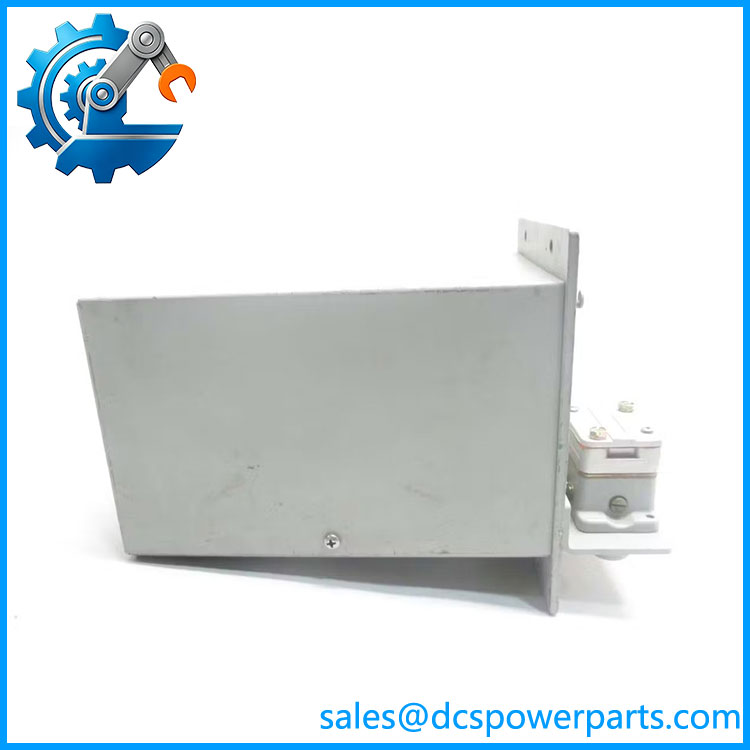
69TA-2RH
Application Scenarios & Field Pitfalls — Engineer’s Perspective
Engineering Pain Point
The major issue with the 69TA-2RH is its legacy signal range. The documented 10–50 mA input is different from the 4–20 mA standard commonly encountered in newer control systems. A replacement therefore needs to match the actual controller output scaling rather than simply matching the mechanical installation.
Typical Applications
- Pneumatic control valves — converts an electronic controller output into a pneumatic actuator signal.
- Legacy Foxboro control loops — maintains electrical-to-pneumatic interfaces in older process-control installations.
- Process pressure and flow control — supports pneumatic final-control elements where the controller generates a current command.
- Plant spare-parts maintenance — useful where existing equipment still depends on the 10–50 mA / 3–15 psi control convention.
Technical Pitfalls to Avoid
- Do not substitute a 4–20 mA I/P without checking loop scaling. The 69TA-2RH is documented for a 10–50 mA input range.
- Verify the pneumatic output requirement. The documented output is 3–15 psi; tubing, actuator and downstream positioner requirements must match.
- Check the complete loop before commissioning. Confirm controller output, instrument air, pneumatic tubing, actuator/positioner, zero/span behavior and fail-state requirements.
- Do not rely on generic reseller specifications. Public listings provide the core 10–50 mA / 3–15 psi identification, but detailed accuracy, air consumption and environmental specifications are not consistently documented.
Related Products
- Foxboro 69TA-2R — closely related 69TA transducer configuration; verify the complete suffix before substitution.
- Foxboro MRT-1023B — associated transducer/controller family referenced with the 69TA-2RH.
- Foxboro 43A — legacy pneumatic controller family; functionally different because it performs control rather than simply electrical-to-pneumatic conversion.
- Foxboro 43AP — pneumatic/electropneumatic controller family used in older process loops.
- Foxboro 67HF-E-OJ — auxiliary bypass station used in legacy control applications; not a direct I/P replacement.
- Foxboro 696A-2J01 — magnetic flow-to-current converter; different measurement/interface function.
- Foxboro 893TA — transmitter family; not a direct substitute for the 69TA I/P transducer.
Procurement Note
For a Foxboro 69TA-2RH replacement, verify the complete model number, input current range, pneumatic output range, instrument-air requirements, mechanical connections and installed loop calibration. The 10–50 mA input is the most important compatibility point.
Do not treat the 69TA-2RH as a generic 4–20 mA I/P converter. The available references specifically identify the 10–50 mA to 3–15 psi configuration, so the existing control-loop engineering should be checked before approving an alternative.