Description
Product Introduction
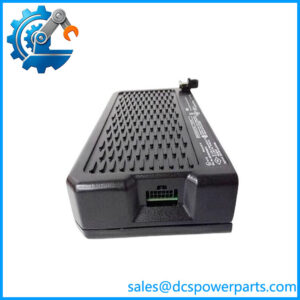
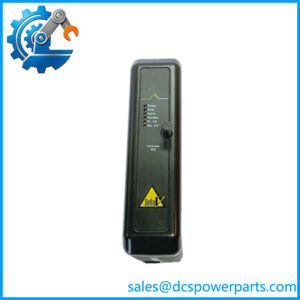
In a DeltaV Electronic Marshalling cabinet, a fault at the CHARM I/O Card can interrupt communication with the installed field I/O subsystem even when individual CHARMs remain functional. The Emerson KL2101X1-BA1 serves as the controller-facing CIOC interface, connecting the CHARM I/O arrangement to the DeltaV system.
For replacement planning, check the carrier type, network arrangement, installed CHARM population, and DeltaV hardware configuration before swapping the card. Published listings report a 24 VDC input and a 6.3 VDC output, but verify the exact BA1 suffix against its applicable documentation and nameplate rather than assuming specifications for another revision apply unchanged.
Key Technical Specifications
| Parameter | Specification |
|---|---|
| Model | KL2101X1-BA1 |
| Manufacturer | Emerson |
| Product family | DeltaV |
| Product type | CHARM I/O Card (CIOC) |
| System function | Interface between the DeltaV system and CHARM I/O subsystem |
| Input power | 24 VDC, 2 A maximum, as reported in product listings |
| Output power | 6.3 VDC at 3.25 A, as reported in product listings |
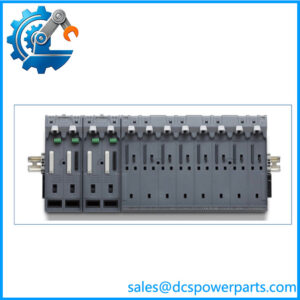
| Carrier arrangement | Two-wide CHARM I/O carrier, per supplier documentation |
| Ambient temperature | -40°C to +70°C reported; confirm the exact BA1 documentation |
| Relative humidity | 5–95%, non-condensing, reported |
| Airborne contaminants | ISA-S71.04-1985 Class G3 reported |
| Protection rating | IP20 reported |
| Calibration | Confirm applicable manufacturer instructions |
| Condition | Must be verified for the actual unit |
Specification note: Emerson’s accessible safety instruction sheet confirms the power and environmental figures for the related KL2101X1-BB1 CIOC2, not the exact BA1 suffix. Do not treat that document alone as definitive evidence for every BA1 specification.
Application Scenarios & Pain Points
- DeltaV Electronic Marshalling maintenance: Replace a diagnosed faulty CIOC while retaining the established carrier and CHARM layout.
- Controller-to-I/O communication faults: Review card status, network connectivity, carrier seating, and system diagnostics before replacing the CIOC.
- Planned spare inventory: Record the complete suffix, label details, and hardware revision so a generic “DeltaV CHARM card” is not mistakenly substituted.
- Commissioning after replacement: Verify communication and the expected status of installed CHARMs before returning the affected control loops to service.
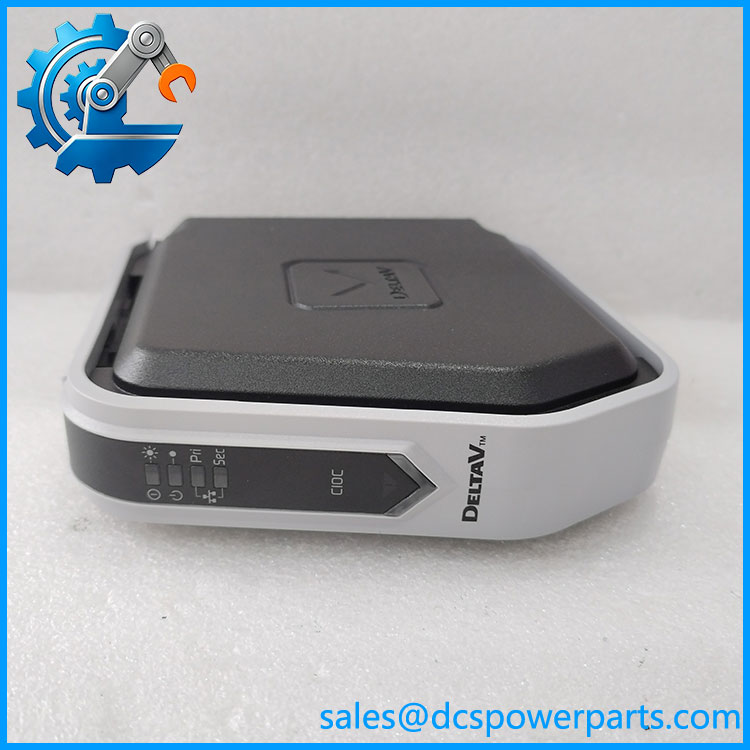
KL2101X1-BA1
Related Products
The following are related DeltaV Electronic Marshalling components, not direct substitutes for the KL2101X1-BA1.
- KL1601X1-BA1 — Copper I/O port module.
- KL2102X1-BA1 — Wireless I/O Card (WIOC).
- KL3001X1-BA1 — NAMUR digital input CHARM.
- KL3002X1-BA1 — 24 VDC high-side digital output CHARM.
- KL3003X1-BA1 — 24 VDC dry-contact digital input CHARM.
- KL3004X1-BA1 — 24 VDC high-side digital output CHARM variant.
These part descriptions appear in Emerson’s DeltaV community documentation. The KL300x items are individual signal-level CHARMs, whereas the KL2101X1-BA1 is a CIOC subsystem card.
The Engineer’s Guide: Field Pitfalls to Avoid
Pitfall 1 — Confusing the CIOC with an individual CHARM
The KL2101X1-BA1 provides the subsystem interface; it is not a dry-contact input or discrete output channel. Identify the failed component from system diagnostics and the cabinet drawings before ordering.
Pitfall 2 — Ignoring the complete suffix and system architecture
Verify the BA1 marking, carrier arrangement, network configuration, and installed DeltaV revision. Do not assume that a related CIOC or CIOC2 model is interchangeable based on appearance or similar power ratings.
Pitfall 3 — Inserting or removing the card under unsafe conditions
Follow the applicable Emerson installation instructions and the site’s hazardous-area procedures. Emerson’s CIOC2 safety sheet warns against insertion or removal with system power energized unless the area is known to be non-hazardous; confirm the specific instructions applicable to the BA1 unit before service.
Q1: What is the Emerson KL2101X1-BA1 used for?
It is a DeltaV CHARM I/O Card that interfaces the Electronic Marshalling subsystem with the control system. It is not an individual signal-level CHARM.
Q2: What input power does it require?
Product listings specify 24 VDC at a maximum of 2 A. Confirm this rating against documentation for the exact BA1 model and installed hardware revision.
Q3: Is the a dry-contact input card?
No. Some reseller listings incorrectly describe the complete model as a dry-contact CHARM. Emerson’s product-family documentation identifies as a CHARM I/O Card (CIOC); individual dry-contact CHARM modules use different part numbers.
Q4: Can it be used in a redundant arrangement?
CIOC redundancy depends on the system’s approved hardware architecture and configuration. Verify the carrier, network design, and installed system documentation rather than assuming a single card supports every redundant arrangement.
Q5: What should I check before purchasing a replacement?
Confirm the full model number, nameplate, carrier compatibility, installed DeltaV revision, unit condition, and any applicable approvals. Request actual-unit photographs and a written description of the tests performed.
Q6: Does the module require calibration?
It is a subsystem interface card rather than a field measurement transmitter. Follow the applicable manufacturer maintenance instructions; do not infer a calibration requirement from the behavior of individual field CHARMs.
Q7: How should lead time and warranty be assessed?
Ask the supplier to confirm stock of the exact , whether it is new, surplus, refurbished, or repaired, its dispatch estimate, and the warranty terms in writing. A catalog listing alone does not establish current availability or factory provenance.