Description
Emerson 8515-BI-PN-06
Product Introduction
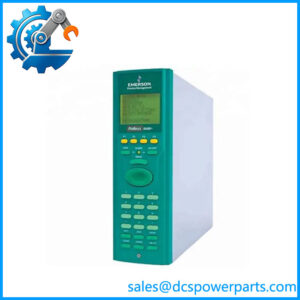
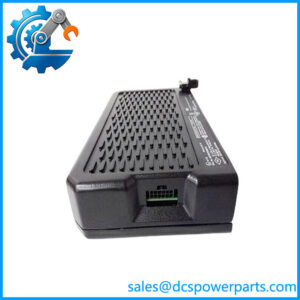
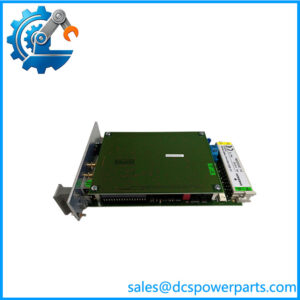
A remote I/O network can fail at a surprisingly small point: the scanner stops exchanging cyclic data, the controller loses the node, and an entire group of field signals disappears from the control application. The Emerson 8515-BI-PN-06 is a PAC8000 PROFINET Scanner Module designed to interface PAC8000 I/O modules with a PROFINET IO controller. It scans the connected I/O, exchanges input and output data, and manages PROFINET communication for the node.
The Emerson 8515-BI-PN-06 provides two 10/100 Mbps copper interfaces and supports line, star, and ring network arrangements, including Media Redundancy Protocol operation. The scanner also handles I/O state management when network communications are lost and reports diagnostics to the PROFINET controller. For PAC8000 installations, the 8515-BI-PN-06 is therefore a network-side component rather than a conventional I/O channel module; correct carrier, firmware, GSDML configuration, and controller compatibility all need to be checked during replacement.
Key Technical Specifications
| Parameter | Specification |
|---|---|
| Product Model | 8515-BI-PN-06 |
| Base Part Number | 8515-BI-PN |
| Manufacturer | Emerson |
| Product Family | PAC8000 Remote I/O |
| Product Type | PROFINET Scanner Module |
| Primary Function | PAC8000 I/O interface to PROFINET IO controller |
| Network Protocol | PROFINET IO |
| PROFINET Device Class | Class A IO-Device |
| Network Interfaces | 2 |
| Ethernet Interface | 10/100 Mbps copper |
| Connector Type | RJ-45 |
| Network Topology | Line, star, ring |
| Redundancy | MRP client support |
| USB Interface | 1 × Micro-B USB |
| USB Function | Firmware upgrades |
| Typical Power Consumption | 4.5 W |
| Maximum Power Consumption | 5.5 W |
| Operating Temperature | -40°C to +70°C |
| Mounting | PAC8000 carrier / DIN rail |
| Required Carrier | 8752-CA-NS |
| Module Dimensions | Approx. 160.3 × 128.3 × 47.78 mm |
| Diagnostics | PROFINET alarms and diagnostics |
| Status/Control Data | 64 input status bits / 48 output control bits |
| Firmware Update | Supported through USB |
| Application | distributed I/O and process automation |
Emerson’s documentation identifies the 8515-BI-PN as the PROFINET Scanner with two 10/100 Mbps copper interfaces and specifies the 8752-CA-NS as its required Node Service Carrier. The scanner documentation lists 4.5 W typical and 5.5 W maximum power consumption, a -40°C to +70°C operating range, two RJ-45 ports, and a Micro-B USB connector used for firmware upgrades.
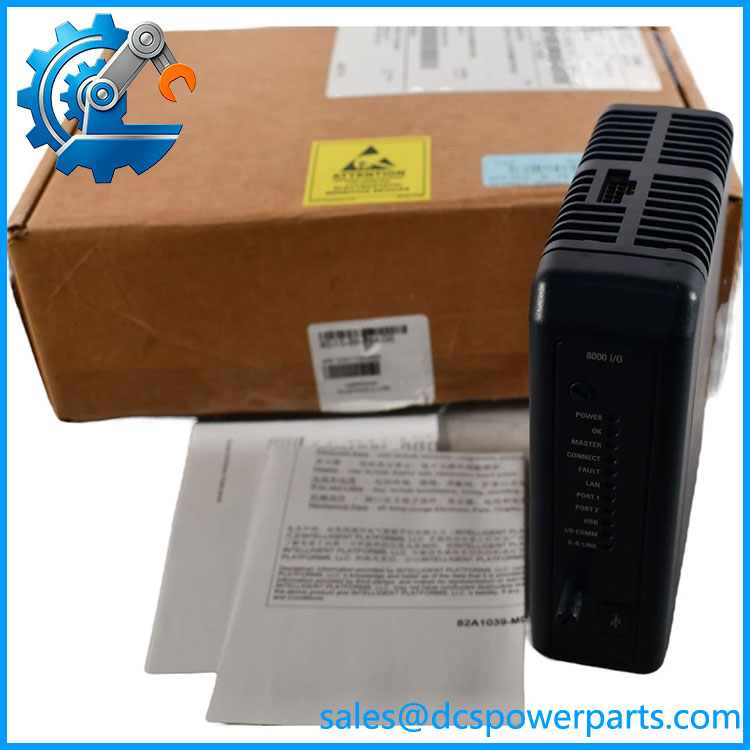
8515-BI-PN-06
Application Scenarios & Pain Points
When a node drops offline, replacing an individual I/O module will not solve the problem if the scanner itself has stopped communicating. The 8515-BI-PN is the network-facing element responsible for scanning the local I/O and exchanging that data with the PROFINET controller.
- Distributed process I/O: Connects field I/O modules to a PROFINET IO controller while managing cyclic data exchange.
- Remote cabinet I/O: Useful where I/O is installed remotely from the primary controller and the field signals are transported over industrial Ethernet.
- Redundant network arrangements: The two copper ports can support line or ring architectures, with MRP client functionality for applicable network designs.
- General-purpose and hazardous-area I/O architectures: documentation positions the platform for general automation as well as selected hazardous-area applications; the specific I/O modules and carrier configuration determine the applicable certification and installation requirements.
Field note: If the controller reports a node communication fault, check the scanner LEDs, both Ethernet links, network topology, device name/IP configuration, carrier connections, and I/O module status before declaring the 8515-BI-PN failed. Network faults and scanner faults can look almost identical from the controller diagnostic screen.
Related Products
- 8752-CA-NS — Node Service Carrier required for the 8515-BI-PN scanner; it provides the physical/electrical carrier interface for the node.
- 8516-BI-PN — PROFINET Scanner variant using two 100 Mbps multimode-fiber ports rather than the 8515’s copper interfaces.
- 8522-EB-MT — Ethernet Bus Interface for a different network architecture; it is not a direct functional substitute for the PROFINET scanner.
- 8101-HI-TX — 8-channel 4–20 mA HART analog input module.
- 8102-HO-IP — 8-channel 4–20 mA HART analog output module.
- 8103-AI-TX — 8-channel 4–20 mA analog input module.
- 8104-AO-IP — 8-channel 4–20 mA analog output module.
- 8122-DI-DC — 16-channel 24 V DC isolated digital input module.
- 8127-DI-SE — 32-channel sequence-of-events module.
The documentation places the 8515-BI-PN, 8516-BI-PN, 8522-EB-MT, and 8752-CA-NS within the bus-interface/carrier portion of the architecture, while the 8100/8120-series devices provide the actual process I/O channels.
Engineer’s Guide — Field Pitfalls to Avoid
1. Do not treat 8515-BI-PN-06 as a generic Ethernet module
The two RJ-45 ports are part of a dedicated PROFINET scanner architecture. Plugging an ordinary Ethernet device into the network does not reproduce the scanner’s I/O-management functions.
Avoidance tip: Verify the PROFINET controller, device name, GSDML configuration, node topology, and I/O configuration before replacement.
2. The carrier is part of the installation
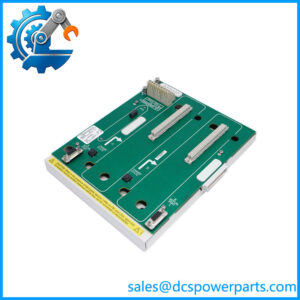
The 8515-BI-PN requires the 8752-CA-NS Node Service Carrier. A scanner module removed from its carrier should not be evaluated as though it were a standalone Ethernet device.
Avoidance tip: Inspect the carrier contacts, terminal connections, DIN-rail mounting, and adjacent I/O modules when troubleshooting intermittent node failures.
3. Firmware version matters for PROFINET integration
The scanner documentation identifies specific firmware requirements for advanced PROFINET functions, including redundant control applications. Later documentation lists PROFINET Version 2.3 Class A operation and notes firmware requirements associated with PACSystems RX3i and Machine Edition environments.
Avoidance tip: Record the firmware revision of the failed scanner before replacement. Do not assume that two visually identical modules will behave identically under every controller configuration.
4. Do not use the USB port as a permanent communication interface
The Micro-B USB connection is intended for firmware upgrades, not continuous process communications.
Avoidance tip: Keep firmware-update procedures separate from normal plant communication wiring and verify that the PROFINET network is restored after any firmware work.
5. Network redundancy needs deliberate configuration
The scanner supports line, star, and ring topologies and MRP client operation, but the presence of two Ethernet ports does not by itself create a functioning redundant network.
Avoidance tip: Confirm MRP manager/client roles, switch configuration, cable paths, and controller diagnostics during commissioning. Test the actual failure scenario rather than relying on a healthy-link indication.
FAQ
What is the Emerson 8515-BI-PN-06?
It is a PROFINET Scanner Module. Its job is to interface I/O modules with a PROFINET IO controller, scan local I/O, exchange process data, manage I/O configuration, and provide diagnostic information.
How many Ethernet ports does the 8515-BI-PN have?
The module has two 10/100 Mbps copper Ethernet interfaces using RJ-45 connectors. They support several network arrangements, including line, star, and ring configurations.
Is 8515-BI-PN-06 the same as 8515-BI-PN?
The core catalog designation is 8515-BI-PN. The “-06” suffix identifies the specific ordering/revision designation supplied to the user. For replacement work, retain the complete 8515-BI-PN-06 identification and compare the hardware and firmware revision rather than purchasing solely from the shortened base number.
What carrier does the 8515-BI-PN require?
The documented carrier is 8752-CA-NS, the Node Service Carrier. It provides the required interface between the scanner and the I/O node.
Can the 8515-BI-PN be replaced by the 8516-BI-PN?
Not as a simple drop-in assumption. Both are PROFINET scanners, but the 8515-BI-PN uses two copper interfaces, while the 8516-BI-PN uses two 100 Mbps multimode-fiber ports. Network media, cabling, and installation requirements therefore differ.
What happens if PROFINET communication is lost?
The scanner manages the configured I/O states when communications with the PROFINET controller are lost and provides diagnostic information to the controller. The resulting field behavior depends on how each connected I/O module has been configured.
What should be checked before purchasing a replacement 8515-BI-PN-06?
Confirm the complete part number, firmware revision, carrier, PROFINET controller, GSDML/device configuration, network topology, and existing I/O configuration. For a production installation, I would also verify both RJ-45 ports, status indicators, firmware-update capability, and node-level diagnostics before putting the replacement into service.