Description
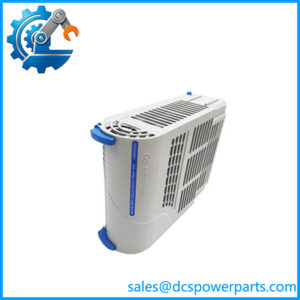
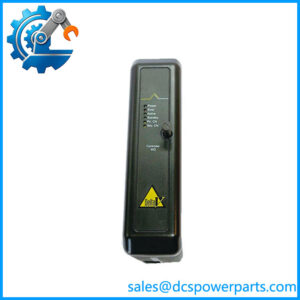
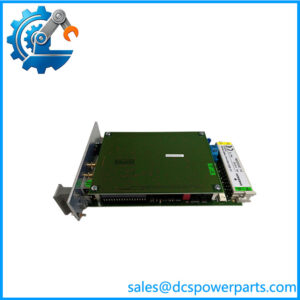
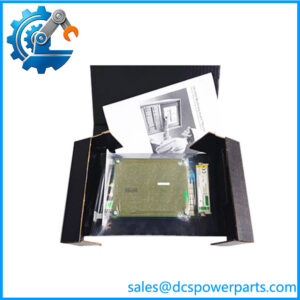
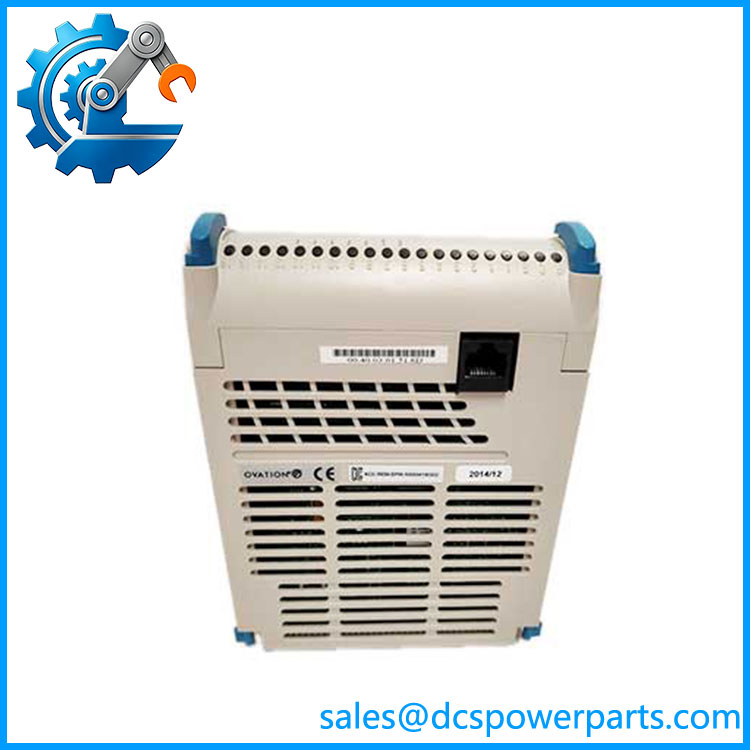
Emerson Ovation 5X00419G02 Ethernet Link Controller
Product Overview
The Emerson Ovation 5X00419G02 is an Ethernet Link Controller (ELC) electronics module used within the Ovation distributed control system. Emerson’s own Ovation spare-parts documentation identifies the exact part as “EMOD ASSY, ETHERNET LINK CONTROLLER W/ TIME STAMP.” This is an important distinction because several third-party listings incorrectly classify the same part number as an analog input or analog output module. The manufacturer’s spare-parts documentation supports the Ethernet Link Controller identification instead.
The Emerson Ovation 5X00419G02 operates as part of the Ovation controller/network architecture rather than functioning as a conventional field I/O card. Emerson’s Ovation Bus and Specialty I/O reference material identifies 5X00419G01 and 5X00419G02 as the two ELC electronics-module groups. The Ethernet Link Controller is installed in an OCR400 or OCR1100 controller and can be configured in simplex or redundant arrangements. Its role is to communicate with external devices through Ethernet while providing capabilities beyond a basic network interface, including time-stamped event handling.
For brownfield Ovation systems, that architecture matters. The ELC can isolate remote-device communications from the core Ovation network when communication is unavailable, and application protocol packages can extend the controller’s external communication capabilities. Emerson’s ELC documentation specifically describes millisecond time stamping for sequence-of-events applications when the protocol supports time stamping, such as DNP3.
Product Introduction
Network replacement in an Ovation system is not simply a matter of matching an Ethernet connector. The 5X00419G02 belongs to the ELC architecture inside the controller, where application protocols, controller configuration, redundancy, and event timing all matter.
For a legacy Ovation communication replacement, verify the controller type, ELC hardware revision, loaded protocol package, redundancy arrangement, external-device mapping, and time-synchronization requirements before commissioning the spare.
Key Technical Specifications
| Parameter | Specification |
|---|---|
| Product Model | 5X00419G02 |
| Manufacturer | Emerson / Westinghouse |
| Platform | Ovation DCS |
| Product Type | Ethernet Link Controller Electronics Module |
| Emerson Description | EMOD ASSY, Ethernet Link Controller w/ Time Stamp |
| ELC Module Group | 5X00419G01 / 5X00419G02 |
| Installation Context | Ovation controller |
| Compatible Controller Context | OCR400 / OCR1100 |
| Operating Mode | Simplex or redundant, depending system architecture |
| Primary Function | External Ethernet device communication |
| Time Stamping | Supported for applicable protocols |
| SOE Application | Millisecond time stamping available when supported by the protocol |
| Protocol Support | Application-dependent; protocol packages can be loaded to the ELC |
| Firmware / Software | System- and application-dependent |
| Field I/O Channels | Not a conventional analog or digital I/O module |
| Mounting | Ovation controller electronics position |
| Hot Swap | Do not assume; follow the applicable Ovation controller procedure |
| Lifecycle | Legacy Ovation spare component |
The exact model-specific electrical ratings, connector pinout, Ethernet speed, protocol set, power consumption, and environmental limits were not sufficiently established in the manufacturer’s public documentation located for this part number. Those values are therefore intentionally omitted rather than inferred from unrelated Ovation I/O modules.
Major Features / Practical Advantages
1. Dedicated Ovation Ethernet Link Function
The 5X00419G02 was designed specifically as an Ovation Ethernet Link Controller rather than as a generic Ethernet interface card. The ELC resides in an Ovation controller and provides the communications path between the Ovation system and external devices. Emerson’s reference material specifically places the ELC in OCR400 and OCR1100 controllers.
5X00419G02
2. Time-Stamped Data and Events
The “W/ TIME STAMP” designation in Emerson’s spare-parts catalog is not cosmetic. The ELC documentation describes millisecond time stamping for events and alarms when the communication protocol supports it. This can be important when several external events occur in rapid succession and the plant needs to determine their chronological order.
3. Sequence-of-Events Applications
For power-generation and process plants, accurate event chronology can be more useful than raw communication bandwidth. The ELC can generate time-stamped SOE points when the selected protocol supports that function. DNP3 is specifically identified in the ELC documentation as an example of a protocol capable of using the time-stamping feature.
4. Simplex and Redundant Architectures
The Ovation reference manual states that the Ethernet Link Controller can be configured in either simplex or redundant mode. That makes the installed architecture an important part of replacement planning. A spare should be checked against the existing controller configuration rather than assuming that every ELC installation uses the same topology.
5. Protocol Extensibility
The ELC is not limited to one fixed external-device protocol in the same way as a dedicated field I/O card. Emerson’s ELC documentation describes application protocol packages that can be loaded onto the controller, extending the Ovation system’s communication capabilities beyond its traditional plant-control boundaries.
6. Network Isolation
One useful architectural feature is the ability to isolate a remote device from the Ovation system when communication is unavailable through the Ovation network. This is a system-level function rather than an Ethernet physical-layer feature, and it is one reason the ELC should not be treated as an ordinary unmanaged network interface.
7. Controller-Level Integration
Because the ELC resides in an Ovation controller, its compatibility is determined partly by the host controller and system software. The same part number can therefore be physically correct while still requiring configuration work before it can perform the same external communication task as the removed unit.
Related Products
- 5X00419G01 — The other documented Ovation Ethernet Link Controller electronics-module group. The two part numbers should not be assumed electrically or functionally identical without checking the applicable ELC documentation.
- 5X00481G01 — Ovation OCR1100 controller electronics assembly with Atom CPU; a controller component rather than an ELC.
- 5X00790G01 — Ovation OCC100 controller; a different controller platform.
- 1C31166G02 — Ovation Link Controller electronics module using the R1120 CPU; a different generation/function from the 5X00419G02 ELC.
- 5X00300G01 — Ovation PROFIBUS electronics module; communication function differs from the Ethernet Link Controller.
- 5X00300G02 — PROFIBUS-DP electronics assembly with time-stamp designation; relevant when tracing protocol-specific communication architecture.
- 5X00357G05 — Ovation enhanced-events input electronics module; focuses on event acquisition rather than external Ethernet communication.
- 1C31203G01 — Ovation Remote Node Controller electronics module.
- OCR400 — Ovation controller platform in which the ELC architecture is documented.
- OCR1100 — Ovation controller platform supporting the ELC architecture.
FAQ
Is 5X00419G02 an analog input module?
No. Emerson’s own spare-parts catalog identifies it as an Ethernet Link Controller electronics assembly with time stamp. Some third-party listings incorrectly describe this part number as an analog input or analog output module. Those descriptions should not be used for engineering selection.
What does the “G02” version represent?
Public Emerson documentation identifies 5X00419G01 and 5X00419G02 as the two ELC electronics-module groups, but the located public material does not provide a sufficiently detailed official decoding of every hardware difference between G01 and G02. Do not infer the difference from unrelated Ovation I/O revisions.
Can 5X00419G02 be installed in an OCR1100?
The Ovation reference material identifies the Ethernet Link Controller as an electronics module installed in OCR400 and controllers. Actual replacement compatibility still depends on controller generation, system release, redundancy arrangement, and ELC configuration.
Does it support time stamping?
Yes. Time stamping is explicitly part of Emerson’s description of the 5X00419G02. The ELC documentation describes millisecond time stamping for SOE and alarm applications when the selected communication protocol supports time stamping.
Does it support DNP3?
The ELC documentation specifically cites DNP3 as an example of a protocol that can use the ELC’s millisecond time-stamping capability. However, the actual protocol package installed on a particular unit must be verified from the Ovation configuration rather than assumed from the hardware part number alone.
Does it support firmware v3.1?
There is no reliable evidence that “firmware v3.1” is a valid universal identifier for this module. ELC functionality is tied to the Ovation system and application protocol packages. For replacement work, record the existing Ovation release, ELC software/configuration, protocol package, and host-controller revision instead of using a generic firmware number.
Can I hot-swap the 5X00419G02?
Do not assume unrestricted hot swapping. The ELC is installed within an Ovation controller architecture, and removal can affect external communications even if the rest of the control system remains operational. Follow the approved Ovation maintenance procedure for the specific OCR400/ configuration.
Is the Ethernet Link Controller a standalone network switch?
No. Its documented role is much more specific. The ELC is an Ovation controller-resident communication component that interfaces external devices with the Ovation system and supports application protocol functions. It should not be substituted with a conventional Ethernet switch.
Procurement Note
For the Emerson Ovation 5X00419G02, the most important procurement check is functional identity. Emerson’s own spare-parts list clearly identifies it as an Ethernet Link Controller with time stamp, while several commercial databases incorrectly classify the same part number as analog I/O. The manufacturer identification should take precedence.
Before approving a replacement, capture the existing / controller type, ELC hardware revision, Ovation software release, simplex/redundant arrangement, external protocol package, device mapping, IP/network configuration, time-synchronization method, and SOE requirements.
For New Surplus or refurbished units, a power-up test is not enough. Verify that the module is recognized by the host controller and that the required ELC application protocol package and configuration can be restored. If the original installation relies on timestamped DNP3 events, test the event chronology under actual system time synchronization rather than checking only Ethernet link status.
Procurement warning: Do not substitute an analog I/O card based on the part-number listings found on some commercial sites. 5X00419G02 is documented by Emerson as an Ovation Ethernet Link Controller electronics module with time stamping.