Description
Neles B1CU13/55 Pneumatic Rotary Actuator
Product Overview
The Neles B1CU13/55 is a B1C-series pneumatic piston actuator designed to operate rotary valves in industrial process applications. The B1C family is intended for quarter-turn valve service and is used with valve packages where controlled pneumatic torque is required for opening, closing, throttling, or emergency shutdown functions. The B1CU13/55 is one of the documented B1C actuator sizes, alongside models such as B1CU11/35, B1CU17/55, and B1CU20/70.
The Neles B1CU13/55 should be evaluated as a mechanical actuator rather than an automation controller. It contains no PLC program, DCS firmware, analog input circuitry, or conventional electrical communication interface. Its performance depends on pneumatic supply pressure, valve torque requirements, actuator configuration, travel limits, shaft/interface dimensions, and the complete valve assembly. In actual plant service, those mechanical details matter more than simply matching the B1CU13/55 nameplate. Public certification documentation for the closely specified B1CU13/55AFL variant reports a piston actuator with an aluminum housing and piston, nitrided-steel pinion shaft, and oil-resistant seals.
A complete valve package may also include a positioner, limit switch, solenoid valve, or other accessories. One documented Neles LW7 valve assembly, for example, combines a /55 actuator with a valve and positioner/accessory package. That means the bare actuator should not automatically be treated as a complete automated valve.
Product Introduction
Valve automation problems are often misdiagnosed as control-system faults when the real limitation is mechanical torque. The belongs to the pneumatic actuator layer, where available torque, air pressure, valve breakaway torque, and travel configuration determine whether the valve actually moves as commanded.
For a legacy valve actuator replacement, verify the valve shaft interface, mounting pattern, required torque, pneumatic pressure, fail-action arrangement, and installed accessories before approving the actuator.
Key Technical Specifications
| Parameter | Specification |
|---|---|
| Product Model | /55 |
| Manufacturer | Neles / Metso |
| Product Series | B1C |
| Product Type | Pneumatic piston rotary actuator |
| Actuator Construction | Piston-type |
| Application | Quarter-turn rotary valves |
| Valve Types | Butterfly, ball, plug and similar rotary valves |
| Configuration | B1C standard construction |
| Pneumatic Medium | Compressed air |
| Actuator Size | 13/55 designation |
| Rotation | Rotary / quarter-turn service |
| Control Type | Pneumatic |
| Electronics | None in the basic actuator |
| PLC/DCS Interface | None in the bare actuator |
| Position Feedback | Requires separate positioner or feedback accessory where required |
| Solenoid Control | External solenoid valve where required |
| Operating Pressure | Application-dependent; verify actuator nameplate and valve sizing documentation |
| Torque | Application-dependent; verify actuator sizing chart and supply pressure |
| Ambient Temperature | Configuration-dependent |
| Mounting | Valve/actuator mounting interface |
| Firmware | None |
Exact torque and pressure values should not be inferred solely from the shortened /55 designation. A certification record for the more fully specified variant reports a maximum pressure of 1.0 MPa and torque values of 914/1780 N·m, but those values belong to that specific configuration and should not automatically be transferred to every /55 installation.
Major Features / Practical Advantages
1. Pneumatic Piston Construction
The B1C architecture uses a piston-based pneumatic mechanism to convert compressed-air energy into rotary valve movement. This provides the mechanical output needed for quarter-turn valves without requiring an electric motor or electronic drive. The /55 is therefore well suited to valve automation packages where plant air is already available.
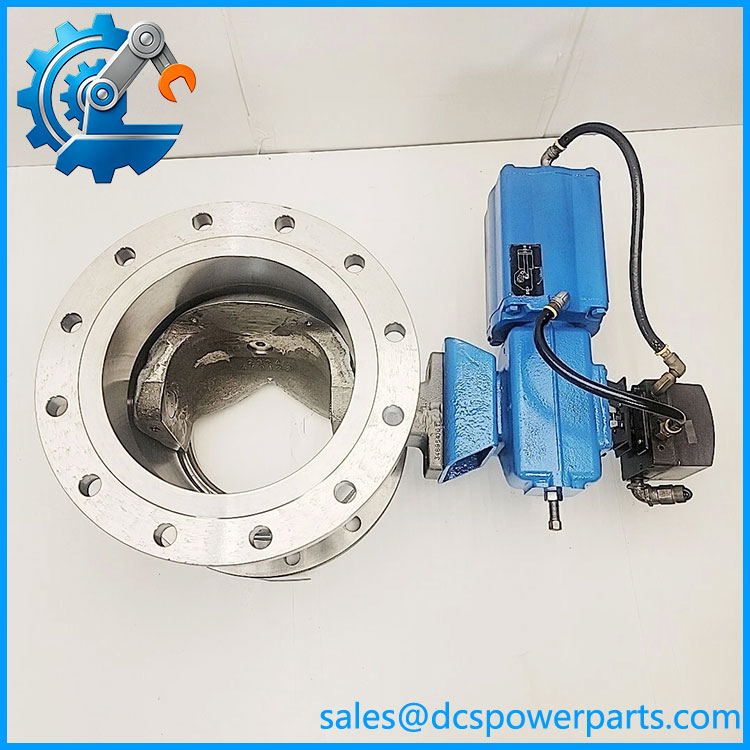
B1CU13/55
2. Rotary Valve Service
The B1C family is specifically associated with rotary valve operation. Available B1C model listings include the /55 together with several other actuator sizes, allowing actuator selection to follow the required valve torque rather than forcing one actuator size across an entire valve population.
3. Suitable for Control and Shutdown Duties
Neles B1C actuators are documented for applications ranging from ordinary control service to demanding emergency-shutdown and on/off applications. That makes the actuator relevant to process isolation, utility systems, compressor service, and other automated rotary-valve duties.
4. Wide Valve-Package Compatibility
A /55 actuator can appear as part of a complete Neles valve assembly. Published valve examples show the actuator combined with LW7 butterfly-valve configurations and additional instrumentation. The actuator therefore provides the mechanical drive while other components provide position control, feedback, and electrical interfacing.
5. Mechanical Rather Than Software-Dependent
There is no application firmware to preserve in the basic actuator. The important replacement parameters are mechanical and pneumatic: valve interface, shaft dimensions, torque requirement, travel, air pressure, fail action, and accessory arrangement.
That is good news for a legacy replacement—but it also means a visually identical actuator can still be the wrong choice if the mechanical sizing is wrong.
6. Industrial Process Applications
B1C-series actuators are used across process industries including energy, chemical processing, mining, pharmaceutical production, and water treatment. The /55 is consequently relevant to a wide range of rotary valve automation packages.
Related Products
- B1CU11/35 — Smaller B1C pneumatic actuator size for lower-torque rotary-valve applications.
- B1CU17/55 — Larger B1C actuator size with increased torque capability.
- B1CU20/70 — Larger B1C pneumatic actuator for higher valve torque requirements.
- B1CU25/95 — Larger B1C actuator used where greater mechanical output is required.
- B1CU32/105 — Higher-capacity B1C actuator for larger rotary valves.
- — Long-life variant of the /55 family; do not assume the L configuration is identical in every mechanical detail.
- — Arctic/extended configuration documented with additional configuration suffixes; the A/F/L suffixes should not be omitted when matching an existing installation.
- B1JU series — Related Neles B1-series actuator family using a different configuration architecture.
- ND900 / ND9100 series — Neles valve positioner families commonly found in automated valve packages; these are separate from the pneumatic actuator itself.
FAQ
Is /55 a complete automatic valve?
No. /55 is the actuator designation. A complete automated valve package may include the valve body, actuator, positioner, solenoid valve, limit switches, tubing, and other accessories. Published Neles valve assemblies demonstrate this distinction.
Is /55 double-acting?
The base B1C family includes both double-acting and spring-return configurations depending on the complete actuator designation. The shortened should therefore not be treated as sufficient evidence for the complete fail-action arrangement. The actuator nameplate and valve assembly documentation should be checked.
What does the 13/55 designation mean?
Public certification documentation for the /55AFL describes 13/55 as part of the actuator size / shaft-bore designation structure. The complete Neles ordering code is needed to decode additional construction and service options.
Can I hot-swap the /55?
No. This is a mechanical pneumatic actuator, not an electronic plug-in module. Valve isolation, pneumatic isolation, stored mechanical energy, and process pressure must be addressed before removal or replacement.
Does it support firmware v3.1?
No firmware applies to the basic pneumatic actuator. If the valve assembly includes an electronic positioner such as a Neles ND-series device, firmware/configuration considerations belong to that separate positioner.
Can I replace /55 with B1CU17/55?
Not simply by part-number similarity. The larger actuator may have different torque characteristics, dimensions, weight, shaft interface, and valve mounting requirements. Actuator selection must be based on the valve’s required breakaway, running, seating, and maximum torque under the actual operating conditions.
What should I verify before ordering a replacement?
Check the complete actuator nameplate, valve model, mounting standard, shaft/bore dimensions, rotation angle, supply pressure, required torque, fail position, and accessories. If a positioner or solenoid is installed, record those part numbers separately.
Procurement Note
For the , the critical procurement mistake is treating the actuator size as the entire specification. The basic /55 designation does not establish every pneumatic, mechanical, temperature, or fail-action parameter needed for a replacement.
Before approving a replacement, record:
- Valve manufacturer and complete valve model
- Actuator complete ordering code
- Required opening/closing torque
- Available pneumatic supply pressure
- Fail-open, fail-closed, or other required action
- Shaft/bore and mounting dimensions
- Rotation angle
- Positioner model
- Solenoid-valve model
- Limit-switch or feedback arrangement
- Ambient and process-temperature requirements
For hazardous-area service, do not transfer certification from a similarly named variant. The certification record, for example, specifies a particular explosion-protection configuration, temperature range, and construction. Those characteristics belong to that complete variant and are not automatically applicable to every /55 actuator.
For New Surplus equipment, inspect piston seals, shaft/pinion condition, housing, mounting surfaces, and evidence of corrosion or contamination. A stored pneumatic actuator may look unused while seals have aged. If the actuator is being installed on a critical shutdown valve, perform the required stroke, torque, fail-action, and leak checks before returning the valve to service.
Procurement conclusion: identify the complete Neles actuator code and the driven valve before substitution. /55 is a mechanical actuator designation, not an electronic control module, and it should be sized against the actual valve torque requirement.