Description
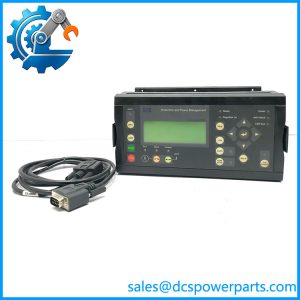
DEIF PPU/2/GS Protection and Paralleling Unit
Product Overview
The DEIF PPU/2/GS is a Multi-line 2 generator protection and paralleling controller designed to combine synchronization, generator control, measurement, and electrical protection in one dedicated unit. DEIF documentation describes the PPU-2 as a microprocessor-based controller for synchronous and asynchronous generators, with applications covering stand-alone operation, paralleling with other generator sets, and paralleling with the mains. The unit can synchronize a generator and then perform the associated generator-control and protective functions.
For an operating plant or vessel, the DEIF PPU/2/GS is much more than a protection relay. Its control functions include synchronization, power and frequency control, droop operation, and load sharing. Standard protection includes reverse power and multiple overcurrent functions. The measuring system uses three-phase true-RMS measurement with galvanically isolated voltage and current inputs, which gives the controller the electrical information required for synchronization and generator protection.
The DEIF PPU/2/GS can also be integrated into PLC-controlled generator systems through binary and analog I/O, with serial communication available through the applicable option set. Configuration is performed through the display’s password-protected menu or the Multi-line 2 PC utility through RS-232. DEIF’s documentation specifically describes the PC utility as a commissioning tool capable of monitoring operating information, saving and downloading settings, and downloading software updates.
A critical procurement point is the /GS configuration and installed options. PPU-2 units could be ordered with different hardware and software options, including additional engine-control I/O, configurable binary/relay/analog I/O, CAN engine communication, display arrangements, and other application functions. Two units carrying the basic PPU/2 designation therefore should not automatically be considered configuration-identical.
Product Introduction
Generator paralleling is one of those jobs where a generic controller is rarely an acceptable substitute. The PPU/2/GS combines synchronization, electrical measurement, protection, and generator-control functions in the Multi-line 2 architecture, making it suitable for both marine and land-based generator systems.
The engineering numbers are straightforward: 100–690 VAC measurement, 1 A or 5 A CT inputs, 12/24 VDC auxiliary supply, three-phase true-RMS measurement, and configurable 0–20 mA analog outputs. Exact I/O availability depends on the option configuration fitted to the individual PPU.
Key Technical Specifications
| Parameter | Specification |
|---|---|
| Product Model | PPU/2/GS |
| Manufacturer | DEIF A/S |
| Product Family | Multi-line 2 |
| Product Type | Protection and Paralleling Unit |
| Primary Application | Generator control, synchronization, paralleling, and protection |
| Operating Modes | Stand-alone, parallel with other generators, parallel with mains |
| Measurement Method | Three-phase true RMS |
| Voltage Measurement | 100–690 VAC ±20%, 50/60 Hz |
| Current Measurement | 1 A or 5 A AC CT input |
| Current Input Burden | Max. 0.3 VA/phase |
| Voltage Input Consumption | Max. 0.25 VA/phase |
| Auxiliary Supply | 12/24 VDC |
| Analog Outputs | 0(4)–20 mA, galvanically separated |
| Analog Output Load | Up to 500 Ω |
| Standard Protection | Reverse power ANSI 32; overcurrent ANSI 51 functions |
| Control Functions | Synchronizing, power control, frequency control, droop, load sharing |
| PC Interface | RS-232 |
| Display Interface | 9-pin Sub-D |
| Mounting | DIN rail or base mounting |
| Operating Temperature | -25 to +70°C |
| Storage Temperature | -40 to +70°C |
| Climate | Up to 97% RH according to IEC 60068-2-30 |
| Overvoltage Category | CAT III, 600 V |
| Galvanic Isolation | Up to 3250 VAC between specified measurement/I/O groups |
| Software | Multi-line 2 PC utility |
| Product Status | Obsolete / legacy PPU-2 documentation |
The technical values above are taken primarily from the DEIF PPU-2 data sheet reproduced in technical documentation repositories. Some commercial listings give conflicting dimensions, weight, communications, and IP values, so those values have intentionally not been used as primary specifications.
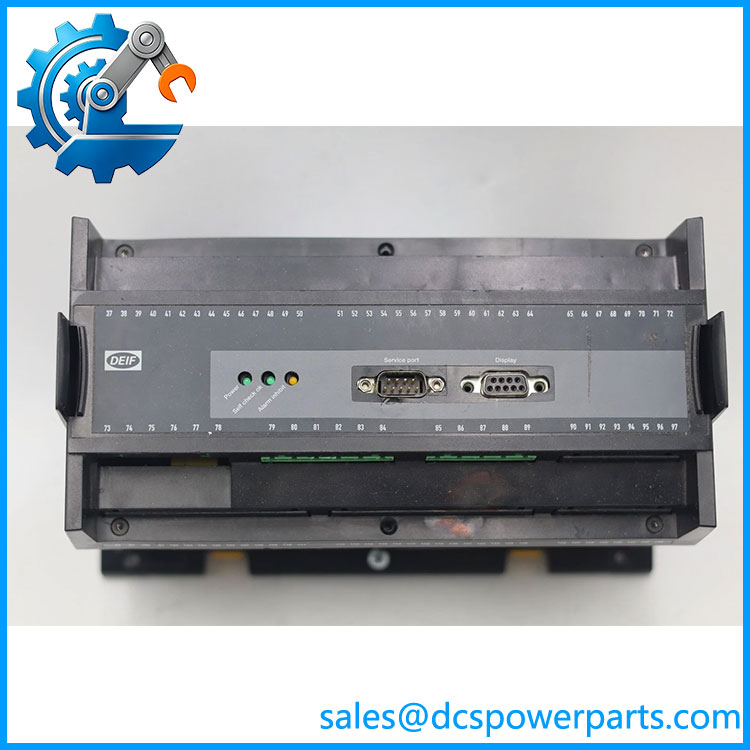
PPU/2/GS
Major Features / Practical Advantages
1. Generator Synchronization
The PPU-2 performs the electrical comparison needed to synchronize a generator before closing the generator breaker. Voltage, frequency, and phase-related information are measured through its three-phase measurement circuits. After synchronization, the same controller can continue with generator-control and protection functions.
For retrofit work, this matters because synchronization parameters are part of the actual generator application. Replacing the controller without preserving the original settings can change breaker-closing behavior even when the replacement hardware is electrically correct.
2. Generator-to-Generator and Generator-to-Mains Operation
The PPU/2/GS supports three broad application arrangements:
- Stand-alone generator operation
- Parallel operation with other generator sets
- Parallel operation with the mains
These modes can be combined with the controller’s power and frequency control functions. Droop and load-sharing modes are also documented.
3. Three-Phase True-RMS Measurement
The measurement system uses three-phase true-RMS acquisition with galvanically separated voltage and current circuits. Voltage measurement covers 100–690 VAC, while current inputs are configured for 1 A or 5 A CT secondary circuits.
That CT rating is a procurement checkpoint. A 1 A relay input and a 5 A relay input are not something to guess from the model name. The actual installed configuration and CT secondary must be confirmed before replacement.
4. Integrated Generator Protection
The documented standard protection set includes reverse power protection (ANSI 32) plus overcurrent functions under ANSI 51. Additional protection and control functionality depends on the selected option configuration.
Reverse-power protection is particularly important for generators operating in parallel. A generator that begins absorbing active power from the bus can indicate a prime-mover or control problem, and the PPU provides the protection function needed to detect this condition.
5. Load Sharing
The PPU-2 supports generator load-sharing functions and provides configurable operating modes including droop and fixed-power operation. The hardware documentation identifies active-power load sharing as standard and reactive-power load sharing as an available option.
Do not assume every PPU/2/GS has identical load-sharing hardware or software options. The original order configuration should be checked.
6. PLC Integration
The PPU can be incorporated into PLC-controlled generator systems through binary and analog interfaces. DEIF documentation also identifies optional serial communication and describes the controller as suitable for PLC-controlled applications.
This makes the unit suitable for generator control architectures where the PLC handles supervisory logic while the PPU remains responsible for dedicated generator synchronization and protection functions.
7. Configurable I/O Options
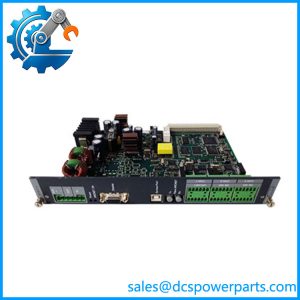
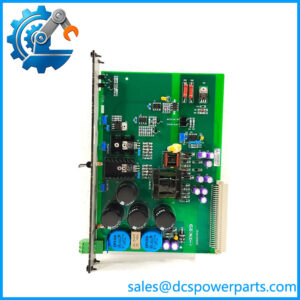
The Multi-line 2 platform supports optional I/O hardware. Documented examples include configurable binary inputs, relay outputs, analog inputs, PT100 inputs, magnetic pickup input, VDO sensor inputs, and additional engine-control functions.
This is one of the main reasons not to order a replacement based only on the short PPU/2/GS designation.
8. Commissioning Through PC Software
Configuration can be performed from the password-protected front-panel menu or through the RS-232 PC interface using the Multi-line 2 utility. The utility supports monitoring during commissioning as well as saving and downloading settings.
For a replacement, the old parameter file is extremely valuable. DEIF’s later -to-PPU-3 conversion guidance specifically recommends creating a complete parameter backup before powering down the old unit.
Related Products
- — Base Multi-line 2 Protection and Paralleling Unit family from which the PPU/2/GS configuration is derived.
- DEIF PPU-3 — Later generation protection and paralleling platform intended for modernization of systems.
- DEIF GPU-2 — Related Multi-line 2 generator protection/control platform.
- DEIF FAS — Full Automatic Synchronizer that can be used within generator synchronization architectures.
- DEIF Multi-line 2 PC Utility — Engineering and commissioning software for configuring and monitoring applicable units.
- DEIF M13 I/O Option — hardware option providing configurable binary inputs.
- DEIF M14 I/O Option — hardware option providing additional relay outputs.
- DEIF M15 I/O Option — hardware option providing configurable 4–20 mA analog inputs.
- DEIF M1 Engine Control Card — engine-control option with PT100, 4–20 mA, magnetic pickup, binary, and relay interfaces.
- DEIF M2 Engine Control Card — Alternative engine-control option using VDO sensor inputs.
FAQ
What is the DEIF PPU/2/GS used for?
It is a generator protection and paralleling controller in the Multi-line 2 family. It can control stand-alone generators, generators operating in parallel with other sets, and generators operating in parallel with the mains.
What voltage can the PPU/2/GS measure?
The documented AC measuring range is 100–690 VAC ±20%, 50/60 Hz. UL/cUL configurations have additional limitations, so the certification and installed configuration should be checked for the actual unit.
Does PPU/2/GS use 1 A or 5 A CTs?
It can be configured for 1 A or 5 A AC current measurement. Do not assume the installed unit’s CT rating from the short model number alone. Check the nameplate, order documentation, and existing CT secondary wiring.
Can I hot-swap the PPU/2/GS?
Do not treat it as a hot-swappable PLC module. It is part of the generator protection and synchronization chain. Generator breaker status, excitation, governor controls, CT circuits, and voltage measurement circuits must be handled under an approved maintenance procedure before removing the controller.
Does PPU/2/GS support Modbus RTU?
The base documentation establishes RS-232 for PC configuration and identifies serial communication as an optional interface. Some configurations use additional communication options, but Modbus availability should be verified from the exact installed option set rather than assumed from the PPU/2/GS model alone.
Does the PPU/2/GS support firmware v3.1?
The model number does not establish firmware version 3.1. The available documentation identifies software version 2.4X.X for the referenced data-sheet revision, while individual field units can have different software revisions. Check the actual unit through the appropriate DEIF commissioning software.
Can PPU/2/GS be replaced directly by PPU-3?
Not as a blind drop-in. DEIF provides a dedicated -to-PPU-3 conversion procedure, which itself calls for parameter backup and conversion of the existing application. That is evidence of a migration path, not proof of direct terminal-for-terminal interchangeability.
What should be backed up before replacing a PPU/2/GS?
At minimum, preserve the complete parameter set, generator nominal data, CT/VT ratios, synchronization parameters, protection settings, breaker logic, governor/AVR control configuration, load-sharing settings, and any engine-control option settings.
Procurement Note
The DEIF PPU/2/GS is a legacy generator protection and paralleling controller, and the exact option configuration is more important than the basic model designation. DEIF’s own documentation shows a substantial option structure covering engine control, additional I/O, CAN communication, displays, and software functions.
For a replacement purchase, request a clear photograph of the complete nameplate and option identification, then compare it against the existing unit. Confirm the CT secondary rating, voltage measurement arrangement, display configuration, I/O option cards, communication options, generator-control functions, and parameter backup.
One practical rule: save the old configuration before removing the old PPU whenever the unit is still accessible and operational. DEIF’s later conversion guidance explicitly recommends a complete parameter backup before powering down an existing .
If the replacement is New Surplus, do not equate that condition with configuration equivalence. A physically new PPU/2/GS can still have the wrong option set for the generator application. The safest procurement match is the complete DEIF order/configuration information plus the existing parameter file, not the short PPU/2/GS label alone.