Description
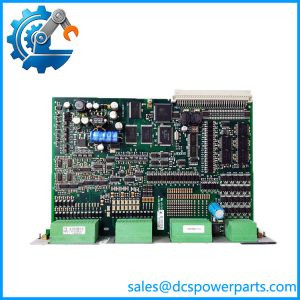
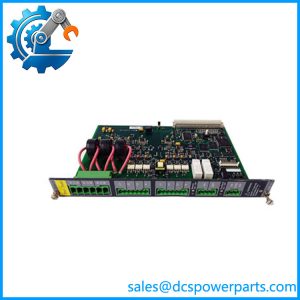
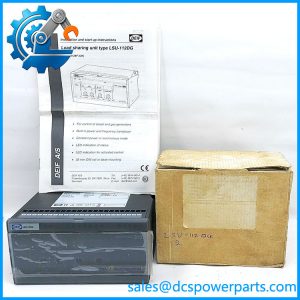
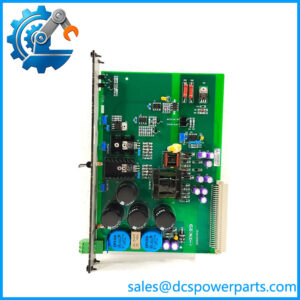
DEIF PPM-3 | Protection & Power Management System
Key Technical Specifications
| Parameter | Specification |
|---|---|
| Product Model | PPM-3 |
| Manufacturer | DEIF A/S |
| Product Family | Multi-line 2 |
| Product Type | Protection & power management system |
| Controller Role | Generator and switchboard power management |
| Generator Synchronization | Supported |
| Active Power Management | Supported |
| Load Sharing | Supported |
| Generator Start/Stop | Supported |
| Generator Protection | Supported |
| Blackout Recovery | Supported |
| Busbar Management | Supported |
| Heavy Consumer Management | Supported in appropriate application configurations |
| Shore Connection | Supported in appropriate marine configurations |
| Event/Alarm Logging | Supported |
| Configuration Software | DEIF Multi-line 2 Utility Software |
| Application Software | PPM application software series 3.x |
| Communication Options | Modbus, Profibus DP, Modbus TCP/IP and other option-dependent interfaces |
| Option Modules | Application-dependent |
| Current Lifecycle | Not recommended for new designs |
| DEIF Replacement Family | iE 350 Marine |
The PPM-3 is an option-based controller rather than a single fixed I/O configuration. DEIF documentation provides separate option documentation for functions such as voltage/VAR/cos-phi control, analog controller/transducer outputs, Modbus communication, PROFIBUS DP, Modbus TCP/IP, and engine communications. Consequently, the exact option code and installed hardware must be checked before defining the complete electrical interface.
Product Introduction
The DEIF PPM-3 is a Multi-line 2 protection and power management system designed to coordinate generators and electrical distribution equipment. Its control functions extend beyond basic generator regulation: the system can handle synchronization, active-power distribution, generator start/stop sequences, protection, blackout recovery, non-essential load disconnection, and other plant-level power-management functions. DEIF documentation identifies the PPM-3 specifically as a protection and power management product.
In a marine or distributed-generation installation, the PPM-3 typically sits between generator controls, switchboard breakers, measurement systems, and higher-level power-management functions. A DEIF case study describes performing generator synchronization, active-power distribution across four diesel generators, load-dependent starting and stopping, blackout automatic start, shore connection operation, alarm/event logging, and heavy-consumer control.
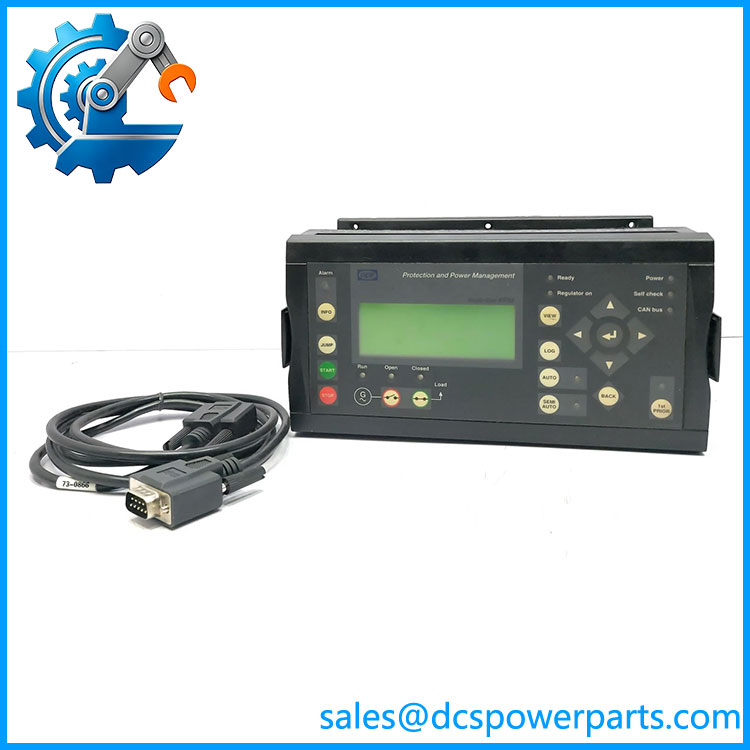
DEIF PPM-3
Engineering Pain Point
The main replacement risk is treating the as a generic generator controller. The controller’s behavior depends heavily on the installed application software, option configuration, measurement wiring, breaker logic, generator priorities, synchronization settings, and power-management sequences. Replacing the hardware without preserving these settings can leave the controller operational but produce different breaker or generator behavior.
DEIF continues to provide -specific Multi-line 2 software releases, and its current support documentation states that the can be connected to a PC using DEIF’s Utility Software and service cable. Older units may use USB or serial connections, while newer units can also provide Ethernet access.
Typical Applications
- Marine generator power management: Coordination of multiple diesel generators, switchboards, busbars, and large consumers.
- Generator synchronization: Automatic synchronization of generator sets to the main switchboard bus.
- Load-dependent generator control: Starting or stopping generating units according to electrical demand and configured priorities.
- Blackout recovery: Automatic generator start and restoration sequences following a loss of the main bus.
- Shore connection and heavy-consumer control: Marine installations requiring controlled transfer or management of large electrical loads.
Technical Pitfalls to Avoid
- Do not replace a based only on the front-panel appearance.
The installed controller may contain application-specific configuration, option modules, and software versions that are critical to the plant sequence. - Back up the configuration before removing the existing controller.
DEIF’s Utility Software is used for configuration of and other Multi-line 2 products. A configuration backup is valuable because generator priorities, protection settings, breaker logic, synchronization parameters, and M-Logic behavior can be installation-specific. - Check the application software version.
DEIF has published multiple PPM application software releases in the Multi-line 2 3.x series. Do not assume that a replacement controller running a different software revision will behave identically. - Verify communication options separately.
documentation includes dedicated options for Modbus, PROFIBUS DP, Modbus TCP/IP, and engine communications. The presence of a communication port on a replacement unit does not prove that the required protocol option is installed. - Preserve generator and breaker sequencing.
Synchronization, dead-bus closing, load sharing, generator priority, blackout recovery, and heavy-consumer logic can interact. Commissioning should validate the complete sequence rather than testing only individual I/O points. - Check the controller battery condition.
DEIF specifically publishes preventive-maintenance guidance for controllers and recommends battery replacement intervals based on operating temperature. The published guidance lists substantially shorter intervals as temperature rises. - Consider lifecycle status before a new project purchase.
DEIF currently identifies as not recommended for new designs and states that it is being phased out in favor of the iE 350 Marine. For an existing installation, this does not by itself make a replacement unsuitable, but it is important for long-term project planning.
Related Products
- DEIF iE 350 Marine — Current replacement family identified by DEIF for ; intended for advanced marine intelligent energy-control applications. It should not be treated as a firmware-equivalent drop-in replacement.
- DEIF iE 250 Marine — Current DEIF intelligent energy controller for marine applications; application scope and hardware architecture differ from .
- DEIF AGC-4 — Multi-line controller used for automatic generator control; it is a different product family and should not be substituted for without an architecture review.
- DEIF ASC-4 — Automatic sustainable controller family for applications such as battery and solar systems; its power-management role differs from the architecture.
- DEIF CIO 116 — Multi-line 2 CAN-based I/O module; provides additional I/O rather than replacing the controller itself.
- DEIF CIO 208 — CAN-based I/O expansion device for Multi-line 2 systems; verify I/O requirements and controller compatibility.
- DEIF CIO 308 — Another Multi-line 2 CAN-based I/O module used for system expansion.
- DEIF Multi-line 2 Utility Software — PC software used to configure and service and other Multi-line 2 products.
Procurement and Replacement Note
For an existing installation, procurement should start with the complete controller identification, hardware/option configuration, application software version, configuration backup, communication options, and installed I/O architecture.
Do not specify a replacement merely as “.” The controller’s actual function can depend on options and application programming. DEIF documentation confirms separate options for analog control outputs, Modbus, PROFIBUS DP, Modbus TCP/IP, and engine communications.
For new engineering projects, lifecycle planning deserves particular attention because DEIF currently classifies as not recommended for new designs and identifies iE 350 Marine as its replacement direction. For an existing vessel or power plant, however, maintaining the original architecture may be preferable when the objective is controlled restoration rather than a full control-system migration.