Description
Honeywell UDA2182-PH1-NN2-NN-N-00C0-EE | Dual Input Analytical Analyzer
Key Technical Specifications
| Parameter | Specification |
|---|---|
| Model | UDA2182-PH1-NN2-NN-N-00C0-EE |
| Manufacturer | Honeywell |
| Analyzer Family | UDA2182 |
| Product Type | Dual-input analytical analyzer |
| Channel 1 | PH1 — pH/ORP |
| Channel 2 | NN2 — none |
| Additional Analog Output / Relays | NN — none |
| Standard Analog Outputs | 2 × 4–20 mA |
| Standard Alarm Relays | 2 |
| Communications Selection | N — none |
| Mounting Selection | 0 — panel mounting; no additional pipe/wall hardware |
| Documentation Selection | 0 — CD-only English instructions |
| Certificate Selection | 0 — none |
| PID Control | 0 — no |
| Language | EE — English/French/German/Spanish/Italian |
| Input Board | 51453313-501 pH/ORP input board |
| Display | High-resolution graphical backlit display |
| Local Configuration | Menu-driven |
| Service Interface | Infrared communications port |
| Ethernet | Platform capability documented by Honeywell; exact enabled/configured interface should be verified |
| Operating Power | Verify against the applicable UDA2182 installation manual/nameplate |
| Mounting | Panel mounting |
| Enclosure / Front Protection | Verify against the installation configuration |
| Operating Temperature | Verify against the applicable UDA2182 installation documentation |
The model-selection guide specifically maps PH1 to the pH/ORP input board, part 51453313-501, while NN2 means that Channel 2 has no input. The NN selection means no additional analog output or relay board.
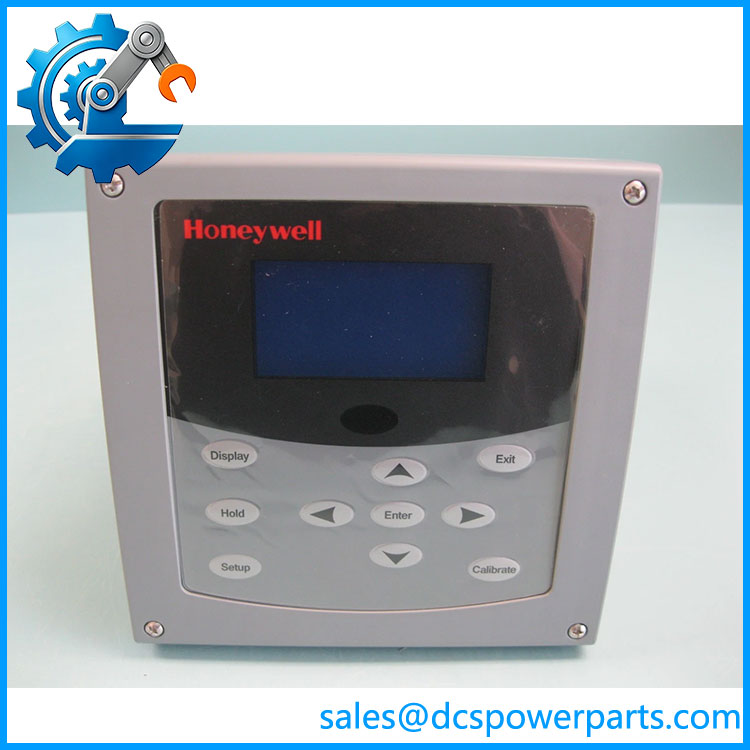
UDA2182-PH1-NN2-NN-N-00C0-EE
Product Introduction
The Honeywell UDA2182-PH1-NN2-NN-N-00C0-EE is a configured dual-input analytical analyzer intended for monitoring and control of liquid-process analytical variables. In this particular configuration, Channel 1 is equipped for pH/ORP measurement, while Channel 2 is intentionally unpopulated. The analyzer’s standard configuration includes two 4–20 mA outputs and two alarm relays.
This configuration is relevant to water-treatment and process-chemistry applications where a dedicated pH/ORP measurement is required without installing a second analytical input. Honeywell lists applications including power-generation water quality, wastewater treatment, pure-water preparation, food and dairy processing, and neutralization processes.
Engineering Pain Point
The main procurement risk with this analyzer is configuration mismatch, not simply identifying the family. A generic may have conductivity, dissolved oxygen, or a second pH input, while this exact configuration has only the PH1 input installed. Replacing it with a different option can therefore leave the existing sensor wiring incompatible with the installed input electronics. Honeywell’s model-selection guide assigns different input-board part numbers to pH, conductivity, and dissolved-oxygen configurations.
Typical Applications
- Boiler and power-plant water treatment: pH monitoring in feedwater, condensate, and related treatment systems.
- Wastewater treatment: continuous pH/ORP measurement for process control and neutralization.
- Pure-water systems: pH monitoring where analytical water quality is tightly controlled.
- Chemical neutralization: process measurement feeding alarm or analog-control systems.
Honeywell specifically identifies power water-quality control, wastewater influent/effluent, pure-water preparation, food and dairy applications, and neutralization among application areas.
Technical Pitfalls to Avoid
- Do not substitute a generic without checking the input code.
PH1specifies the pH/ORP input board;CC1,DM1, andDB1represent different analytical inputs. - Do not assume Channel 2 is available.
NN2explicitly specifies no second input in this configuration. - Check the actual sensor type before commissioning. pH and ORP measurements use different sensor technologies and calibration procedures even though Honeywell groups them under the PH1 input selection.
- Do not assume additional relay or analog-output capacity.
NNmeans the optional additional analog output/relay board is not selected. The analyzer’s standard two 4–20 mA outputs and two alarm relays remain part of the basic unit. - Check communication requirements before ordering. The
Ncommunication selection specifies no communications option in the ordering guide. Do not assume a particular Modbus or other digital communication interface merely because another configuration supports it. - Verify the exact suffix against the nameplate. The complete configuration string is more informative than the base
designation when replacing an installed analyzer.
Related Products
- Honeywell -PH2 — configuration using a pH/ORP input on Channel 2; useful when a second analytical channel is required.
- Honeywell -CC1 — configuration using a contacting-conductivity input on Channel 1 rather than pH/ORP.
- Honeywell -DM1 — configuration for dissolved oxygen measurement in ppm range.
- Honeywell -DB1 — configuration for dissolved oxygen measurement in ppb range.
- 51453313-501 — UDA pH input board corresponding to the PH1 selection.
- 51453316-501 — UDA conductivity input board used by the CC configuration.
- 51453319-501 — UDA dissolved-oxygen ppm input board.
- 51453319-502 — UDA dissolved-oxygen ppb input board.
- 51453328-501 — Optional UDA additional analog-output and relay board associated with the C3 selection.
Procurement Note
For a replacement UDA2182-PH1-NN2-NN-N-00C0-EE, specify the complete configuration code, not simply “Honeywell .” The critical matching points are the PH1 input, unpopulated NN2 second channel, NN additional-output selection, N communications selection, mounting/documentation/certification options, PID setting, and language package.
Before installation, compare the analyzer nameplate with the existing purchase specification and confirm the installed pH/ORP sensor, input board 51453313-501, analog-output requirements, alarm wiring, supply requirements, and communications expectations. Honeywell’s own documentation confirms the ‘s modular configuration architecture, making the full order code important for a like-for-like replacement.