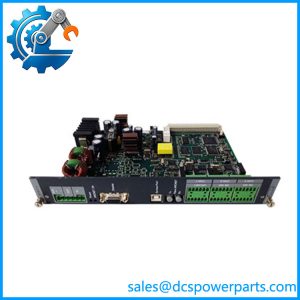
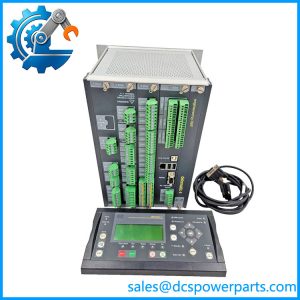
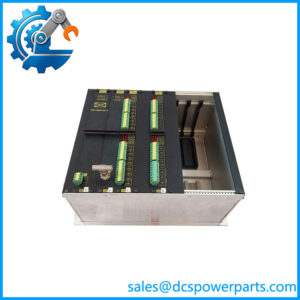
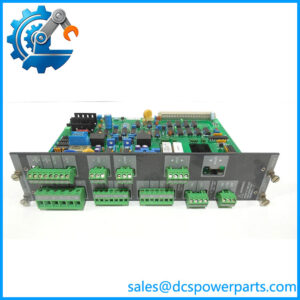
Description
Product Overview
The DEIF FAS-113DG is designed for automatic synchronization of generator sets to a common busbar. Before a generator breaker closes, the synchronizer evaluates the generator’s electrical conditions against the busbar and accounts for the circuit breaker’s closing time. This timing compensation is important because the generator continues moving electrically while the breaker mechanism operates. The relay can issue frequency-control pulses to the prime mover so the generator can approach the required synchronization point. It is intended for power-generation control panels, including marine and industrial installations where generator connection must follow defined electrical limits.
The DEIF FAS-113DG provides front-panel LED indications for operating status, voltage and frequency differences, synchronization state, and control outputs. Its settings include control-pulse duration, proportional range, allowable slip frequency, acceptable voltage difference, and breaker closing time. These adjustments must be matched to the generator’s response and the installed breaker rather than copied blindly from another installation. The product family supports different supply and measuring-voltage configurations, so the exact unit’s nameplate is essential when selecting a replacement.
For maintenance teams, the main procurement risk is ordering the correct model with the wrong electrical configuration. Verify the complete part number, supply voltage, measuring voltage, frequency setting, and any option suffix before installation. Confirm the relay outputs and control wiring against the existing panel drawings. After replacement, qualified personnel should validate voltage sensing, frequency-control direction, breaker timing, synchronization permissives, and the actual breaker-closing sequence under the site’s commissioning and electrical-safety procedures.
Product Introduction (Non-Templated)
A generator that reaches the correct frequency can still be unsafe to connect if its phase angle or voltage difference remains outside the permitted window. The DEIF FAS-113DG coordinates these checks and compensates for breaker operating time before issuing a synchronization command.
Before replacing the relay, compare its supply and measuring-voltage ratings with the panel drawings. A model-number match alone does not confirm that the electrical execution is correct.
Key Technical Specifications
| Parameter | Value |
|---|---|
| Manufacturer | DEIF |
| Model | FAS-113DG |
| Product family | uni-line |
| Product type | Automatic synchronizer with frequency control |
| Primary application | Generator-to-busbar synchronization |
| Synchronization inputs | Generator and busbar voltage measurements |
| Monitored conditions | Voltage difference, frequency difference, phase angle |
| Breaker control | Relay output for circuit-breaker closing |
| Breaker closing pulse | 400 ms in the documented standard configuration |
| Frequency-control outputs | Relay contacts for increase/decrease frequency control |
| Voltage-control output | Analog output functions are documented; exact execution must be checked |
| Measuring-voltage options | Multiple AC ratings; select according to the nameplate and datasheet |
| Supply options | AC and DC variants are documented |
| Frequency range | 40–70 Hz range is specified in the datasheet |
| Mounting | 35 mm DIN rail or base mounting |
| Operating temperature | −25°C to +70°C in the documented specification |
| Enclosure protection | IP40 housing; IP20 terminals |
| Insulation | Input/output isolation specified in the manufacturer documentation |
| Manufacturer reference | 2913010160; confirm complete order code and suffix |
| Condition | Confirm from the individual unit’s inspection and quotation |
The FAS-113DG has multiple electrical configurations. The voltage ratings, supply type, and optional functions must be checked against the exact order code; do not infer them from another unit carrying the same model name.
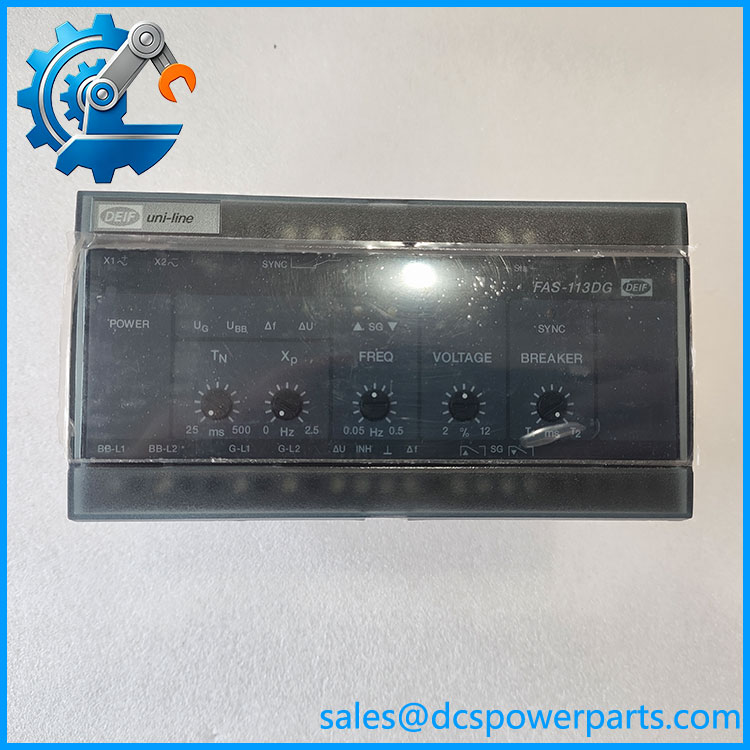
FAS-113DG
Related Products
The following DEIF products are relevant when evaluating generator synchronization and control-panel replacements. They are not direct substitutes without an application and wiring review.
- DEIF FAS-115DG — Automatic synchronizer in the same general product family. Confirm the required control functions and electrical configuration before considering it as an alternative.
- DEIF HAS-111DG — Semi-automatic/manual synchronizer with voltage-control and synchronism-check functions; its operating approach differs from the FAS-113DG.
- DEIF uni-line synchronizing relays — Related relay family for generator synchronization and associated control functions. Select by documented application and electrical ratings, not family name alone.
Frequently Asked Questions
1. What does the DEIF do?
It synchronizes a generator to a busbar by monitoring voltage, frequency, and phase angle. When the configured conditions are met, it issues a breaker-closing command while accounting for breaker operating time. It also provides frequency-control outputs to adjust the prime mover.
2. Can I hot-swap the while the generator is running?
Do not assume hot-swapping is permitted. This relay is part of a generator synchronization and breaker-control circuit. Follow the equipment manufacturer’s instructions and the site’s electrical isolation procedures. Any replacement or wiring work should be performed by qualified personnel, with the generator and breaker placed in an approved safe state.
3. Does the support firmware v3.1?
A firmware version such as v3.1 has not been verified for this model in the available manufacturer documentation. The is documented as a synchronizing relay with adjustable hardware settings. Confirm the exact product revision and any electronic configuration requirements from the nameplate and applicable documentation.
4. How do I confirm the correct voltage version?
Read the complete nameplate, including the measuring voltage, supply voltage, and product/order number. Compare these values with the existing panel drawings and the manufacturer’s datasheet. Do not rely on a generic listing that states only “,” since different electrical executions are documented.
5. What should be checked during commissioning?
Check generator and busbar voltage sensing, phase and frequency measurement, frequency-control direction, synchronization settings, breaker closing-time compensation, status indication, and the breaker-close circuit. Test the complete synchronization sequence under an approved commissioning procedure before returning the generator to service.
6. How can I verify whether a supplied is new or refurbished?
Request photographs of the nameplate, terminal connections, enclosure, and any visible wear. Obtain written confirmation of the condition category and ask for test records covering the relay’s sensing and output functions. For refurbished units, confirm which functions were tested and what warranty applies to the specific unit.
7. Can the replace a different DEIF synchronizer?
Not automatically. Models within the same product family can differ in automatic versus semi-automatic operation, voltage-control functions, and electrical configuration. Compare the control philosophy, input ratings, output contacts, breaker timing requirements, and panel wiring before approving a substitute.
Procurement recommendation: Specify DEIF and provide a photograph of the existing nameplate. Confirm the full order number, measuring voltage, supply voltage, and option configuration before purchase. For a synchronization relay, correct electrical configuration and documented functional testing are essential to safe commissioning.