Description
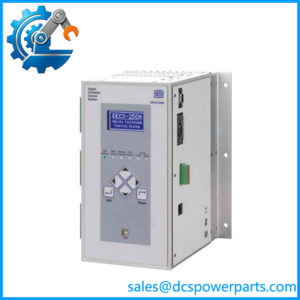
DDK SAN3-40 | AFC1500 Servo Controller | RM3 Nutrunner Axis
Key Technical Specifications
| Parameter | Specification |
|---|---|
| Manufacturer | DDK / FEC |
| Model | SAN3-40 |
| Product Family | AFC1500 SAN3 |
| Product Type | Servo Controller / SAN Unit |
| Supported Motor Type | RM3 |
| Input Power | 180–242 VAC |
| Input Frequency | 50/60 Hz |
| Motor Maximum Power | 200 W |
| Motor Rated Current | 3 A RMS |
| Maximum Tool Torque | 30.0 kgfm / 294 Nm |
| SAN Output | 270–300 VAC PWM |
| Control Method | Torque, angle, and current control |
| Processor | 32-bit RISC |
| Parameter/Firmware Storage | Flash ROM |
| Communication | Two RS-485 ports |
| Typical Application | AFC1500 electric servo nutrunner |
| Related Display | SAN3-DP1 / SAN3-DP2 |
The AFC1500 operations manual specifies SAN3-40 for RM3 motors, with 200 W maximum motor power, 3 A RMS rated motor current, and a maximum tool torque of 30.0 kgfm (294 Nm). The SAN input supply is specified as 180–242 VAC at 50/60 Hz, with 270–300 VAC PWM output to the motor.
The controller uses a 32-bit RISC processor, stores parameters and firmware in Flash ROM, and supports torque, angle, and current control methods. The manual also identifies two RS-485 communication ports: one for AFC user-console software and another for Multi Unit communications.
Product Introduction
The DDK SAN3-40 is an axis-level servo controller in the FEC AFC1500 electric servo nutrunner system. It drives the RM3 motor used on medium-torque fastening tools and provides the closed-loop control required for torque, angle, and current-controlled tightening operations.
The -40 is therefore application-specific hardware rather than a generic servo amplifier. Its compatibility with the connected tool and motor must be confirmed before replacement because the AFC1500 system explicitly checks for SAN-unit and servo-motor type compatibility.
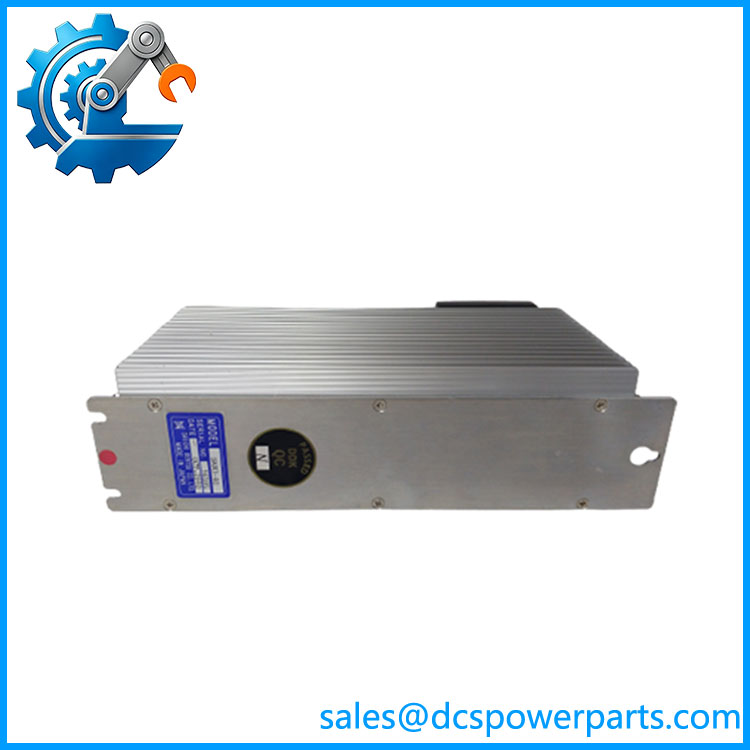
SAN3-40
Application Scenarios & Field Pitfalls — Engineer’s Perspective
Engineering Pain Point
When a -40 fails, replacing it with a physically similar SAN unit is not enough. The architecture assigns different SAN controllers to different motor sizes, and the controller must match the connected tool’s motor type.
Typical Applications
- electric servo nutrunner systems
- Automotive engine and component assembly
- High-repeatability bolt and nut fastening
- Production lines using RM3 servo fastening tools
Technical Pitfalls to Avoid
- Match the RM3 motor/tool combination.
The manuaps to RM3 tools such as NFT-401RM3, NFT-601RM3, NFT-801RM3, NFT-132RM3, NFT-152RM3, NFT-202RM3, and NFT-302 A should not be substituted for a -24 or -120 simply because the units look similar. - Do not cse with -40M.
The family includes multiple configurations, and the operating documentation distinges from -40M/other variants. Verify the exact nameplate designation and system generation before ordering. - Re-enter and verify configuration after replacement.
FEC replacement instructions state that the replacement SAN unit must have the appropriate spindle number and ramp-up settings, and that hardware/software configuration must match. The manual also notes that preset data must be re-entered after replacement. - Check the complete fastening system, not just the controller.
The SAN unit, tool motor, resolver/motor cable, display, and Multi Unit or PLC interface form a coordinated system. A communication or servo fault can originate outsihe .
Related Products
- — Lower-power controller for RM1/RM2-class applications; not a direct replacemeor .
- DDK -60H — Higher-torque configuration for RH3 tools; different motor/application class.
- DDK -120TM — RM4-class controller for higher-power fastening applications.
- DDK -120WM — RM5-class controller for the highest-power fastening applications.
- DDK -DP2 — Display/keyboard unit with RS-232 capability for systems.
- FEC NFT-401RM3 — RM3 servo fastening tool compatiblth .
- FEC NFT-601RM3 — RM3 tool configuration compatiblth .
- FEC NFT-801RM3 — RM3 tool configuration compatiblth .
- FEC Multi Unit — Multi-spindle controller/interface used when multiple SAN units are coordinated.
The documentation specifically states that SAN units must be matched to the correct servo motor type. This makes the tool model and motor designation important procurement information, not optional details.
Procurement Check
Before approving a replacement, verify:
- Exact model:
- system generation
- RM3 motor designation
- Connected NFT tool model
- Tool torque requirement
- 180–242 VAC supply
- Spindle number setting
- Ramp-up setting
- Existing SAN firmware/configuration
- Preset fastening parameters
- Motor/resolver cable
- SAN-DP display arrangement
- Multi Unit or PLC interface
- Hardware revision and nameplate
Recommended procurement description:
DEC Servo Controller, Axis Unit, RM3 Motor Controller, 180–242 VAC, 200 W Motor Capacity, 3 A RMS, 294 Nm Maximum Tool Torque Class.
The critical identification point is = RM3-cl1500 servo controller. It should be purchased as a matched component of the fastening system, not as a generic industrial servo drive. The OEM operating documentation specifically warns that SAN-unit and motor-type compatibility must be verified during replacement.