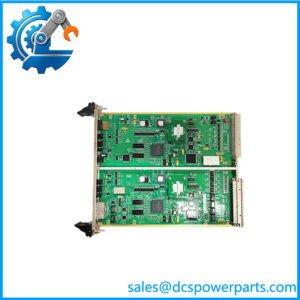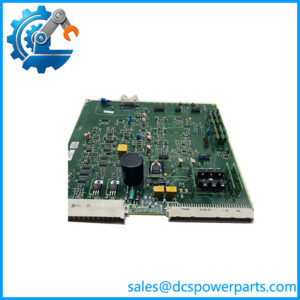
Description
Product Overview
The ALSTOM 730475-D ELEMENTS-F2 is a field-configurable turbine control module designed around a 32-bit microprocessor. Available technical documentation identifies it specifically for controlling a single extraction, extraction/intake, or intake steam turbine. Unlike a general-purpose PLC I/O card, the ALSTOM 730475-D combines control processing with an integrated operator control panel, allowing field engineers to configure the controller and make operating adjustments directly at the unit.
The front-panel operator interface is a significant part of the design: the published description specifies a two-line display with 24 characters per line and a 30-key keypad. The controller can be programmed in the field using menu-driven software, allowing one hardware design to support different turbine or mechanical-control applications. For turbine applications, the controller can interface with HP and LP control valves and regulate or limit parameters such as inlet pressure or flow, exhaust pressure or flow, generator power, process temperature, frequency, and related operating variables.
The ALSTOM ELEMENTS-F2 730475-D should therefore be evaluated as a dedicated turbine-control platform rather than as a conventional PLC CPU. Its application depends heavily on the installed turbine configuration and programmed control strategy. One source specifically describes set values and actual values as two-byte register data, with host access to set points and read-only access to actual values. This makes configuration compatibility especially important when sourcing a replacement.
Key Technical Specifications
| Parameter | Value |
|---|---|
| Manufacturer | ALSTOM |
| Model | 730475-D |
| Functional Designation | ELEMENTS-F2 |
| Product Type | Turbine Control Module |
| Processor | 32-bit microprocessor |
| Configuration | Field programmable/configurable |
| Primary Application | Single extraction, extraction/intake, or intake steam turbine control |
| Operator Interface | Integrated operator control panel |
| Display | 2 lines × 24 characters |
| Keypad | 30 keys |
| Control Valves | Supports HP and LP valve control applications |
| Host Data Structure | Set values and actual values stored as two-byte values |
| Set-Point Access | Host can read/write set values |
| Actual-Value Access | Read-only from host |
| Register Addressing | Hexadecimal addresses |
| Control Variables | Pressure, flow, generator power, frequency, temperature, level, and related process parameters |
| Programming | Menu-driven field configuration |
| Mounting | System/application dependent |
| Firmware | Application dependent |
| Operating Temperature | Not reliably confirmed |
| Power Supply | Not reliably confirmed |
| Condition | New Surplus, subject to inspection and functional testing |
The two-byte set-point/actual-value structure and host read/write behavior are specifically described in available technical material. Exact supply voltage, I/O channel count, environmental limits, and electrical ratings should be verified against the original system documentation rather than inferred from generic listings.
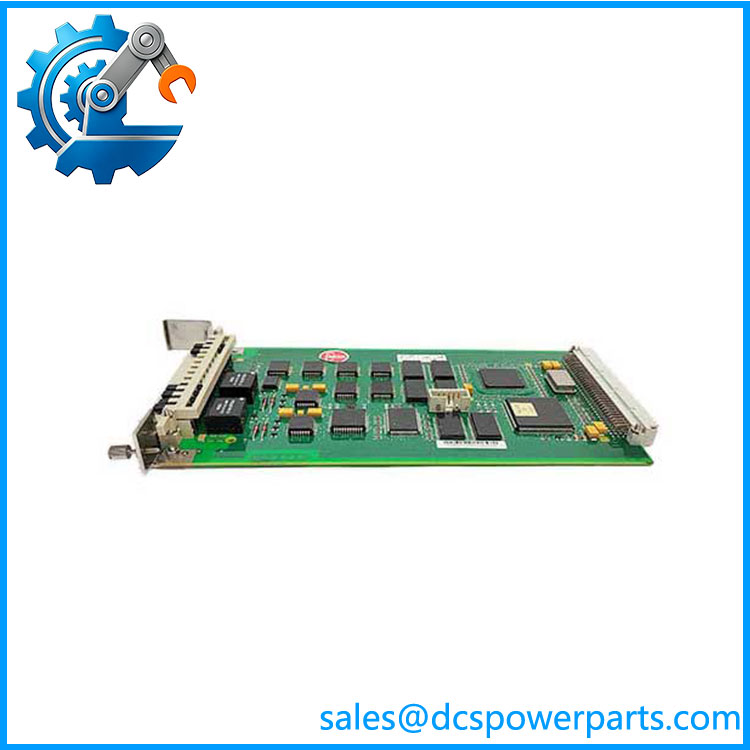
730475-D
Related Products
- ALSTOM N895600512D / N895600051C / ECPU_1 / N895600200Q — Central processor assembly used in a different ALSTOM control architecture. It should not be treated as a direct substitute for the turbine-specific ELEMENTS-F2 controller.
- ALSTOM MLU VER.A01 — Main Logic Unit associated with another legacy ALSTOM control platform. Its central logic role differs from the dedicated turbine-control functions of 730475-D.
- ALSTOM N895609510K / N895609010R / E32OUT / N895609100P — Digital-output hardware. It provides discrete outputs in its host architecture rather than performing the complete turbine-control function.
- ALSTOM N897066510E / N897066010M / AOVD / N897066000A — Analog-output module. It can provide analog control signals in a larger control architecture but does not replace the ELEMENTS-F2 controller.
- ALSTOM N897093511D / N897093051D / DIAGNOSTICA / N897093400H — Diagnostic hardware. It supports system monitoring and fault information rather than primary turbine regulation.
- ALSTOM CMU 42015-115-00 — Legacy ALSTOM control module. It belongs to the broader ALSTOM spare-parts ecosystem but has a different functional identity from .
- ALSTOM 42011-106-00 A01 / ITC_VIOM_VIOC VER.A01 — VIOC I/O processing board for a separate ALSTOM architecture. It is an I/O-processing component, not a direct turbine-controller replacement.
Frequently Asked Questions
1. What is ALSTOM 730475-D used for?
The is a dedicated turbine controller. Available documentation identifies applications involving:
- Single extraction turbines
- Extraction/intake turbines
- Intake steam turbines
- HP and LP control-valve regulation
- Turbine pressure and flow control
- Generator power and frequency control
- Process-related pressure, level, and temperature control
Its field-programmable architecture allows the same controller design to be configured for different applications.
2. Does 730475-D have a built-in operator interface?
Yes. The published description specifies an integrated operator control panel consisting of a two-line, 24-character-per-line display and 30-key keypad.
That interface is used for configuration, operating adjustments, and viewing turbine set values and actual values.
3. Can I use 730475-D for a generic PLC application?
That would not be the normal engineering approach.
Although it uses a microprocessor and is programmable, the unit is specifically designed around turbine-control functions. Its data structures, operator interface, control algorithms, and valve/process application are tied to the architecture.
For a general PLC project, use hardware designed for the required PLC platform instead.
4. Can I hot-swap the 730475-D?
Do not assume it supports hot-swapping.
This is a turbine controller, not a routine I/O slice. Removing it during operation could affect speed/load regulation, valve control, protection-related functions, or communications with the host system.
A controlled shutdown or approved maintenance mode should be used unless the exact turbine-control documentation explicitly authorizes energized replacement.
5. Will I lose my turbine control logic when replacing the controller?
This is the critical replacement risk.
The hardware is field programmable, so the installed configuration can be specific to the turbine application. A replacement unit should therefore be checked for:
- Application program/configuration
- Control-valve setup
- Turbine operating parameters
- Set-point configuration
- Communication/register configuration
- Firmware/software compatibility
A new physical controller without the correct application configuration may power up normally but still be unsuitable for commissioning.
6. Does 730475-D support firmware v3.1?
There is no reliable evidence establishing firmware v3.1 as a universal firmware version for this model.
For replacement work, compare the firmware and application revision of the installed controller with the proposed spare. The application configuration is particularly important because the controller is field-programmable.
7. How should I verify a New Surplus 730475-D before installation?
For a turbine controller, I would require more than a visual inspection.
Hardware checks:
- 730475-D identification
- marking
- PCB and revision information
- Keypad condition
- Display condition
- Connectors and terminals
- Signs of corrosion or storage damage
Functional checks:
- Controlled power-up
- Display/keypad operation
- Processor diagnostics
- Configuration access
- Communication interface
- Set-point read/write behavior
- Actual-value acquisition
- Output/control-channel verification where test facilities permit
Commissioning checks:
- Match the turbine application configuration
- Confirm HP/LP valve configuration
- Verify scaling and set points
- Confirm permissives/interlocks
- Perform controlled startup testing
Procurement judgment: The strongest available evidence identifies as a 32-bit, field-configurable turbine controller with an integrated 30-key operator panel, specifically intended for single extraction, extraction/intake, or intake steam-turbine applications. Some online listings attach unrelated pulse-control, power-supply, or railway-control descriptions to the same part number, so those claims should not be accepted without primary documentation.