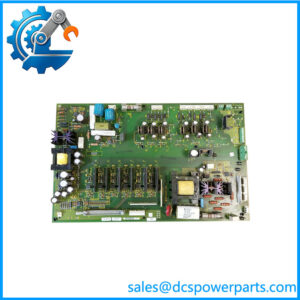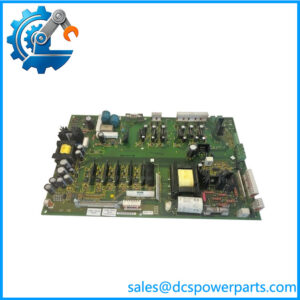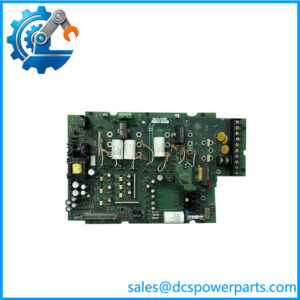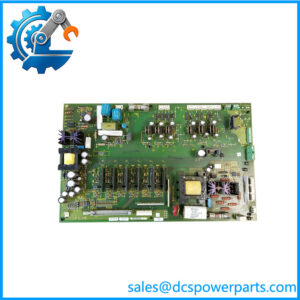
Description
Key Technical Specifications
| Parameter | Specification |
|---|---|
| Product Model | 1394C-SJT22-A |
| Manufacturer | Allen-Bradley / Rockwell Automation |
| Product Line | Bulletin 1394 |
| Series | C |
| Module Type | System module / servo controller |
| Input Voltage | 324–528 VAC; nominal 360–480 VAC |
| Input | 3-phase, 50–60 Hz |
| AC Input Current | 28.6 A |
| DC Bus Output | 530–680 VDC |
| Continuous Output | 17 kW at 360 VAC / 22 kW at 480 VAC |
| Continuous Output Current | 33.8 A |
| Peak Output Current | 200 A |
| Analog Interface | ±10 VDC |
| Communication / Interface | SCANport |
| Efficiency | Approximately 98% |
| Line-Loss Ride Through | 20 ms |
| Internal Capacitance | 660 µF |
| Weight | Approximately 16.24 kg |
| Typical Configuration | Multi-axis 1394 servo system |
The 1394C-SJT22-A is specifically documented as a Series C system module, rather than an individual axis module. Rockwell’s technical documentation lists 1394C-SJT22-A among the Series C analog system modules.
Product Introduction
The Allen-Bradley 1394C-SJT22-A is a Bulletin 1394 Series C servo system module designed for high-power multi-axis motion systems. It accepts three-phase AC power and provides a high-voltage DC bus for connected axis modules, with a continuous system rating reaching 22 kW at the upper nominal input range. The module also supports ±10 V analog control and SCANport communication.
From a maintenance standpoint, the important detail is the 22 kW system rating and Series C architecture. This is not a drop-in substitute for every 1394-SJT22 variant. Input voltage, series designation, axis-module compatibility, contactor requirements, shunt arrangement, and control interface all need to match the existing motion system. Rockwell documentation specifically distinguishes Series C modules from earlier Series A/B hardware.
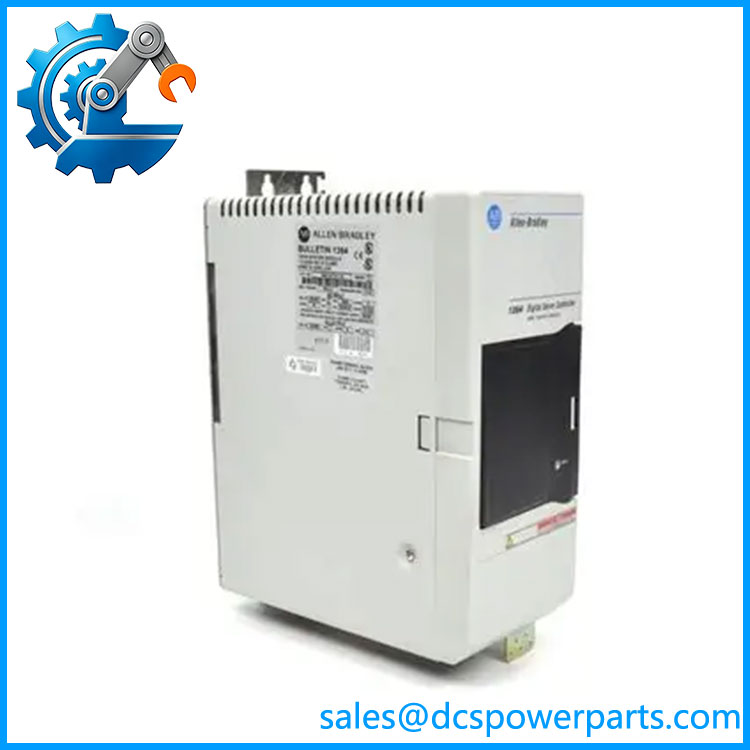
1394C-SJT22-A
Application Scenarios & Field Pitfalls
Engineering Pain Point
A failed 1394 system module can take an entire multi-axis machine offline even when the individual axis modules and motors remain serviceable. Because the system module establishes the common DC bus, an input-stage or power-conversion fault can appear to technicians as a broader axis-control problem.
The 1394C-SJT22-A is therefore a system-level component. Before replacing it, technicians should determine whether the fault originates in the AC input section, DC bus, contactor circuit, shunt arrangement, axis modules, or control interface.
Typical Applications
- CNC and machine tools requiring coordinated multi-axis servo control.
- Large gantry machines where several servo axes share a common power system.
- Material processing and converting equipment with multiple synchronized motion axes.
- Legacy manufacturing machinery built around the Bulletin 1394 multi-axis motion platform.
The 1394 architecture was designed as a multi-axis digital AC motion-control system, with separate system, axis, and shunt modules forming the complete installation.
Technical Pitfalls to Avoid
- Do not substitute by kW rating alone. A 22 kW 1394 unit with a different suffix or series designation may have different control or power characteristics. The complete catalog number and series must be matched.
- Check the DC bus before touching the hardware. The module can produce a nominal DC bus in the 530–680 VDC range. Proper lockout, discharge verification, and the manufacturer’s servicing procedure are mandatory.
- Verify the contactor and shunt configuration. Rockwell’s documentation provides different contactor requirements for 1394 module families, and the configuration has specific power-system requirements.
- Confirm the analog-control architecture. The “-A” designation identifies the analog version; the ±10 VDC interface should not be assumed equivalent to other 1394 control variants.
Related Products
- — earlier Bulletin 1394 analog system-module variant; closely related in power class but belongs to the earlier Series A/B architecture.
- 1394C-SJT10-A — Series C analog system module for a lower power class; useful where the existing system does not require the 22 kW capacity.
- 1394C-SJT05-A — lower-rated Series C analog system module for smaller motion systems.
- 1394C–C — Series C 22 kW system-module variant with a different control architecture; not a direct replacement for the analog “-A” version.
- 1394C–T — Series C 22 kW system-module variant with a different interface/function configuration; catalog suffix must be verified before substitution.
- 1394C–D — another Series C system-module variant; application and interface configuration differ from the “-A” analog module. Rockwell’s conversion documentation lists the different suffixes as distinct module configurations.
- 1394-AENT — associated with later communication-oriented 1394 system configurations rather than the basic analog interface of the -A.
- 1394 Axis Modules — connected downstream of the system module and selected according to the motor/axis requirements; they should be evaluated as part of the complete DC-bus architecture rather than as substitutes for.
Procurement check: For a replacement 1, verify the nameplate for the complete catalog number, Series C designation, and revision. Also compare the existing axis modules, shunt module, input protection, contactor arrangement, and control interface. The older Bulletin 1394 family has several visually similar power modules whose suffixes represent materially different system configurations.