Description
ABB TBU850 Termination Base Unit
Product Introduction
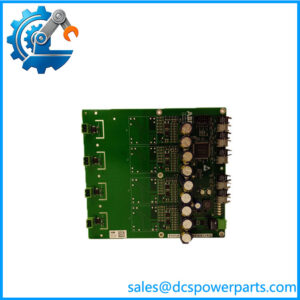
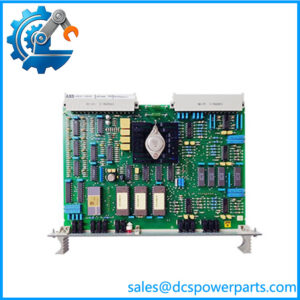
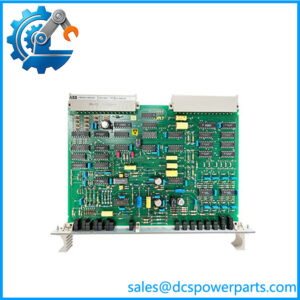
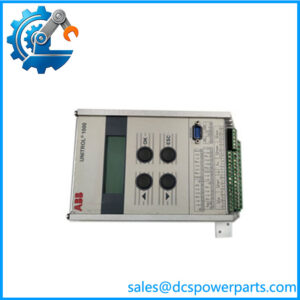
When an MCM800 station has to be replaced without disturbing the complete field wiring, the termination base is often the part that determines whether the repair is straightforward or turns into a cabinet rework. ABB TBU850 is the dedicated termination base unit for the ABB MCM800 machinery condition monitoring system. It provides the connection infrastructure for power, field signals, and communications, while the MPM810 processor plugs directly into the base and executes the configured monitoring functions.
For maintenance and retrofit work, ABB TBU850 should therefore be purchased and documented as a system-specific mounting and termination assembly rather than as a generic PLC backplane. ABB’s MCM800 documentation identifies standard DIN-rail mounting and field termination provisions, with PROFIBUS DP and Modbus RTU used for control-system integration through the MPM810.
Key Technical Specifications
| Parameter | Specification |
|---|---|
| Product Model | TBU850 |
| Manufacturer | ABB |
| Product Family | Symphony Plus / MCM800 |
| Product Type | Termination Base Unit |
| System Application | MCM800 Machinery Condition Monitoring |
| Processor Module | MPM810 |
| Primary Function | Power, field-signal, and communication termination |
| Mounting | Standard 35 mm DIN rail |
| Power Architecture | MCM800 uses +24 VDC / -24 VDC supplies |
| Communication Architecture | PROFIBUS DP v1 and Modbus RTU |
| Field Termination | Compression terminals; ABB data sheet specifies 0.14–1.5 mm² / 28–16 AWG conductors |
| Communication Connectors | D-sub connections for PROFIBUS / Modbus |
| System Ethernet | 10/100Base-T within the architecture |
| System Dimensions | ABB data sheet gives approximately 187 × 210 × 122 mm for the assembled MPM810/TBU850 arrangement |
| TBU Weight | Approximately 775 g according to the ABB data sheet |
| Installation Role | One-slot modular termination base |
| Condition | Verify actual inventory condition, revision, and connector condition before purchase |
The electrical values above should not be interpreted as independent TBU850 operating ratings where they actually describe the complete assembly. ABB’s data sheet specifies +24/-24 VDC system power, approximately 300 mA typical current per supply, and a 7.2 W typical consumption per supply.
Application Scenarios & Practical Pain Points
1. Machinery Condition Monitoring Replacement
The primary use is as the physical base for an station. The MPM810 plugs into the and handles the configured machinery-monitoring functions. These include vibration monitoring, eccentricity, thrust position, differential expansion, and case expansion.
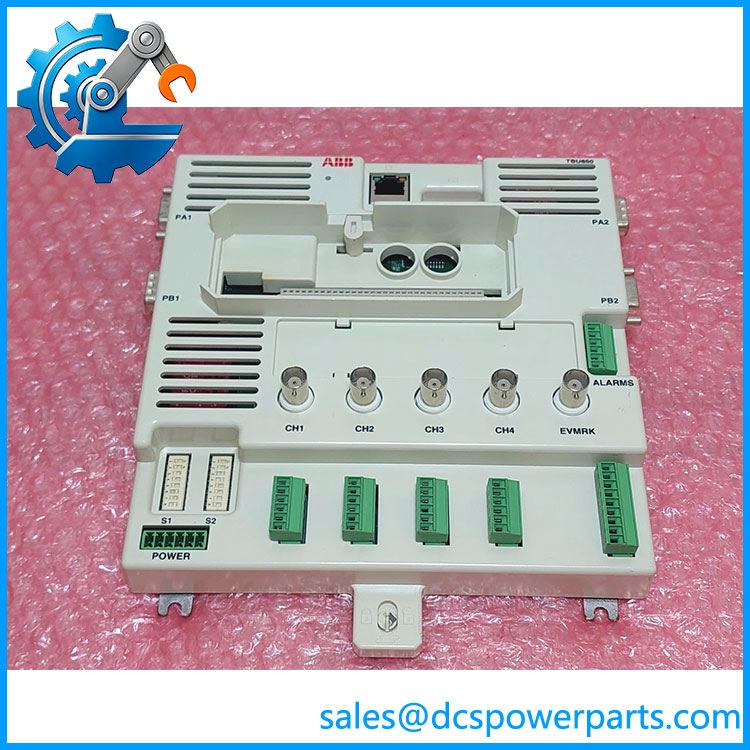
ABB TBU850
2. Turbine Monitoring Cabinets
is part of ABB’s S+ Turbine specialty-module architecture. The platform was designed for turbine supervisory instrumentation where dedicated processing and signal handling are required rather than relying solely on conventional DCS I/O.
3. Legacy Cabinet Maintenance
A damaged termination base can create a surprisingly expensive maintenance problem because the field wiring is already landed on the existing assembly. Replacing the can be preferable to redesigning the cabinet around a different interface arrangement—provided the replacement matches the installed architecture.
4. DCS Integration
The itself is not the DCS communication processor. The MPM810 installed on the executes the functions and communicates with the control system through PROFIBUS DP or Modbus RTU. This distinction matters when preparing a spare-parts list.
Related Products
- — processor module that plugs into the and executes the monitoring functions.
- — Complete machinery condition monitoring platform using the and architecture.
- TBU810 — Termination base used with other S+ Turbine specialty modules such as TP800, VP800, and AS800; it should not be treated as a substitute.
- TPM810 — Analog module associated with the TP800 turbine protection architecture.
- VPM810 — Analog module associated with the VP800 valve-positioning architecture.
- ASM810 — Analog module associated with the AS800 automatic-synchronization architecture.
- CPM810 — Common processor used in the TP800, VP800, and AS800 architecture rather than the ‘s .
Engineer’s Guide — Field Pitfalls to Avoid
1. Do not order when the actual requirement is
This is the most important distinction. is the termination base; is the processor module. ABB explicitly describes the as these two principal components.
2. Do not substitute TBU810 because it looks similar
TBU810 belongs to the TP800, VP800, and AS800 specialty-module architecture. ABB separately identifies as the termination base. Mechanical similarity is not enough to establish interchangeability.
3. Check the field wiring before removing the existing base
The is where power, field connections, and communications terminate. Photographing and documenting the installed wiring, connector positions, cable labels, and termination arrangement before replacement is basic but valuable outage protection.
4. Verify the communication architecture
documentation identifies PROFIBUS DP and Modbus RTU interfaces, with Ethernet also documented in the data sheet. Do not assume every communication interface is physically available or configured identically on every installed station.
5. Inspect the physical assembly, not just the part number
For a used or removed , inspect terminal blocks, connector shells, DIN-rail latch hardware, screw/clamp condition, contamination, corrosion, and evidence of field overheating. A clean label does not prove that the termination hardware is electrically serviceable.
FAQ
Is ABB a complete module?
No. is the Termination Base Unit. The processor plugs into the and provides the processing and control-system communication functions of the .
What does the ABB connect to?
It provides the termination infrastructure for power, field connections, and communications. The is mechanically installed into the .
Is compatible with ?
Yes. ABB’s documentation explicitly identifies the as the processor module that plugs into the .
Is the same as ABB TBU810?
No. is associated with the machinery condition monitoring system. TBU810 is used with other S+ Turbine specialty modules, including TP800, VP800, and AS800. They should not be substituted solely because both are termination bases.
What communication protocols are associated with the /?
The architecture supports PROFIBUS DP v1 and Modbus RTU, with redundant communication arrangements documented by ABB. Ethernet 10/100Base-T is also specified in the data sheet for configuration, control, reporting, and firmware functions.
Can be used for a turbine retrofit?
It can be appropriate where the existing system is based on the ABB architecture. ABB positions within its S+ Turbine specialty modules for turbine supervisory and machinery condition monitoring. For a retrofit, verify the installed , firmware/configuration, field wiring, and control-system interface before treating the base as a direct replacement.
What should procurement verify before buying a ?
At minimum, match , confirm that the installed system is , verify the associated , inspect connector and terminal condition, and confirm whether the required spare is the base unit alone or a complete assembly. If the supplier’s listing gives dimensions or electrical ratings that differ from ABB documentation, use the ABB documentation and the physical nameplate as the engineering reference rather than assuming the listing is correct.