Description
Product Overview
The ABB SPIIT13 INFI-NET to INFI-NET Local Transfer Module is a communication component used in ABB Symphony Plus HR Series and legacy Bailey INFI 90 OPEN distributed control system environments. Its documented purpose is to facilitate communication between two local Cnet networks. In installations where separate network segments need to exchange control-system information, the SPIIT13 forms part of the communication architecture rather than serving as a process I/O module or standalone controller. ABB’s Symphony Plus product catalog lists the SPIIT13 as a local transfer module and identifies the SPIIL02-L as a related bundled local-interface kit.
The module’s published hardware specifications include 8 MB of DRAM, 512 KB of nonvolatile RAM, and 2 MB of flash ROM. It requires a +5 VDC supply at 2 A, with typical power consumption listed as 10 W. A P4 RS-232-C diagnostic port is specified, and the documented ambient operating range is 0°C to 70°C. These values are useful when reviewing replacement requirements, but they do not establish that the module will work in every rack or network configuration. The installed system’s hardware generation, interface components, termination units, cables, and network layout must also be checked.
When procuring an ABB SPIIT13, confirm the exact model marking and inspect the module’s condition before installation. Do not confuse the individual transfer module with the complete SPIIL02-L interface kit, which includes additional network interface modules, cables, termination units, and mounting hardware. For an operating DCS, verify compatibility against the existing system documentation and follow the site’s approved shutdown, replacement, and network-recovery procedures.
Product Introduction
The SPIIT13 is intended for communication infrastructure in ABB’s distributed control systems. It should not be specified as a generic serial gateway: the documented RS-232-C port is identified as a diagnostic port, while the module’s main role is local transfer between Cnet networks. Claims that it provides native Modbus, Profibus, or Ethernet communication should not be assumed without specific supporting documentation.
For a replacement project, record the existing module’s complete designation, rack position, associated network interface modules, and cable and termination-unit part numbers. Confirm that the replacement is appropriate for the installed Symphony Plus or INFI 90 OPEN configuration. After installation, use the approved commissioning procedure to verify module status, network communication, and the exchange of expected system data before returning the affected control functions to service.
Key Technical Specifications
| Parameter | Specification |
|---|---|
| Manufacturer | ABB |
| Model | SPIIT13 |
| Product type | Local transfer module |
| System family | Symphony Plus HR Series / Bailey INFI 90 OPEN |
| Primary function | Communication between two local Cnet networks |
| DRAM | 8 MB |
| NVRAM | 512 KB |
| Flash ROM | 2 MB |
| Supply requirement | +5 VDC at 2 A |
| Typical power consumption | 10 W |
| Diagnostic port | P4, RS-232-C |
| Ambient operating temperature | 0°C to 70°C (32°F to 158°F) |
| Related interface kit | SPIIL02-L |
| Dimensions | Verify against the actual module and rack documentation |
| Weight | Confirm for the supplied unit |
Specifications above are based on ABB’s Symphony Plus product catalog. Confirm the installed-system requirements and the exact supplied configuration before ordering.
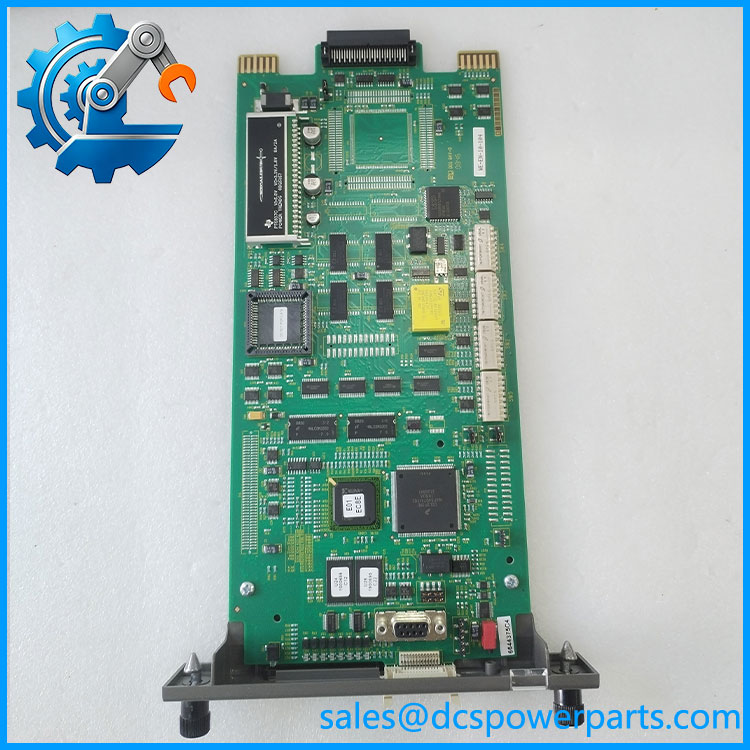
SPIIT13
Related Products
These components are associated with the ABB SPIIL02-L local-interface kit or the surrounding Cnet communication architecture. They are not direct substitutes for the .
- SPIIL02-L — INFI-NET-to-INFI-NET local interface bundled kit; includes the transfer module and supporting components.
- SPNIS21 — Cnet network interface module; the catalog lists two in the SPIIL02-L kit.
- NKLS01-10 — Communication module cable; two are listed in the kit.
- NTCL01 — Communication termination unit; two are listed in the kit.
- IEMMU21 — Module mounting unit included in the kit.
- NFTP01 — Field termination panel included in the kit.
Frequently Asked Questions
Q1: What does the ABB do?
It is a local transfer module that facilitates communication between two local Cnet networks in supported ABB Symphony Plus and Bailey INFI 90 OPEN environments.
Q2: What power supply does the require?
ABB’s catalog specifies +5 VDC at 2 A, with typical power consumption of 10 W. This is the module’s documented supply requirement, not a 24 VDC field-power rating.
Q3: Does the support RS-232 communication?
The catalog identifies a P4 RS-232-C diagnostic port. Do not interpret this as proof that the module provides general-purpose serial protocol conversion.
Q4: Is the compatible with Bailey INFI 90 systems?
It is listed within the Symphony Plus HR Series communication hardware and associated with INFI 90 OPEN installations. Verify compatibility with the exact installed configuration and network architecture before replacement.
Q5: Is the same as ?
No. is the individual local transfer module. is a bundled local-interface kit that includes the along with other communication and mounting components.
Q6: What should be checked before ordering a replacement?
Confirm the model marking, hardware condition, rack and system compatibility, and the required associated interface modules, cables, and termination units. If replacing a complete interface, compare the kit contents rather than ordering only the transfer module.
Q7: What tests should be requested for a used or refurbished ?
Request clear photographs of the actual unit, confirmation of the part number, a written condition statement, and test evidence relevant to the supported rack and communication setup. A visual inspection alone does not establish successful Cnet communication.
Procurement Recommendation
The ABB is a specific communication component for legacy and current-generation ABB DCS environments, not a general-purpose controller. Before placing an order, match the model to the installed network design and determine whether the requirement is for the individual module or the complete kit.
For critical process-control applications, request confirmation of the supplied part number and condition, applicable testing evidence, warranty terms, and lead time. After replacement, verify network status and expected data exchange under the site’s approved commissioning procedure before returning the affected system to normal operation.