Description
Product Overview
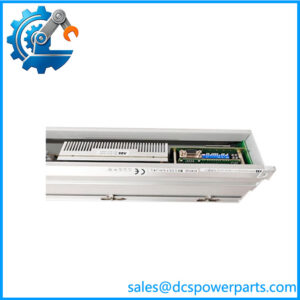
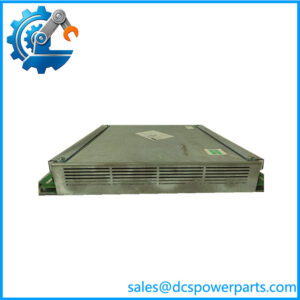
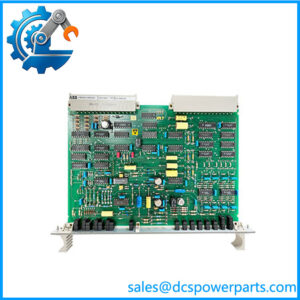
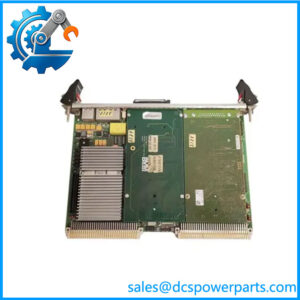
500BIM01 1MRB150024R0002 is the digital acquisition card of a rack whose other members already tell you what it must be. In this block, 500MBA01 and 500MBA02 are the module bus adapters at 150003, 500TRM02 marshals field wiring at 150011, 500AIM02 acquires analog signals at 150022, and 500CPU05 processes at 150081. A BIM sitting at 150024, right behind the analog module and in front of the processor, is the element that reads contact states — breaker auxiliary contacts, pump run feedback, valve limit switches, interlock permissives — and hands them to the controller as binary values. The family’s internal logic therefore settles the abbreviation even though no datasheet does.
That matters, because BIM is the one code in this block whose expansion has been taken two ways. One catalogue calls it a Bus Interface Module and assigns it “likely Profibus DP” communications; several others call it a Binary Input Module. Both readings are superficially reasonable — BIM could plausibly be either — and only one of them is right, which is a rare and dangerous situation in a family where every other disagreement is between a plausible claim and an absurd one. The disambiguating argument comes from the block itself: the bus element already exists, twice, as 500MBA01 and 500MBA02 at the head of the series. A rack does not carry three bus interface modules and no input card, and a module numbered after the analog input and before the processor is an input. So the Bus Interface Module reading is not merely unsupported, it is contradicted by the card the rack already has — which is the useful lesson here: in a factory-planned module series, an expansion that duplicates a sibling’s function is a wrong expansion.
The order code carries a second warning, this one about the block digits rather than the name. 1MRB150024R0002 is the coherent form and matches the sequence — 150003, 150011, 150022, 150024 — but two catalogues print 1MRB160024R0002, with the block reading 16 instead of 15. Those two pages are near-identical in wording, which is how such an error propagates: one writer mistyped a block digit, the next copied the page, and a plausible-looking order code was born that belongs to no module. The consequence is practical and unpleasant: a buyer who queries the sixteen-form against a stock system gets nothing, concludes the part is unavailable, and either pays a broker or abandons a repair. The repair is to check the number against the rack’s own record and against the family sequence, where 150024 is the only value that fits.
The specifications offered for this module are, as usual, invented. One page gives it “16 independent digital input channels”, software-configurable PNP and NPN polarity “without hardware jumper switching”, with a 15–30 V DC input window. Another gives 24 V DC, 200 mA, Ethernet/IP, DIN-rail mounting, 0.5 kg and −20 to +60 °C. Neither is sourced, and both conflict with what the rack format implies: this is a plug-in card for a plant control rack, not a DIN-rail block with an Ethernet stack, and software-selectable PNP/NPN polarity is a feature of modern compact PLC I/O, not of a legacy marshalling rack. The channel count may well be sixteen — it may also be eight or thirty-two, and no accessible document says which. What a buyer can establish without a datasheet is the card’s function, its slot, and the field-side convention its wiring schedule expects.
The release field on this module is plain: R0002, with no trailing letter. That is worth noting only because the family demonstrates the alternative so clearly — R1E on 500CPU05, R1J on 500BIO01, R0002Y on 500AIM02. Where a letter appears it marks a sub-variant of the same release, and where it does not, there is none. Reading R0002 here as “the plain release 2” is correct; treating the lettered forms elsewhere as a different product class is not.
One further member surfaced alongside this order and is worth recording: 500BIO01 at 1MRB150005R0001, listed as a baseplate I/O module with the second-layer code 1MRB200060-E. If that reading holds, BIO in this family does not mean binary I/O at all — the baseplate is the rack’s mechanical and electrical foundation, and its presence at 150005, just after the bus adapters, fits that role. It is a reminder that the naming convention explains most of this family but not all of it, and that a two-digit variant index plus a block position is often more informative than the letters.
Technical Specifications
| Parameter | Value |
|---|---|
| Module designation | 500BIM01 |
| Order code | 1MRB150024R0002 — block 1MRB150024, release R0002 (no trailing letter) |
| Block variant in circulation | 1MRB160024R0002 appears on two catalogues; the 16 block is not part of this series |
| Family | 500xxx rack modules, 1MRB15xxxx block |
| Block position | 150024, after the analog module 150022 and before the processor 150081 |
| Function category | Binary input module — discrete state acquisition into the rack |
| Manufacturer | ABB, Sweden |
| Platform compatibility as stated | Procontrol P13, per listing compatibility fields |
| Release letters in this block | Plain R0002 here; R1E, R1J and R0002Y on siblings |
| Channel count, input voltage window, isolation groups | Not published; the circulating “16-channel” figure is unsourced |
| Mounting | Rack plug-in module; slot per the rack’s layout; DIN-rail attribution on one page is wrong |
| Configuration | Input filtering and processing held in the rack’s configuration |
| Published documentation | None located at module level |
| Lifecycle status | No end-of-life notice located; supply is dismantled and surplus stock |
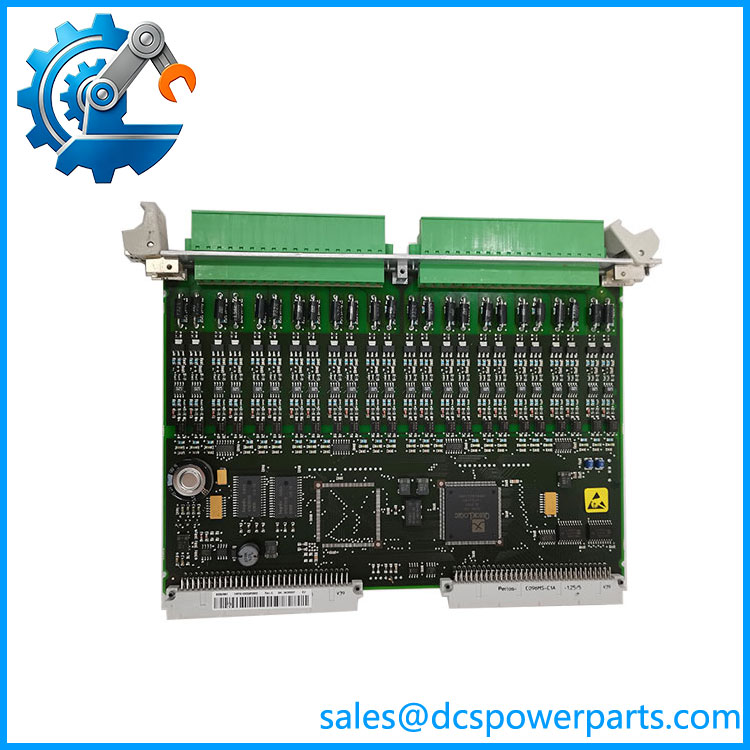
500BIM01 1MRB150024R0002
Key Features and Advantages
An expansion settled by its siblings: BIM as binary input is confirmed by the block, which already contains the bus element twice as 500MBA01 and 500MBA02. An expansion that duplicates a sibling’s function is a wrong expansion — a rule that works across the whole family.
A block-digit trap worth knowing by name: 1MRB150024R0002 fits the series; 1MRB160024R0002 does not, and two catalogues print it because one copied the other. Checking the block against the sequence prevents a “unavailable” conclusion that is actually a typo.
Position in an ordered series: 150003, 150011, 150022, 150024, 150081 place seven known modules of one factory-planned rack in ascending order, allowing an undocumented cabinet to be characterised from its card names alone.
Release literacy: plain R0002 here, R1E, R1J and R0002Y on siblings. A trailing letter is a sub-variant of the same release, not a different product, and its absence is meaningful too.
The digital front end’s real value: binary inputs are where plant interlocks and permissives enter the controller, so their filtering and wetting behaviour — not their headline channel count — determine whether a cabinet reports a chattering contact as a chattering contact or as a plant trip.
No invented numbers: channel count, voltage window and isolation arrangement are absent because no accessible document states them, in a market that offers sixteen channels, software-selectable polarity and a DIN-rail mount for a card that plugs into a rack.
Applications
Plant status and annunciation: breaker auxiliary contacts, pump and fan run feedback, valve limit switches and pressure-switch trips all arrive through cards of this class — the layer that turns the plant’s discrete reality into the controller’s Boolean world.
Interlock and permissive feedback: where a control scheme depends on confirmations — “closed”, “running”, “in position” — the binary input card is what certifies them, and a missing or inverted contact is the difference between a permitted start and a refused one.
Alarm acquisition in legacy cabinets: older plant racks accumulate alarm contacts faster than they accumulate analog measurements, which makes binary input capacity the scarcest resource in a retrofit.
Retrofit and channel reallocation: because spare capacity is rarely available, a replacement card has to match the cabinet’s variant and release as well as its name, or the wiring schedule stops matching the hardware.
Sequence-of-event and trip recording support: fast, debounced state capture at this layer feeds the event log that a plant uses to reconstruct a trip, and the card’s filtering behaviour shapes what that log can honestly claim.
Where it does not fit: bus interface duty, Profibus DP communications, DIN-rail mounting, Ethernet/IP networking, or software-selectable PNP/NPN polarity without jumpers. Each of those has been attached to this number, and the block’s own composition refutes the bus reading.
Related Products
500MBA01 (1MRB150003R0002) — module bus adapter at the head of the same block; the card whose existence makes the “bus interface module” expansion impossible. 500MBA02 (1MRB150003R0003, 1MRB200053/M) — the second bus adapter variant of the same base block. 500AIM02 (1MRB150022R001, 1HDF930412X010) — analog input module immediately preceding this one; the sibling that shares its field-side discipline. 500TRM02 (1MRB150011R1) — terminal module of the same block; the marshalling element whose terminations feed this card. 500BIO01 (1MRB150005R0001, second-layer code 1MRB200060-E) — listed as a baseplate I/O module; the member that shows BIO is not necessarily binary I/O. 500CPU05 (1MRB150081R1E) — processor of the same block; the consumer of this card’s states, and the module with a lettered release. 500CPU03 (1HDF700003R5122) — the processor that circulates with an 1HDF code only; its missing 1MRB half is a data gap rather than a platform difference. 07KT98-H2 (GJR order code) — the older 07KT9x/GJR pattern of the same power-plant control lineage.
Installation and Maintenance
Before installation: confirm the block digits. 1MRB150024R0002 matches the family sequence; 1MRB160024R0002 is a transcription variant that will query as unavailable, so a supplier quoting it is not offering a different module but repeating an error. Then read the slot’s wiring schedule for the field-side convention — wetting voltage, common polarity, channel grouping and terminal assignment all come from the drawing — and confirm the cabinet’s configuration expects this variant before accepting a substitute.
Installation: with the rack de-energised and the field circuits isolated, seat the card to full backplane engagement and land terminations per the schedule. On a binary input card, the checks that matter are at the field side: verify the wetting supply is present and correctly polarised, confirm that no channel is wired to a source whose voltage exceeds what the cabinet’s design anticipates, and check the first few channels against a known contact operation before returning the rack to service. A card that reports inverted states will pass a power-up test and fail a start permissive.
Maintenance: schedule contact and termination inspection rather than card replacement — oxidation at a terminal block, a loosened ferrule and a pitted auxiliary contact produce the same symptom as a failed input channel, and the card is usually the innocent party. Keep the rack’s wiring schedule and its module record archived with the order code and release, and store a spare 500BIM01 labelled with the full code, since a substitute with a different variant or a lettered sub-release may fit the socket and not the schedule.
Warranty and Quality
Every 500BIM01 1MRB150024R0002 module is supplied as a binary input module of ABB’s 500xxx rack family in the 1MRB15 block, documented by designation and full order code, with the block digits verified against the family sequence so that a 16-block transcription error is not passed onward. Units are inspected for terminal and backplane-interface condition, PCB and assembly damage, rework evidence, corrosion, label legibility and the legibility of the release field; verification covers power-up presence and channel response to a known contact operation where a compatible rack is available. No channel count, input voltage window or isolation arrangement is asserted, because none is published: the “16-channel, software-configurable PNP/NPN” description and the DIN-rail, Ethernet/IP and 0.5 kg figures circulating for this module are unsourced and inconsistent with a rack-mounted plant control card. The function is stated as the family’s settled reading — binary input, confirmed by the block’s own composition — and the Bus Interface Module expansion is rejected on the grounds that the bus element already exists at 150003. A 12-month repair, replacement or refund commitment applies. Technical support covers what this part actually requires: distinguishing 150024 from the 160024 transcription, keeping the plain R0002 release distinct from the lettered sub-releases on siblings, and confirming the slot’s field-side convention from the cabinet’s wiring schedule before a spare is dispatched.
免费
今天 10:09