Description
Product Overview
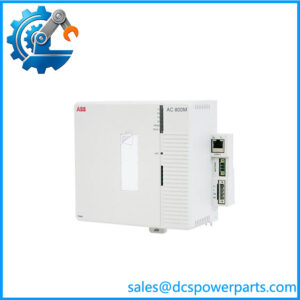
500MBA01 1MRB150003R0002 is the fourth module of a family that has now become legible from the numbers rather than from the descriptions. In the 1MRB15xxxx block, four modules are documented in the trade: this one at 150003, 500TRM02 at 150011, 500BIM01 at 150024 and 500CPU05 at 150081. Those are sequential numbers in one block, which is what a factory-assigned module series looks like — and this module carries the lowest of them, meaning it sits earliest in the sequence, before the terminal, binary-input and processor modules of the same rack. The 500xxx names then tell you what each one does: CPU for the processor, BIM for binary input, TRM for terminal, and MBA here.
Reading MBA is the whole technical question, and the family itself supplies the method. In a naming scheme where three letters spell out a function — CPU, BIM, TRM — the letters are not decoration. MBA read as Module Bus Adapter is the expansion that fits both the convention and the rack it belongs to: a module that couples the rack’s module bus, sitting between the controller and the I/O modules or between the rack and an external bus segment. That reading also explains one of the stranger listings in circulation, which calls this item a “Motor Control Bus Adapter” — a mangled form of the same phrase, where “Module” became “Motor”, and where the function survived the corruption even though the name did not.
Against that, two listings describe the item as a power supply module, and one of them adds that it is the power-supply internal component. That is a genuinely different product class, and it matters for a buyer: a bus adapter is replaced for connectivity faults, a power supply for rail collapse, and the two faults look nothing alike. The evidence behind the power-supply reading is thin — both listings come from the same template tier that misidentifies other ABB families wholesale, and the naming convention argues against MBA being a supply at all, since the family would have called it a supply. The honest position is therefore that the adapter reading is the coherent one, the supply reading is possible, and the rack drawing decides. What can be settled without the drawing is the code structure, and that is the part buyers actually need.
Because this item is not one code. 1MRB150003R0002 is the module-level order code; 1MRB200053 appears beside it on nearly every listing, sometimes with an -L suffix, and at least once as the title of an entirely different product — a motor circuit breaker unit. The plausible reading, supported by the listing that calls the item a power-supply internal component while printing both codes in its product-ID field, is that 1MRB200053 belongs to the internal subassembly or base unit inside the module rather than to the module as delivered. That makes it a second layer of identity, not a substitute article number: quoting 1MRB200053 alone when ordering would be quoting the part inside the box and hoping the box comes with it.
The R field, finally, is not even uniform within this one block. 500CPU05 carries 1MRB150081R1E — an alphanumeric release — while this module carries R0002, four digits. Two release languages inside one sequential family means nobody should normalise order codes by pattern: copy them from the cabinet record, character for character, because the field that distinguishes stock is formatted differently module by module.
One useful corroboration arrived with this order. A listing for 500MBA01 1MRB150003R0002 states, in its compatibility field, Procontrol P13 / P14 — the first explicit platform statement anywhere in this family’s listings, and consistent with the 07KT9x/GJR modules that dealers catalogue alongside these 500xxx parts. It does not turn an inference into documentation, but it puts a platform name on the family, which is more than the AC500, RTU500 or Advant Controller labels ever achieved.
Technical Specifications
| Parameter | Value |
|---|---|
| Module designation | 500MBA01 |
| Order code | 1MRB150003R0002 — block 1MRB150003, release R0002 |
| Second code | 1MRB200053, also seen as 1MRB200053-L; a different identity layer, not a substitute article number |
| Family | 500xxx rack modules with 1MRB15xxxx order codes |
| Family sequence | 150003 (this module), 150011 500TRM02, 150024 500BIM01, 150081 500CPU05 |
| Manufacturer | ABB, Sweden |
| Product type | Rack bus-coupling module (adapter reading); a power-supply reading also circulates and is unresolved |
| Platform compatibility as stated | Procontrol P13 / P14, per a listing compatibility field |
| Dimensions | One listing gives 180 mm × … (truncated); not verified |
| Release-field format | R0002 here versus R1E on 500CPU05 — two formats in one block |
| Mounting | Rack plug-in module; slot per the rack’s own layout |
| Supply, current, channel count | Not published in accessible sources |
| Published documentation | None located at module level |
| Lifecycle status | No end-of-life notice located; supply is dismantled and surplus stock |
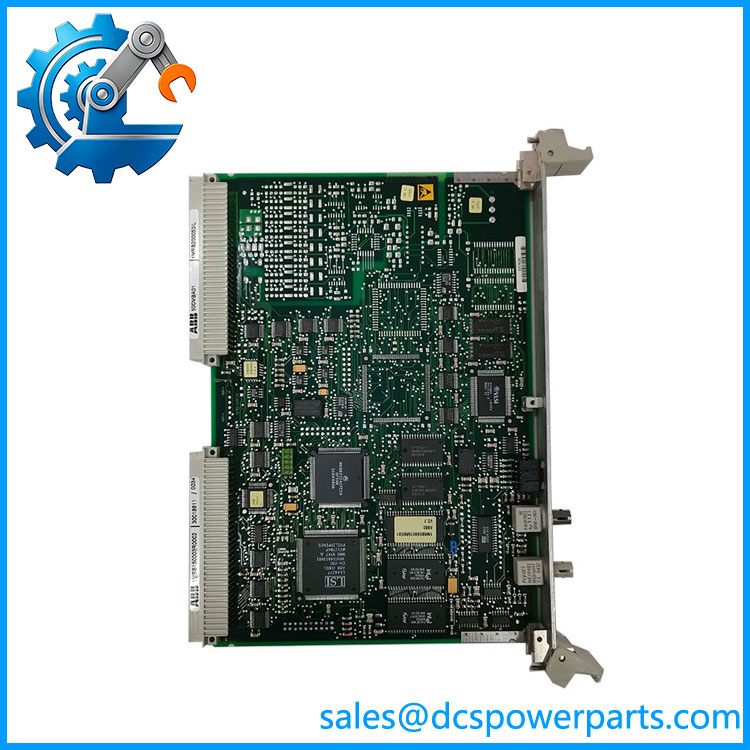
500MBA01 1MRB150003R0002
Key Features and Advantages
The letters decode the module: in a family where CPU, BIM and TRM spell out their functions, MBA read as Module Bus Adapter is the expansion consistent with both convention and rack role — and it explains the “Motor Control Bus Adapter” listing as the same phrase corrupted, not as an independent claim.
Sequential order codes that prove a family: 150003, 150011, 150024, 150081 are consecutive assignments in one 1MRB15 block, so 500MBA01 is a factory-planned member of a module series and not a relabelled part from elsewhere.
Two identity layers, correctly separated: 1MRB150003R0002 for the module, 1MRB200053 for the internal subassembly or base unit. Quoting the second alone is how a buyer receives a component instead of a module.
Release fields that cannot be normalised: R0002 here, R1E on the sibling processor. The family’s release language is inconsistent by design, so only a character-for-character copy of the cabinet record is safe.
A platform name at last: the Procontrol P13/P14 compatibility statement, taken together with the 07KT9x/GJR modules catalogued alongside, gives this family a credible lineage — plant control racks with rack-mounted processors and bus-coupled I/O — rather than the AC500, RTU500 or Advant Controller labels the market attaches to it.
Buyer-grade caution instead of invented numbers: no voltage, current, channel count or bus rate is asserted for this module, because none is published; what is published is structural, and structure is what tells you whether the spare belongs in the rack.
Applications
Motor-control and MCC integration: if the bus-adapter reading holds, the module is the point where a plant controller reaches motor control centres over a bus segment instead of hard-wired status signals — the difference between a cabinet full of auxiliary relays and a segmented, diagnosable motor-control network.
Procontrol P13/P14 plant racks: as a bus-coupling element in a Swedish-origin power-plant control rack, the module’s duty is continuity between the processor and the I/O modules, which is where a rack-wide communication fault usually begins.
Bus segmentation and spur isolation: adapters of this class let a rack be split into segments so that a fault on one spur does not take the whole module bus down — a real requirement in plants where cabinets are spread across boiler, turbine and balance-of-plant areas.
Retrofit of legacy plant cabinets: modules in this block are long out of production, and the practical failure mode is a rack that cannot be repaired because one coupling element is missing rather than because the processor failed.
Spares identification for undocumented racks: 500xxx names on neighbouring modules plus the sequential 1MRB15xxxx codes let an engineer place a rack in its family and generation faster than any serial-number search.
Where it does not fit: AC500 or AC500-eCo PLC duty, Advant Controller 8 duty, touchpad or load-cell duty, or a motor circuit breaker. Those descriptions have been attached to this number and none of them survives the code structure.
Related Products
500CPU05 (1MRB150081R1E) — processor of the same 1MRB15 block; the family anchor and the module whose R1E release shows the block’s format inconsistency. 500BIM01 (1MRB150024R0002) — binary input module of the same block; a field-side partner whose R0002 release matches this module’s format. 500TRM02 (1MRB150011R1) — terminal module of the same block; the marshalling element that pairs with the rack’s I/O modules. 500CPU03 (1HDF700003R5122) — the family’s outlier, carrying a 1HDF prefix instead of 1MRB; proof that the 500xxx name identifies the family while the order-code prefix does not. 1MRB200053 / 1MRB200053-L — the second code printed beside this module; an internal subassembly or base-unit layer, not an alternative article number. 07KT98-H2 (GJR order code) — the older 07KT9x/GJR module pattern of the same power-plant control lineage, catalogued alongside these 500xxx parts. AC500 / AC500-eCo PM5xx modules — the products this family is most often mis-sold as; 1SAP codes and a DIN-rail format separate them conclusively.
Installation and Maintenance
Before installation: settle the function before ordering, because the adapter and supply readings lead to different spares. Read the rack drawing or the cabinet’s module list, confirm whether 500MBA01 sits on the module bus or stands as a separate supply assembly, and copy both codes — 1MRB150003R0002 and 1MRB200053 — from the record rather than from a listing. Check the slot assignment, inspect the backplane connector for bent pins and oxidation, and confirm the release field character by character, since this block mixes R0002 with R1E and the market already mis-copies digits. Work at an ESD-protected bench, photograph the module in place with its cabling, and record the neighbouring 500xxx modules so the rack’s family is documented from then on.
Installation: with the rack de-energised, seat the module to full backplane engagement and secure it per the rack’s mechanical arrangement. On a bus-coupling module, verify termination and segment addressing before energising — a correctly fitted adapter with wrong termination produces exactly the intermittent rack faults it was meant to prevent. Bring the cabinet up, let self-test complete, and confirm that every module on the segment is recognised at its expected address before the plant is returned to service.
Maintenance: treat bus continuity as a scheduled check rather than a fault response — inspect segment cabling, termination resistors and connector condition at planned outages, since adapter faults present as distributed, intermittent I/O errors that are easy to blame on the I/O modules. Keep the rack’s module list, its release fields and its slot map archived with the cabinet, and store a spare 500MBA01 in dissipative packaging labelled with both codes and the rack it belongs to. A module from the same family in another cabinet may be the right name and the wrong layer of identity.
Warranty and Quality
Every 500MBA01 1MRB150003R0002 module is supplied as a member of ABB’s 500xxx rack module family in the 1MRB15 order-code block, documented by module designation, full order code and the second code 1MRB200053, so that it can be matched against a cabinet record instead of a description. Units are inspected for connector and backplane-interface condition, PCB and assembly damage, rework evidence, corrosion, label legibility and the legibility of both codes; verification covers power-up presence and self-test behaviour in a compatible rack where one is available. No voltage, current, channel count or bus rate is asserted, because none is published for this module, and the functional reading — a module bus adapter, with a power-supply interpretation also in circulation — is presented as a reading to be confirmed against the rack drawing rather than as a specification. A 12-month repair, replacement or refund commitment applies. Technical support covers what this part actually requires: decoding MBA against a family whose other members spell out their functions, keeping 1MRB150003R0002 distinct from 1MRB200053, respecting a release field that switches format between and R1E within one block, and confirming the module’s role in the rack before it is dispatched.
免费
今天 09:52