Description
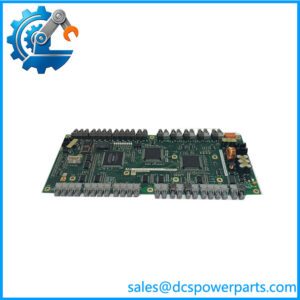
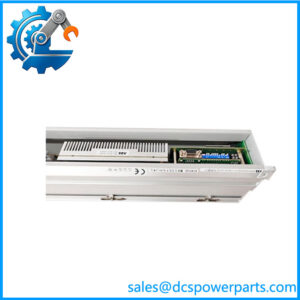
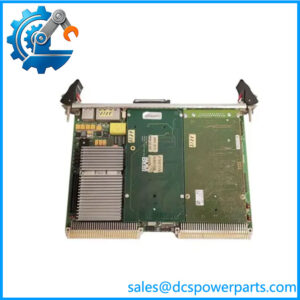
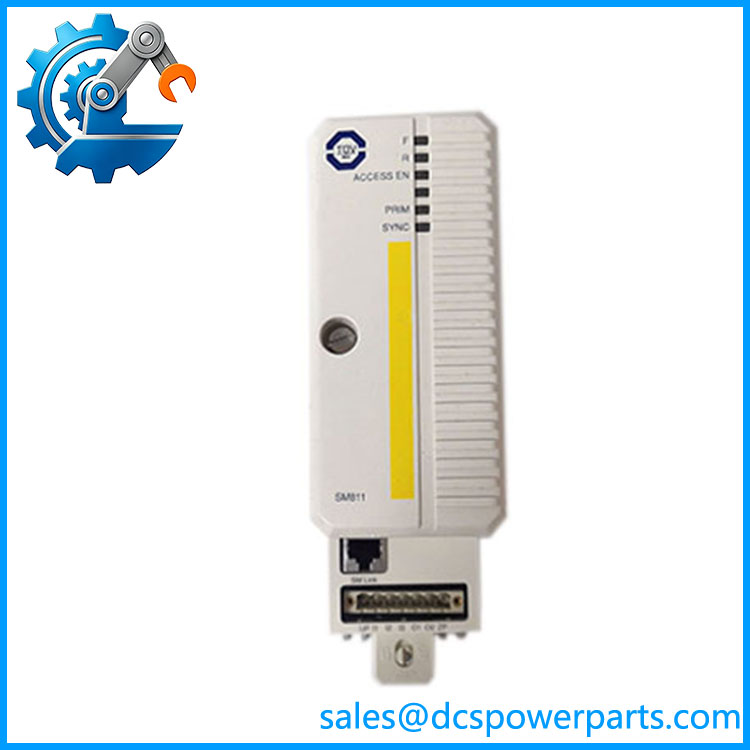
ABB 3BSE018173R1 SM811K01 Safety CPU Module
Product Introduction
In an AC 800M High Integrity installation, the safety CPU cannot be treated like an ordinary controller expansion card. ABB SM811K01, article 3BSE018173R1, is the safety CPU module kit built around the SM811 Safety Module and designed to collaborate with the PM865 processor. ABB’s controller documentation states that SM811 supervises the PM865 during SIL1–2 operation and, together with PM865, forms a 1oo2 diverse architecture for SIL3 applications.
The supplied kit includes the SM811 module, TP868 baseplate, and TK852V10 synchronization-link cable. SM811 connects to the CEX-Bus after a BC810 CEX-Bus interconnection unit, while the SM Link provides synchronization between redundant safety modules. This makes the exact kit configuration important during procurement; ordering an SM811 module without confirming the baseplate, synchronization cable, PM865 generation, and installed safety configuration can create an avoidable commissioning problem.
Key Technical Specifications
| Parameter | Specification |
|---|---|
| Product Model | SM811K01 |
| ABB Article Number | 3BSE018173R1 |
| Manufacturer | ABB |
| Product Family | AC 800M High Integrity |
| Product Type | Safety CPU Module Kit |
| Safety Module | SM811 |
| Baseplate | TP868, 60 mm width |
| Synchronization Cable | TK852V10 |
| Primary Processor Companion | PM865 |
| CPU | MPC862P |
| Clock Frequency | 96 MHz |
| RAM | 32 MB SDRAM |
| Flash Memory | 4 MB Flash PROM |
| System Bus | CEX-Bus |
| Synchronization Interface | SM Link |
| Digital Inputs | 3 |
| Digital Outputs | 2 |
| Nominal I/O Voltage | 24 VDC |
| Digital Input Logic High | 15–30 V |
| Digital Input Logic Low | Below 5 V |
| Digital Output Process Voltage | 12–32 V |
| Maximum Continuous Output Current | 0.5 A |
| Typical Current Consumption | 160 mA from CEX-Bus |
| Maximum Current Consumption | 250 mA |
| Typical Power Dissipation | 3.8 W |
| Electrical Isolation | Yes |
| Insulation Test Voltage | 500 VAC, 1 minute |
| Kit Dimensions | 59 W × 185 H × 127.5 D mm |
| Kit Weight | Approx. 0.6–0.7 kg |
| RoHS 2 Status | Not compliant |
| Lifecycle Classification | Spare for legacy systems |
| Recommended New-Installation Module | SM812K01 |
The processor, memory, CEX-Bus, power-consumption, and physical specifications are documented in ABB’s AC 800M controller hardware manuals. The three inputs are used for functions including Reset All Forces, Access Enable, and Hot-Insert of the safety module; the two outputs indicate Any Force Active and System Alarm. These are High Integrity system I/O, not ordinary process I/O channels.
Major Features / Advantages
Dedicated High Integrity supervision
is designed specifically for AC 800M High Integrity applications. Its principal job is not to execute ordinary process control independently; it supervises the PM865 processor and participates in the safety architecture. ABB identifies as providing supervision of during SIL1–2 operation and, with , forming a 1oo2 diverse architecture for SIL3 applications.
That distinction is important when diagnosing a controller. A may continue to execute standard control applications while the High Integrity portion has a problem. Conversely, replacing without checking the , CEX-Bus path, synchronization link, and safety configuration can leave the original fault untouched.
3BSE018173R1 SM811K01
MPC862P processing platform
The hardware uses an MPC862P microprocessor running at 96 MHz, with 32 MB SDRAM and 4 MB Flash PROM documented for firmware storage. The hardware also includes internal voltage monitoring and overvoltage protection.
These specifications are useful for identifying the correct legacy hardware generation. Do not substitute a generic AC 800M processor merely because its physical dimensions appear similar; the safety module has a specific architectural relationship with .
CEX-Bus integration
connects to the AC 800M CEX-Bus architecture. In a configuration using a BC810 CEX-Bus interconnection unit, ABB specifies that connects to the CEX-Bus after the BC810. Communication interfaces can then be attached through the CEX-Bus architecture.
For field replacement, inspect the BC810 and CEX-Bus connections as carefully as the safety CPU itself. A loose or contaminated connection can produce symptoms that look like a processor failure.
Redundant synchronization
The includes an SM Link used for synchronization of a redundant pair. The SM811K01 kit includes the TK852V10 synchronization-link cable, so the kit is intended to support the physical implementation of this safety-module arrangement.
In redundant configurations, ABB requires corresponding digital inputs on the two safety modules to be connected to common switches. This is particularly relevant for Access Enable and Hot-Insert functions. Wiring these independently without following the approved architecture is not a harmless commissioning shortcut.
High Integrity diagnostic I/O
provides three digital inputs and two digital outputs for High Integrity system functions. I1 is associated with Reset All Forces, I2 with Access Enable, and I3 with Hot-Insert of the safety module. O1 indicates Any Force Active, while O2 indicates System Alarm.
These points should not be counted as general-purpose PLC I/O capacity. ABB explicitly describes them as High Integrity-related digital I/O rather than process I/O.
Hot-swap capability with safety restrictions
ABB documents support for hot swap, but this does not mean an can simply be pulled from a live SIL3 controller without procedure. When a running SIL3 application is involved, ABB’s controller documentation specifies use of the Access Enable function before Hot-Insert and requires synchronization/configuration steps after insertion. The running safety application can be temporarily interrupted during synchronization.
This is one of the most important maintenance points for procurement teams: a module being technically hot-swappable does not mean that replacement is operationally risk-free.
Application Scenarios & Pain Points
AC 800M High Integrity control
SM811K01 is used in AC 800M High Integrity systems where the is paired with a safety CPU for safety-related control. ABB identifies the / combination as the hardware basis for a 1oo2 diverse SIL3 architecture.
Redundant safety CPU configurations
Two modules can operate as a synchronized redundant pair. The TK852V10 cable supplied in the kit provides the SM Link connection required for synchronization. The exact redundancy arrangement must follow the installed safety-system engineering documentation.
Legacy 800xA safety-system maintenance
The part is particularly relevant when maintaining older AC 800M High Integrity installations. ABB’s catalog explicitly states that 3BSE018173R1 is a spare for systems placed on the market before July 22, 2017 and directs new installations toward SM812K01.
Safety-system troubleshooting
The module’s front-panel indicators provide information for Fault, Run, Access Enable, Primary, and Synchronization status. These indicators can help distinguish a processor-state problem from synchronization or system-configuration issues before a board swap is authorized.
Related Products
- — AC 800M processor used with in the documented High Integrity architecture.
- PM865K01 — Processor Unit kit containing and its associated baseplate/terminators.
- SM812K01 — Later Safety CPU module kit intended for new installations and based on the PM867 processor generation.
- TP868 — Baseplate supplied as part of the SM811K01 kit.
- TK852V10 — Synchronization-link cable supplied with .
- BC810 — CEX-Bus Interconnection Unit used when connecting the safety CPU to the CEX-Bus architecture.
- SS823 — Voting Device required in an AC 800M High Integrity 800xA system according to ABB’s system catalog.
- SD831 / SD832 / SD833 — High Integrity power-supply family associated with the AC 800M safety architecture.
Engineer’s Guide — Field Pitfalls to Avoid
1. Do not confuse with alone.
The order number 3BSE018173R1 identifies a kit containing , TP868, and TK852V10. A loose board does not necessarily represent the same supplied package.
2. Do not assume SM812K01 is a drop-in substitute.
ABB associates with , while SM812K01 is associated with PM867. ABB also identifies SM812K01 for new installations. That is a system-generation distinction, not merely a cosmetic revision.
3. Do not treat the three inputs and two outputs as process I/O.
They are reserved for High Integrity system functions such as Reset All Forces, Access Enable, Hot-Insert, Any Force Active, and System Alarm.
4. Follow the hot-swap procedure exactly.
ABB documents hot-swap capability, but inserting an into a running SIL3 application requires Access Enable and synchronization procedures. A replacement can temporarily interrupt applications during state synchronization.
5. Check the CEX-Bus path before condemning the CPU.
is connected through the CEX-Bus, potentially through BC810. A CEX-Bus interconnection fault can mimic a module-level problem.
6. Verify the safety configuration, not just the hardware.
The is a safety-system component. Its capability depends on the certified architecture, configuration, software, wiring, and engineering procedures. The label alone does not make an arbitrary installation .
7. Pay attention to lifecycle status.
ABB explicitly states that 3BSE018173R1 is not RoHS 2 compliant and is restricted to spare-part use for systems placed on the market before July 22, 2017. For new installations, ABB specifies instead.
FAQ
What is ABB ?
is ABB’s Safety CPU Module kit for AC 800M High Integrity systems. Article number 3BSE018173R1 includes the Safety Module, TP868 baseplate, and synchronization-link cable. It collaborates with the processor.
What is the difference between and ?
is the primary AC 800M processor, while is the collaborating safety CPU. ABB describes the pair as forming a 1oo2 diverse architecture for applications. also supervises during SIL1–2 operation.
What processor does use?
ABB’s AC 800M controller hardware documentation specifies an MPC862P processor running at 96 MHz, with 32 MB SDRAM and 4 MB Flash PROM.
Does have Ethernet?
The documented core interface is the CEX-Bus, with an SM Link connection for synchronization. It should not be marketed as a general-purpose Ethernet CPU simply because other AC 800M communication interfaces can be attached through the CEX-Bus architecture.
What digital I/O is available on ?
provides three digital inputs and two digital outputs for High Integrity system functions. The inputs correspond to Reset All Forces, Access Enable, and Hot-Insert; the outputs correspond to Any Force Active and System Alarm.
Is 3BSE018173R1 still suitable for a new AC 800M project?
ABB’s catalog specifically identifies this part as a spare for systems placed on the market before July 22, 2017 and states that should be ordered for new installations. Therefore, 3BSE018173R1 should be treated primarily as a legacy maintenance spare rather than a new-project selection.
Is by itself?
No. ABB’s documentation describes together with as forming the relevant 1oo2 diverse architecture for applications. The claim belongs to the properly configured safety system, not to an isolated replacement module sitting outside that architecture.
What should be checked before purchasing a replacement?
Confirm 3BSE018173R1, , the hardware revision, processor generation, TP868 baseplate, cable, /CEX-Bus arrangement, synchronization configuration, and the installed safety-system version. For used or surplus inventory, verify the actual nameplate and physical condition rather than relying only on a generic photograph.
Procurement Note
3BSE018173R1 is a legacy safety-system spare, not a general-purpose PLC CPU. ABB’s own documentation is unusually clear about its lifecycle: the kit is intended for repair, reuse, functionality updates, or capacity upgrades on systems placed on the market before July 22, 2017; is the designated choice for new installations.
When sourcing a replacement, match the complete article number and installed architecture first. For a safety CPU, a visually similar module with a different processor generation or firmware state is not an acceptable assumption of compatibility. Actual inventory condition, revision marking, included baseplate, and cable should be verified before procurement.