Description
Key Technical Specifications
| Parameter | Specification |
|---|---|
| Product Model | |
| ABB Product ID | 3BSE018105R1 |
| Product Type | Processor Unit Kit |
| Controller Family | AC 800M |
| System Platform | Advant 800xA |
| Processor | MPC860 |
| Processor Frequency | 48 MHz |
| SDRAM | 16 MB |
| Flash PROM | 2 MB |
| Application Memory | 11 MB available in documented configuration |
| Supply Voltage | 24 VDC nominal |
| Supply Range | 19.2–30 VDC |
| Typical Current | 250 mA at 24 VDC |
| Maximum Current | 430 mA at 24 VDC |
| Typical Power Dissipation | 6 W CPU / 11 W including full ModuleBus and CEX-Bus supply |
| Ethernet | 2 × 10Base-T, CN1/CN2 |
| Serial Interface | COM3 RS-232C with modem support |
| Service Interface | COM4 RS-232C |
| ModuleBus | Electrical ModuleBus support |
| CEX-Bus | CEX-Bus communication support |
| Redundancy | CPU redundancy via Redundancy Control Link |
| Memory Backup | Internal/external battery backup facility |
| Protection Rating | IP20 |
| Power Reservoir | Internal 5 ms reservoir |
| Kit Baseplate | TP830 |
| Kit Terminators | TB850, TB807, TB852 |
| Battery | 4943013-6 |
| Approx. Kit Weight | 1.14 kg |
| Approx. Kit Dimensions | 203 × 157 × 135 mm |
ABB’s controller hardware documentation specifies 16 MB SDRAM, 2 MB flash PROM, 24 VDC operation from 19.2 to 30 VDC, 250 mA typical and 430 mA maximum processor current, and IP20 protection for the PM861/TP830 assembly.
The PM861 architecture provides two 10Base-T Ethernet ports, an RS-232C COM3 interface with modem signals, a separate RS-232C COM4 service interface, CEX-Bus capability, and ModuleBus connectivity. ABB also documents PM861 as one of the processor units that can be configured for CPU redundancy.
Product Introduction
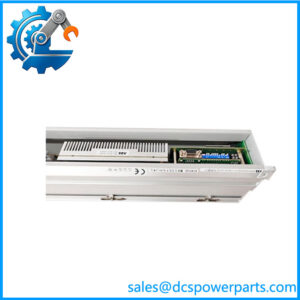
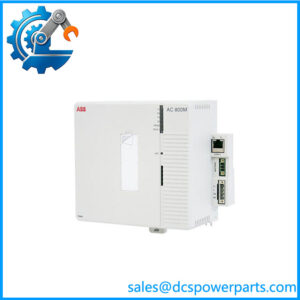
The ABB 3BSE018105R1 is an AC 800M Processor Unit Kit used as the central computing element of ABB control systems. The kit combines the PM861 processor unit with a TP830 baseplate, TB850 CEX-Bus terminator, TB807 ModuleBus terminator, TB852 RCU-Link terminator, memory-backup battery, and power connector hardware. This makes the K01 package different from purchasing the CPU board alone.
The ABB 3BSE018105R1 provides the processing and communication functions required for AC 800M controller applications, including process logic execution, I/O communication, control-network communication, and controller redundancy. With 16 MB SDRAM, dual Ethernet ports, CEX-Bus, electrical ModuleBus, and a documented 24 VDC power architecture, the ABB 3BSE018105R1 remains relevant when maintaining an established AC 800M installation where a controller migration is not yet practical.
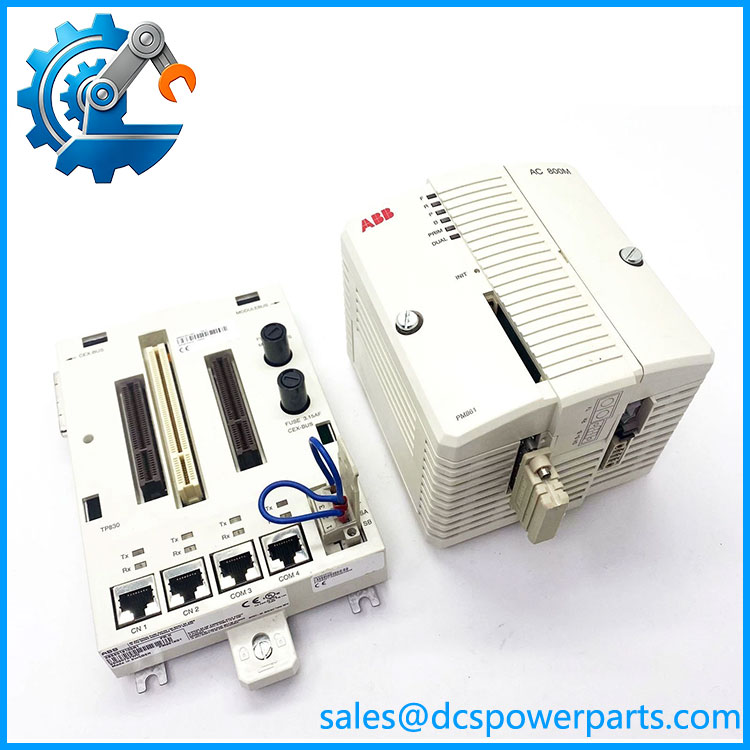
PM861K01 3BSE018105R1
Application Scenarios & Field Pitfalls — The Engineer’s Perspective
Engineering Pain Point
The biggest mistake when replacing a is treating it as just another PLC CPU. In an operating AC 800M system, the processor is tied to the application project, firmware generation, I/O architecture, communication interfaces, redundancy configuration, and controller identity. A physically correct CPU can still create commissioning problems if its firmware and project environment do not match the installed system.
The K01 package also matters from a procurement perspective. refers to the processor unit, while identifies the processor-unit kit with TP830 and associated installation hardware. ABB’s product information explicitly describes 3BSE018105R1 as a ” Processor Unit Kit.”
Typical Applications
- Process DCS control: Central controller for continuous and batch process automation within AC 800M/Advant 800xA installations.
- Plant utility systems: Controller applications for water treatment, power utilities, compressed air, steam, and other plant services.
- Manufacturing automation: Sequence control, interlocking, analog/digital I/O management, and machine coordination.
- Legacy DCS maintenance: Replacement of an aging controller while retaining the surrounding AC 800M architecture.
- Redundant controller systems: supports a primary/backup processor arrangement using the Redundancy Control Link. ABB documentation identifies among the processor units supporting redundancy.
Technical Pitfalls to Avoid
1. Confirm versus .
A processor module and a kit are not the same procurement item. The K01 package includes and the required termination and backup components.
2. Check firmware before commissioning.
installations exist across multiple controller-software generations. The processor’s 2 MB flash PROM stores firmware, while the application resides in SDRAM. A replacement CPU should therefore be checked against the Control Builder/project version and the installed controller revision before loading an application.
3. Do not overlook redundancy wiring.
In a redundant AC 800M configuration, the second processor is part of the controller architecture rather than simply a spare CPU sitting on the same rack. The RCU-Link connection, baseplates, controller configuration, and firmware need to be treated as one system.
4. Check ModuleBus and CEX-Bus loading.
The ‘s documented 6 W typical CPU dissipation increases to approximately 11 W when full supply to ModuleBus and CEX-Bus is included. Power-budget calculations should therefore include connected communication and I/O hardware rather than using the CPU-only figure.
5. Verify the power supply and redundant-status wiring.
The controller uses a four-pin power connector carrying L+, L−, SA, and SB. ABB specifies 19.2–30 VDC for the main supply and separate threshold requirements for the redundant power-supply status inputs.
6. Inspect the battery condition.
The K01 package includes a memory-backup battery. A replacement processor with an aged battery can create an avoidable commissioning issue, particularly when retained application or cold-retain data depends on battery-backed memory.
7. Do not assume both Ethernet ports are interchangeable in every architecture.
The provides CN1 and CN2 Ethernet ports, but network topology and controller configuration determine how they are used. Document the existing control-network arrangement before moving cables to a replacement unit.
Related Products
- — The processor unit contained in the kit. Use this designation when sourcing the CPU itself rather than the complete K01 package.
- — Baseplate supplied with . It provides the mechanical and electrical interface for the processor assembly.
- PM861A — Later processor variant in the family. It should not be substituted solely because the model number appears similar; verify controller version and project compatibility.
- PM864 — Higher-performance AC 800M processor option for applications where the existing architecture is being evaluated for controller replacement.
- PM865 — AC 800M processor unit used in higher-performance controller configurations.
- PM866 — AC 800M processor family member supporting applications with different performance and system requirements.
- PM865K01 — Processor Unit Kit in the same AC 800M family; useful when evaluating a controller migration or performance upgrade.
- BC810 — AC 800M CEX-Bus extender used where the CEX-Bus architecture requires additional physical separation or expansion.
- CI856 — Communication interface for integrating supported ABB S100 I/O into AC 800M architectures, particularly relevant to legacy DCS migration projects.
- SB821 / SB822 — External battery solutions associated with AC 800M controller memory-backup arrangements.
Procurement Note
For an ABB 3BSE018105R1, verify the complete ordering code, processor revision, firmware generation, baseplate requirement, application project version, and redundancy configuration before installation. The physical package is clearly defined by ABB as a processor-unit kit containing the , , three termination components, battery, and power connector.
One additional point is worth checking during procurement: ABB’s current refurbishment documentation still lists U3BSE018105R1 / as a refurbished part, which confirms that this part number remains relevant to legacy maintenance channels even though it belongs to an older AC 800M generation.
For a plant outage, the safer approach is to match the installed hardware and firmware generation first, then verify the Control Builder project and redundancy configuration before the replacement CPU is placed into service.