Description
Key Technical Specifications
| Parameter | Specification |
|---|---|
| Product Model | PFSK164 |
| ABB Part Number | 3BSE021180R1 |
| Manufacturer | ABB |
| Product Family | PFSK |
| Product Type | Tension Control / Processing Board |
| Processor | Intel Pentium III |
| Processor Architecture | 32-bit addressing / 64-bit data capability |
| Cache | 256 KB Advanced Transfer Cache |
| Bus Interface | VMEbus |
| P2 I/O | VMEbus P2 I/O |
| SCSI Interface | PCI Fast/Wide SCSI-2 |
| Serial Interfaces | 2 × 16550-compatible serial ports |
| Parallel Interface | Enhanced parallel port, ECP/EPP |
| USB | Front-panel USB |
| Keyboard/Mouse | PS/2 interfaces |
| Real-Time Clock | Yes |
| System Audio | Miniature speaker reported |
| Typical Application | Industrial tension measurement and control |
| Condition | New Surplus / Used / Tested Refurbished |
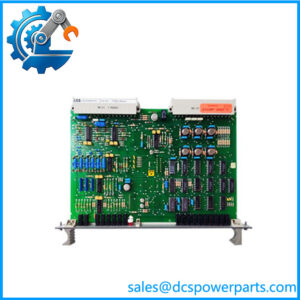
Available technical references identify PFSK164 3BSE021180R1 as an ABB PFSK-series control/processing board. One detailed hardware description specifies an Intel Pentium III, VMEbus P2 I/O, PCI Fast/Wide SCSI-2, two 16550-compatible serial ports, ECP/EPP parallel capability, PS/2 interfaces, USB, and a real-time clock.
There is some inconsistency in secondary descriptions of the exact PFSK164 function. Some sources call it a tension sensor/processing board, while others use broader terms such as pulse-control or channel-control card. The hardware references agree more clearly on the PFSK164 identification and its computer-board architecture than on simplified marketing descriptions.
Application Scenarios & Pain Points
Tension-control failures are rarely convenient. A production line may continue running while product quality deteriorates, making the fault harder to catch than a simple CPU shutdown.
- Paper and film converting: Tension feedback can be processed for winding and unwinding applications where web stability directly affects finished-roll quality.
- Steel processing: Tension regulation is relevant to strip-handling lines where excessive or unstable force can cause tracking problems, surface defects, or material damage.
- Industrial tension measurement: The PFSK family is associated with ABB tension-control applications using sensor/load-cell feedback. Related PFSK hardware is listed alongside ABB Pressductor and tension-control components.
- Legacy control-system maintenance: A PFSK164 spare can be useful when an established tension-control installation remains operational but the original processing board has become difficult to source.
Field note: On an old board, inspect the cooling path before condemning the processor. Dust packed around heatsinks, aging fans, and heat-darkened components can create intermittent behavior that looks like a software or communication fault.
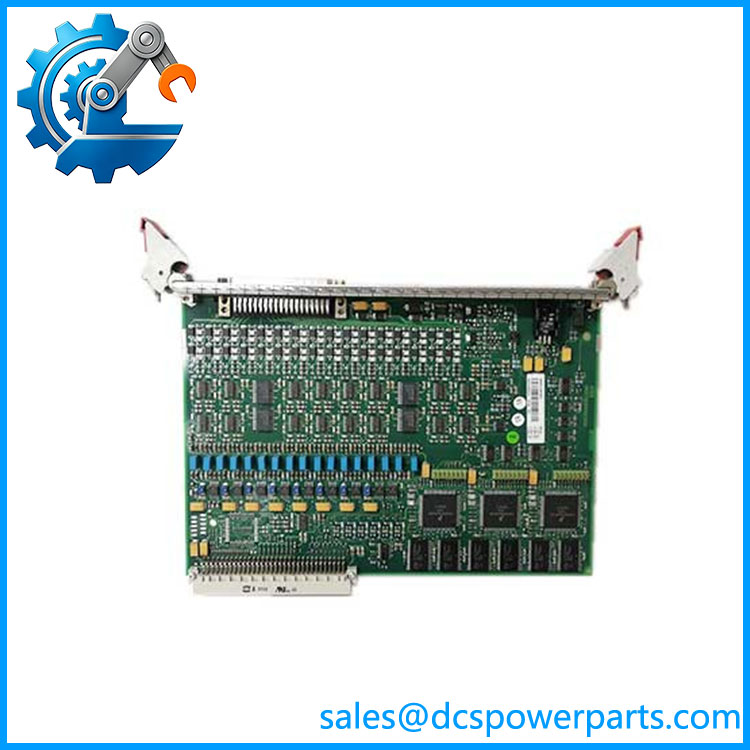
PFSK151 3BSE018876R1
Related Products
- ABB PFSK162 3BSE015088R1 — A closely related PFSK processing board. It is useful for comparison within the same tension-control hardware family, but the different part number means direct substitution requires system verification.
- ABB PFSK160A 3BSE009514R1 — Another PFSK-family control/processing reference. It is relevant to legacy tension-control architectures but should not be assumed electrically or functionally identical to PFSK164.
- ABB PFSK152 3BSE018877R1 — PFSK-series tension-control hardware associated with earlier-generation tension processing. Its architecture and function differ from the computer-oriented board.
- ABB PFSK151 3BSE018876R1 — Another PFSK-series board used in tension-control applications. It is a related spare option, not an automatic replacement.
- ABB PFSK130 3BSE002616R1 — Older PFSK-series hardware. It can appear in legacy tension-system inventories, but its generation and functionality must be checked against the installed system.
- ABB PFEA111 — A later ABB tension-control platform component. It belongs to a different hardware generation and is more relevant when planning a broader tension-system modernization than when performing a like-for-like replacement.
- ABB PFCL301E — Tension-measuring hardware associated with ABB tension-control systems. It is complementary sensor equipment rather than a processing-board substitute.
- ABB PFTL101 — Another ABB tension-measurement/load-cell family reference. It supplies measurement information to the control system and therefore serves a different physical layer from the .
The Engineer’s Guide: Field Pitfalls to Avoid
⚠️ Do not buy by “” alone.
The complete identification is 3BSE021180R1. Legacy ABB boards can have visually similar assemblies and multiple hardware revisions.
How to avoid it: Match the full ABB part number, PCB identification, revision markings, and installed cabinet configuration. A photograph of the actual label is worth more than a generic catalog description.
⚠️ Do not assume every PFSK board is interchangeable.
PFSK130, PFSK151, PFSK152, PFSK160A, PFSK162, and belong to related hardware families, but their functions and system interfaces are not automatically equivalent.
How to avoid it: Confirm the exact application, sensor arrangement, backplane interface, software configuration, and board revision before ordering a substitute.
⚠️ Processor-board storage and configuration deserve special attention.
The is not just a passive signal-conditioning card; available hardware documentation describes a Pentium III-based computer architecture with VMEbus and multiple peripheral interfaces.
How to avoid it: Before replacing the board, preserve configuration data and record communication settings. For a used spare, test the actual interfaces rather than stopping at a power-on check.
Frequently Asked Questions (FAQ)
What is ABB 3BSE021180R1?
ABB 3BSE021180R1 is a PFSK-series industrial control/processing board associated with ABB tension-control applications. Available technical documentation describes an Intel Pentium III processor and VMEbus-based I/O architecture.
Is a standard PLC I/O module?
No. It should not be treated as a conventional digital or analog I/O card. The available hardware description shows a computer-oriented architecture with a Pentium III processor, VMEbus P2 I/O, SCSI, serial ports, USB, and other peripheral interfaces.
What is used for?
It is associated with industrial tension-control systems, particularly applications where sensor feedback must be processed as part of tension regulation. Paper, film, steel, and converting equipment are typical application areas for this type of control hardware.
Can I replace with PFSK162?
Do not assume direct compatibility. Both belong to the PFSK family, but PFSK162 3BSE015088R1 and 3BSE021180R1 have different hardware identities. Confirm the installed system architecture, software, I/O arrangement, and board revision before making the substitution.
What should I check on a used ?
At minimum:
- Full 3BSE021180R1 identification
- PCB revision and component condition
- VMEbus/backplane connector condition
- Serial interfaces
- USB and peripheral interfaces where applicable
- Processor startup and diagnostics
- Configuration/data retention
- Cooling fan and heatsink condition
A board that boots is not necessarily a fully tested tension-control spare.
Does require special testing?
Yes. Because the board is tied to a larger control architecture, a meaningful test should include the backplane interface and applicable communication/peripheral functions. If the board is being used for tension control, testing with the actual sensor/control configuration is much more informative than a simple bench power test.