Description
Product Overview
The ABB INNPM22 is a network processor module designed for ABB Bailey INFI 90 and Harmony distributed control system architectures. It forms part of the communication interface between the plant control network and Harmony control units. In the documented NIS21/NPM22 arrangement, the INNIS21 network interface module handles the network-facing connection, while the INNPM22 performs associated processing and communication routing toward the control units. This division of responsibilities is important when diagnosing network faults or planning a replacement: the processor module should not automatically be treated as the source of every communication failure.
In an established DCS installation, communication modules help move control data, configuration messages, exception reports, and system status information between network nodes and controllers. The INNPM22 belongs to a mature control-system generation, so its value is often tied to maintaining an existing plant architecture rather than adding generic Ethernet or modern fieldbus functionality. Do not assume that it supports Ethernet, Modbus, or PROFIBUS simply because those protocols are common in industrial automation. The actual communication paths are determined by the Harmony system design and the installed interface hardware.
For maintenance teams, the main concerns are module compatibility, network integrity, firmware consistency, and availability of a tested replacement. ABB’s Harmony communication documentation identifies the newer SPNIS21/SPNPM22 nomenclature as the successor naming for the corresponding NIS21/NPM22 generation. A replacement decision should therefore account for the exact hardware generation and any system-specific migration requirements. Where redundant modules are installed, verify the redundancy arrangement and ensure the required firmware revisions match.
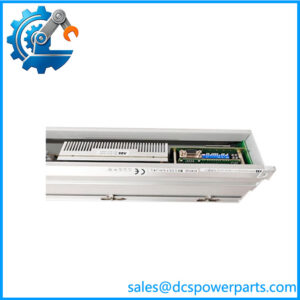
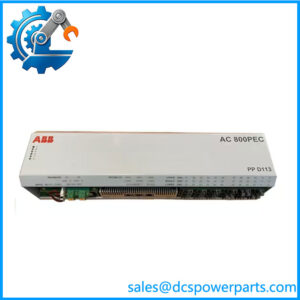
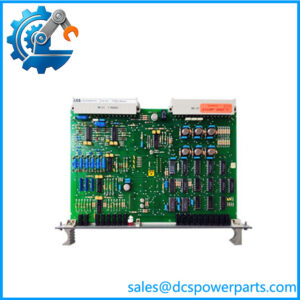
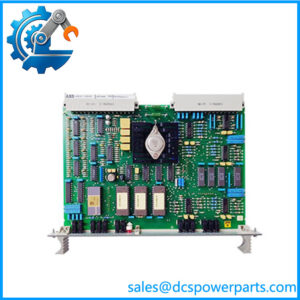
When sourcing an INNPM22, request photographs of the identification label, hardware revision, and front-panel connectors. Establish whether the module is new, unused surplus, or refurbished, and ask what testing was performed. A module that powers up is not necessarily proven to communicate correctly with the installed network interface and controllers. Before returning the system to service, verify network status, controller communication, diagnostics, and redundancy behavior using the plant’s approved procedures.
Product Introduction
The ABB INNPM22 is intended for compatible Bailey INFI 90 and Harmony control-system communication architectures. Its primary role is network processing rather than direct analog or digital field-signal acquisition. Correct operation depends on the surrounding communication modules, control-unit architecture, and system configuration. The INNPM22 should therefore be ordered by its exact model designation and checked against the installed system’s parts list.
Before purchasing a replacement, identify the companion network interface module and determine whether the installation uses a single module or a redundant pair. Confirm the hardware revision, firmware requirements, and any redundancy cable or mounting accessories required by the specific arrangement. Do not mix module generations based solely on physical fit. For older installations, retain a record of the original configuration and verify that a proposed replacement is supported by the applicable system documentation.
Incoming inspection should include label verification, connector condition, evidence of repairs, and a review of supplier test records. During commissioning, check network communication and controller availability before declaring the repair complete. If the original fault involved intermittent network loss, investigate cabling, connectors, the companion interface module, and network conditions as well as the processor itself.
Key Technical Specifications
| Specification | Details |
|---|---|
| Manufacturer | ABB / Bailey |
| Model | |
| Product Type | Network Processor Module |
| Control System Family | Bailey INFI 90 / Harmony |
| Communication Role | Processing between network interface and Harmony control units |
| Companion Interface | INNIS21 for the corresponding NIS21/NPM22 generation |
| Network Architecture | Cnet / INFI-NET and Controlway, according to system configuration |
| Supply Voltage | Reported as +5 VDC |
| Supply Current | Reported as 2 A |
| Typical Power Consumption | Reported as approximately 10 W |
| Memory | Supplier technical listing reports 8 MB DRAM, 512 KB NVRAM, and 2 MB flash ROM |
| Controlway Rate | Reported as 1 Mbaud |
| Modulebus Rate | Reported as 83.3 kbaud |
| Operating Temperature | Reported as 0 to 70°C |
| Installation | Compatible Harmony rack/MMU slot; verify the chassis arrangement |
| Redundancy | Verify configuration, required accessories, and firmware consistency |
| Firmware | Confirm the revision supported by the installed system |
| Protection Rating | Not independently verified |
| Product Condition | Confirm new, surplus, or refurbished status with the supplier |
Specification note: The electrical and memory figures above are reported in available technical listings and should be checked against the applicable ABB manual before installation. In particular, do not use the +5 VDC rating as a reason to connect an external supply directly; the module is intended for its specified rack and power arrangement. <Cite refs={[“turn765758search4″,”turn765758search20″,”turn765758search9”]} />
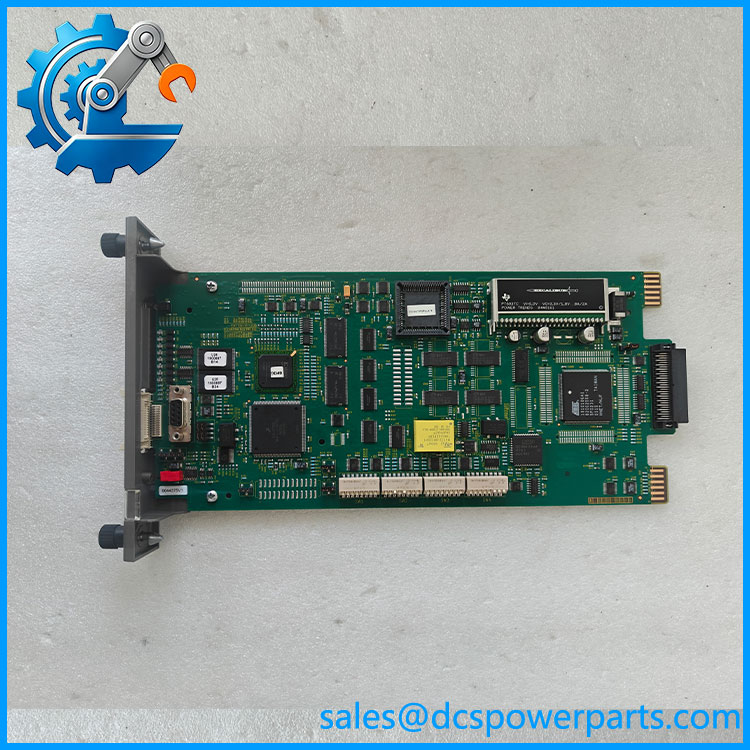
INNPM22
Related Products
- ABB INNIS21 — Network Interface Module: The companion interface for the corresponding NIS21/NPM22 generation.
- ABB SPNPM22 — Network Processing Module: Newer Harmony naming associated with the NPM22 communication-interface family. Confirm migration and replacement requirements.
- ABB SPNIS21 — Network Interface Module: Corresponding newer interface designation.
- ABB INNPM11 — Network Processor Module: An earlier model designation; do not assume direct interchangeability with .
- ABB INNPM01 — Network Processor Module: Another earlier-generation network processor requiring separate compatibility verification.
- ABB Harmony Control Units: The controller modules that exchange data through the communication architecture; identify the exact installed model before planning changes.
These are related system components and generation references, not a list of universally interchangeable replacements.
Frequently Asked Questions
Q1. What is the ABB ?
It is a network processor module used in ABB Bailey INFI 90 and Harmony DCS communication architectures. It processes communications between the compatible network interface and Harmony control units.
Q2. Which module works with the ?
The corresponding INNIS21 network interface module is identified as its companion for the NIS21/NPM22 generation. Confirm the installed hardware generation and system manual before ordering.
Q3. Does the support Ethernet or Modbus?
Do not assume so from the model designation. Its documented role is associated with the Harmony communication architecture. Any connection to external networks depends on the specific interface modules and system configuration.
Q4. What power supply does the require?
Available technical listings report +5 VDC at 2 A, with approximately 10 W typical consumption. Verify the rating and rack power arrangement in the applicable ABB documentation before installation.
Q5. Can the be used in a redundant configuration?
Redundant arrangements are documented for the NIS21/ communication generation. Verify the required module pair, firmware consistency, redundancy cable, and chassis arrangement for the installed system.
Q6. Is the interchangeable with the INNPM11 or INNPM01?
Do not assume direct interchangeability. These are different model generations, and physical fit alone does not establish firmware, functional, or system compatibility.
Q7. What should be checked before buying a replacement ?
Confirm the model and hardware revision, companion interface, firmware requirements, redundancy arrangement, and actual product condition. Request clear label photographs and test records. If the module is refurbished, ask whether testing included communication with a compatible interface and control-system hardware.