Description
Product Introduction
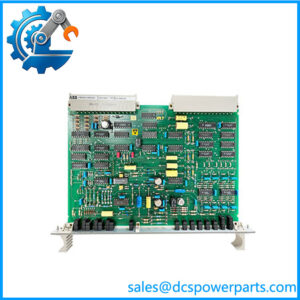
When a legacy control or power-electronics system develops an intermittent trigger signal, replacing the suspected card without checking the surrounding circuit can leave the original fault unresolved. The ABB DSTS104 3BSE007285R1 is identified in supplier catalogs as a trigger pulse amplifier card. Its intended role is associated with pulse-signal handling, but the specific host equipment and signal characteristics should be verified before treating it as a direct replacement.
For maintenance teams, the practical priority is matching the full order number, connector arrangement, and installed hardware revision—not relying on the DSTS104 name alone. Confirm the system’s wiring and commissioning requirements before installation, especially where trigger signals control power-conversion equipment.
Key Technical Specifications
| Parameter | Details |
|---|---|
| Manufacturer | ABB |
| Model | DSTS104 |
| Order number | 3BSE007285R1 |
| Catalog description | Trigger Pulse Amplifier Card |
| Product category | Industrial control circuit card |
| Reported supply rating | 24 V DC |
| Signal function | Trigger-pulse amplification; detailed signal characteristics unverified |
| Communication protocol | Not confirmed |
| Dimensions | Reported width 130.5 mm; height 31.5 mm |
| Weight | Reported 0.22 kg |
| Installation method | Confirm the original chassis or assembly; no verified mounting specification available |
| Operating temperature | Not confirmed |
| Protection rating | Not confirmed |
| Condition | Confirm with the supplying vendor |
The model designation, order number, card description, and reported electrical rating are listed by a supplier. Detailed operating specifications should be checked against the equipment documentation before use.
Application Scenarios & Pain Points
The DSTS104 may be relevant when maintaining an existing ABB control or power-electronics assembly that uses trigger-pulse circuitry. Its exact application should be established from the installed system rather than inferred from the card description alone.
- Suspected pulse-amplification fault: Check the incoming command signal, power supply, connectors, and downstream circuit before condemning the card.
- Unplanned shutdown: Matching the complete part number before ordering helps reduce delays caused by receiving a visually similar but incompatible board.
- Intermittent operation: Inspect connector contacts, contamination, thermal damage, and the condition of the surrounding electronics.
- Legacy equipment maintenance: Record the installed card label, hardware revision, chassis position, and wiring before removal.
A useful field rule: a replacement card does not prove the original fault has been corrected. Verify the complete signal path during commissioning.
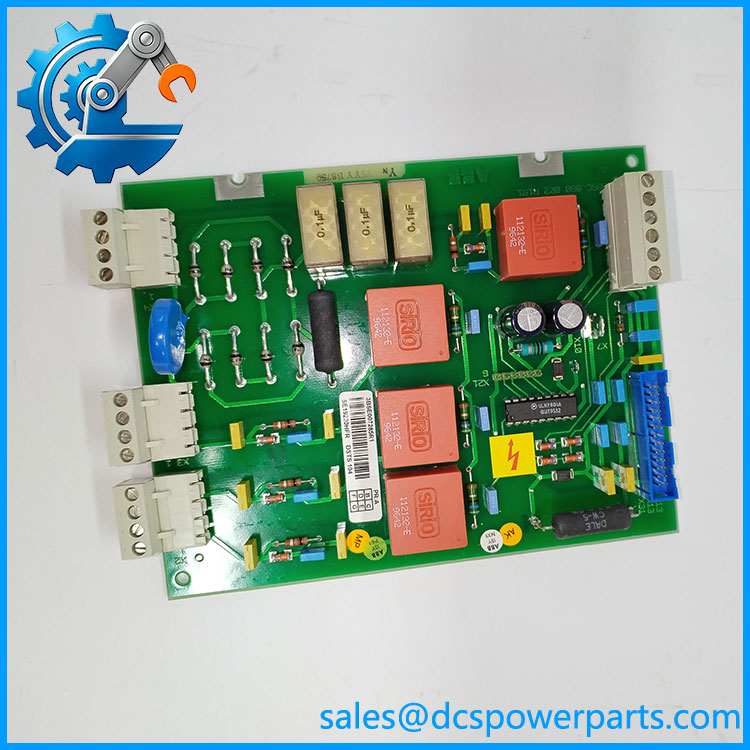
DSTS104
Related Products
The following are potentially relevant items to investigate within an ABB legacy control-system maintenance project. They are not confirmed direct substitutes for DSTS104.
- DSTS106 — 3BSE007287R1: Listed as a trigger pulse generator card. Its stated function differs from the DSTS104 amplifier-card description, so do not assume interchangeability.
- SDCS-IOB-3 — 3BSE004086R1: An ABB option module listed in the same broader spare-parts catalog; verify the specific system role.
- NAMC-03 — 3BSE006065R1: An ABB control board; check the host assembly and control architecture before considering it for the same maintenance scope.
- CI626A — 3BSE005023R1: Listed as a bus administrator board, a different functional category from .
- PM150 — 3BSE003641R1: Listed as a processor module. It is a separate system component, not an equivalent trigger-pulse card.
- AO820 — 3BSE008546R1: An ABB analog output module; potentially relevant to wider control-system maintenance, but not a demonstrated replacement for .
The Engineer’s Guide: Field Pitfalls to Avoid
Pitfall 1 — Ordering by model name alone
A catalog description is not a substitute for a verified equipment bill of materials.
- Match and 3BSE007285R1 against the installed label.
- Compare revision markings and connector arrangements.
- Obtain confirmation of compatibility with the specific host assembly before purchase.
Pitfall 2 — Treating the reported 24 V DC rating as the complete electrical specification
A supply-voltage listing does not establish trigger-input thresholds, output characteristics, current limits, or connection polarity.
- Verify the correct electrical drawing and terminal assignments.
- Do not apply power based solely on a reseller’s short description.
- Check for damage or wiring faults in the surrounding circuit before energizing a replacement.
Pitfall 3 — Installing a replacement without a commissioning plan
A replacement may fit physically yet fail to perform correctly in the installed circuit.
- Follow the equipment manufacturer’s isolation and ESD procedures.
- Photograph and document the original installation before removing the board.
- After installation, test the relevant signal path and interlocks using the approved maintenance procedure.
FAQ
Q1: What is the ABB 3BSE007285R1?
It is described in supplier catalogs as an ABB trigger pulse amplifier card. Its exact function within a particular machine or control assembly needs to be confirmed from the applicable system documentation.
Q2: Does operate on 24 V DC?
A supplier listing reports a 24 V DC rating. Confirm this against the actual card label and its applicable technical documentation before connecting the supply.
Q3: Can replace DSTS106?
Do not assume so. is described as a trigger pulse amplifier card, while DSTS106 is listed as a trigger pulse generator card. Their distinct catalog descriptions are reason to verify the circuit function and approved part substitution before ordering.
Q4: What information should I provide when requesting a replacement?
Provide the complete order number, photographs of the label and connectors, hardware revision, host equipment model, and any available parts-list reference. This makes compatibility checks more reliable than using the model name alone.
Q5: Is a new or refurbished available?
Availability and condition depend on the specific supplier and stock. Request written confirmation of whether the unit is new, unused surplus, or refurbished, and ask what inspection or functional test documentation is included.
Q6: What warranty and lead time should I expect?
These are supplier-specific and cannot be established from the model number. Obtain the warranty period, dispatch estimate, return terms, and test-report availability in writing before placing an order.
Q7: What should be checked if the replacement card does not restore operation?
Check the supply, connectors, incoming trigger signal, downstream circuitry, and associated fault indications. If the same fault remains after replacement, investigate the surrounding system rather than assuming the replacement card itself is defective.