Description
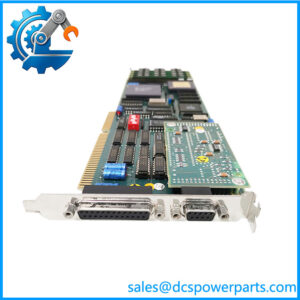
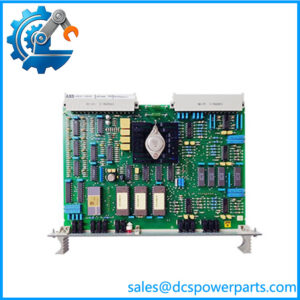
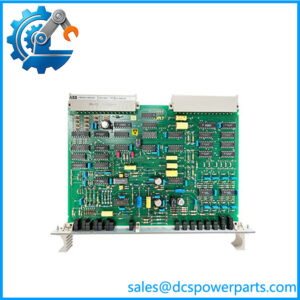
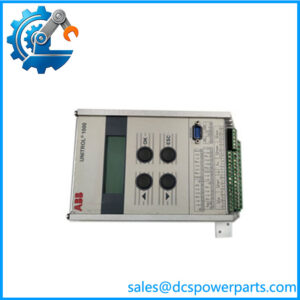
ABB CTB810 Communication Terminal Board
Product Introduction
In an HPC800 installation, the communication accessory has to match the physical bus architecture as well as the controller arrangement. ABB CTB810 is a dedicated communication terminal board positioned on the left side of the MB810 module base used with HPC800 controllers. ABB specifies that it provides connections for HN800 and CW800 devices, making it part of the system-level communication and interconnection hardware rather than a standalone PLC I/O module.
The practical procurement point is simple: ABB CTB810 should be treated as an architecture-specific accessory. It is not interchangeable with every ABB terminal board that happens to carry a similar “810” designation. The right-side counterpart is CTB811, while other HN800 accessories such as bus extenders and terminators perform different physical functions. For DCS expansion, HPC800 cabinet maintenance, or legacy Symphony Plus hardware replacement, verify the MB810 arrangement and the required left/right position before ordering.
Key Technical Specifications
| Parameter | Specification |
|---|---|
| Product Model | CTB810 |
| Manufacturer | ABB |
| Product Type | Communication Terminal Board |
| System Family | ABB Symphony Plus / HPC800 |
| ABB Type Designation | CTB810 |
| Catalog Description | HPC800 Comm.Terminal Board, Left Side |
| Primary Function | HN800/CW800 communications connection |
| Installation Position | Left side of MB810 |
| Associated Module Base | MB810 |
| Supported Controller Platform | HPC800 |
| HN800 Connection | Supported |
| CW800 Connection | Supported |
| Right-Side Counterpart | CTB811 |
| Power Supply | Not specified in the reviewed ABB CTB810 documentation |
| Communication Protocol | Not specified as a standalone protocol interface |
| Operating Temperature | Not specified in the reviewed documentation |
| Protection Rating | Not specified in the reviewed documentation |
ABB’s current product documentation classifies as a Control_System_Accessory, rather than an independent controller or I/O module.
Application Scenarios & Field Considerations
Controller Installation
The is used with the MB810 module base in an controller installation. Its defining characteristic is physical placement: ABB specifies the for the left-hand side of the base.
HN800 / CW800 Connectivity
The board provides the connections required for HN800 and CW800 devices. This makes it part of the communication accessory layer surrounding the controller rather than an application-level signal-processing module.
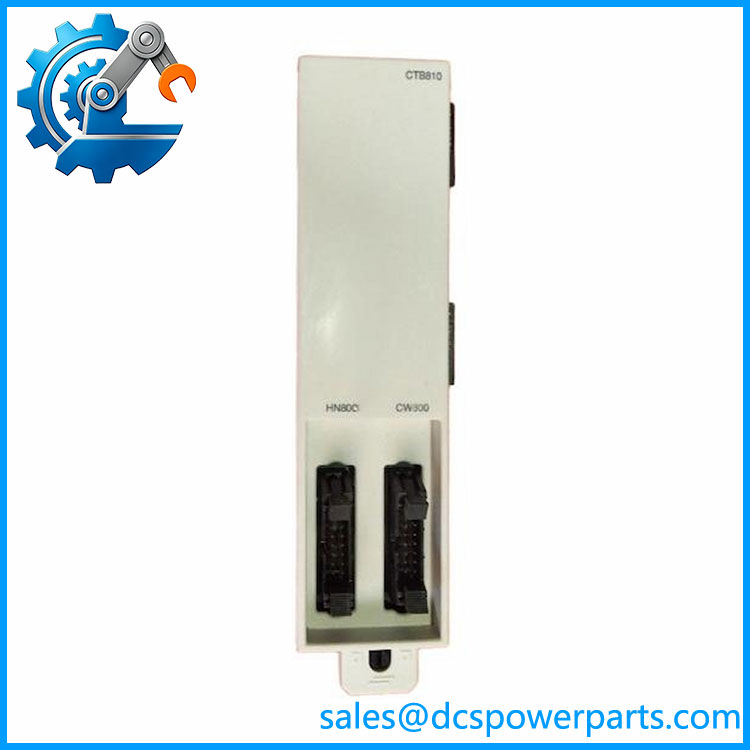
CTB810
Symphony Plus Maintenance
For maintenance teams supporting existing ABB Symphony Plus installations, can become a critical replacement item even though it contains no obvious high-level control function. A missing or incorrect terminal accessory can prevent the intended system architecture from being assembled correctly.
Cabinet Expansion or Hardware Replacement
When replacing a damaged , the left/right orientation matters. ABB separately specifies CTB811 for the right-hand side of MB810. Substituting one based only on the similar model number is not a safe procurement practice.
Related Products
- ABB CTB811 — communication terminal board for the right side of ; it provides and CW800 connections.
- — module base associated with controller mounting; is specifically designed to connect to its left side.
- ABB cHBX01L — compact horizontal bus extender for the left side of devices; it also provides an connector and 24 VDC power connection.
- ABB cHBX01R — right-side compact horizontal bus extender for devices.
- ABB HBX01L — horizontal bus extender for the left side of devices.
- ABB HBX01R — right-side horizontal bus extender for devices.
- ABB TER800 — / bus terminator; ABB specifies one terminator at each end of the bus.
- ABB TER810 — enhanced bus terminator.
Engineer’s Guide — Field Pitfalls to Avoid
1. Do not confuse with CTB811.
The distinction is mechanical and architectural, not merely cosmetic. is specified for the left side of , while CTB811 is the right-side counterpart.
2. Do not treat as a standalone I/O module.
It is a communication terminal accessory for the / architecture. Claims about analog channels, digital channels, independent CPU functions, or standalone fieldbus operation should not be assigned to this part without separate documentation.
3. Verify the assembly before replacing the board.
A terminal board can be mechanically correct but still be wrong for the intended cabinet arrangement. Check the actual base, adjacent hardware, / connections, and left/right position.
4. Avoid copying generic electrical specifications from unrelated ABB products.
The reviewed ABB documentation does not establish an independent supply-voltage, current, temperature, or IP specification for . Those values should not be invented simply because similar ABB communication accessories have published electrical data.
5. Check the complete identification on legacy hardware.
For a field replacement, record the marking, associated base, controller model, revision where available, and cabinet drawing reference. This is more useful than relying on “” alone when several generations of system hardware are present.
FAQ
Is ABB a PLC I/O module?
No. ABB identifies as an Communication Terminal Board and classifies it as a control-system accessory. It is associated with the module base and provides / connections.
What is the difference between and ?
The principal documented difference is installation position. connects to the left-hand side of , while connects to the right-hand side. Both provide connections for and .
Is compatible with the module base?
Yes. ABB documentation specifically describes as connecting to the left side of , the module base used for mounting controllers.
Does provide and connections?
Yes. This is explicitly stated in ABB’s Symphony Plus product catalog and product documentation.
Is the same as an bus extender?
No. ABB lists separately from cHBX01L/R, HBX01L/R, and the vertical bus extenders. These accessories have different physical positions and functions within the architecture.
What should be checked before purchasing a replacement ?
At minimum, verify the identification, base, left-side installation position, controller architecture, / connections, and physical revision/condition. If the existing board is part of an operating legacy system, matching the cabinet drawing and installed hardware is preferable to relying on the part number alone.
Does ABB publish an independent operating-temperature or IP rating for ?
The ABB material reviewed here identifies the board’s function and system position but does not provide an independent operating-temperature or protection-rating specification. Those values should therefore be confirmed from the applicable system documentation rather than assumed.