Description
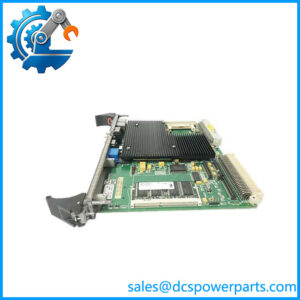
GE IS420YAICS1A Mark VIeS YAIC Analog I/O Pack
Product Overview
Analog signals in a turbine safety-control system need more than simple voltage conversion. The I/O electronics must acquire field measurements, communicate them through the control network, and maintain diagnostic information that the controller can use when evaluating process conditions. GE IS420YAICS1A is the YAIC Analog I/O Pack used in the Mark VIeS architecture to provide this interface between the analog terminal board and one or two I/O Ethernet networks. GE documentation describes the YAIC as supporting up to ten analog inputs and two analog outputs.
The IS420YAICS1A designation also deserves careful attention during procurement. GE documentation for the YAIC family distinguishes the S1A hardware from later configurations, and compatibility depends on the terminal-board revision. The YAIC is not a standalone field-wiring assembly; it plugs directly into a compatible terminal board through a DC-37 connection while using RJ-45 Ethernet connections for I/O network communication. For a replacement, match the complete pack number, terminal-board model, redundancy arrangement, and Mark VIeS configuration rather than ordering by the generic “YAIC” name alone.
Key Technical Specifications
| Parameter | Specification |
|---|---|
| Manufacturer | General Electric |
| Product Family | Mark VIe / Mark VIeS |
| Product Model | IS420YAICS1A |
| Functional Abbreviation | YAIC |
| Product Type | Analog I/O Pack |
| Primary Function | Analog signal acquisition/output and I/O Ethernet interface |
| Analog Inputs | 10 channels |
| Analog Outputs | 2 channels |
| AI Channels 1–8 | ±5 V, ±10 V, or 4–20 mA configurations |
| AI Channels 9–10 | ±1 mA or 4–20 mA configurations |
| Analog Output | 0–20 mA |
| A/D Resolution | 16-bit |
| I/O Network | One or two I/O Ethernet networks |
| Ethernet Connectors | Dual RJ-45 |
| Pack Power | 28 VDC |
| Terminal Connection | DC-37 connector to compatible terminal board |
| Redundancy | Simplex or TMR, depending on terminal board |
| Diagnostic Functions | Power-up and continuous hardware/power monitoring |
| System | Mark VIeS Functional Safety System |
| Safety Capability | Mark VIeS safety architecture; exact SIL capability depends on system configuration |
| Operating Temperature | Verify against the applicable S1A installation documentation |
| Terminal Board | Must match the approved YAIC S1A configuration |
GE’s YAIC documentation states that the first eight analog inputs can be configured for ±5 V, ±10 V, or 4–20 mA, while the last two support ±1 mA or 4–20 mA. The pack also supports two 0–20 mA outputs.
Application Scenarios & Field Considerations
Mark VIeS Safety Analog Measurement
The YAIC provides the electrical interface between process analog signals and Mark VIeS safety control logic. Typical signals can include transmitter current loops and voltage-based process measurements. The exact signal assignment is determined by the terminal-board wiring and control configuration.
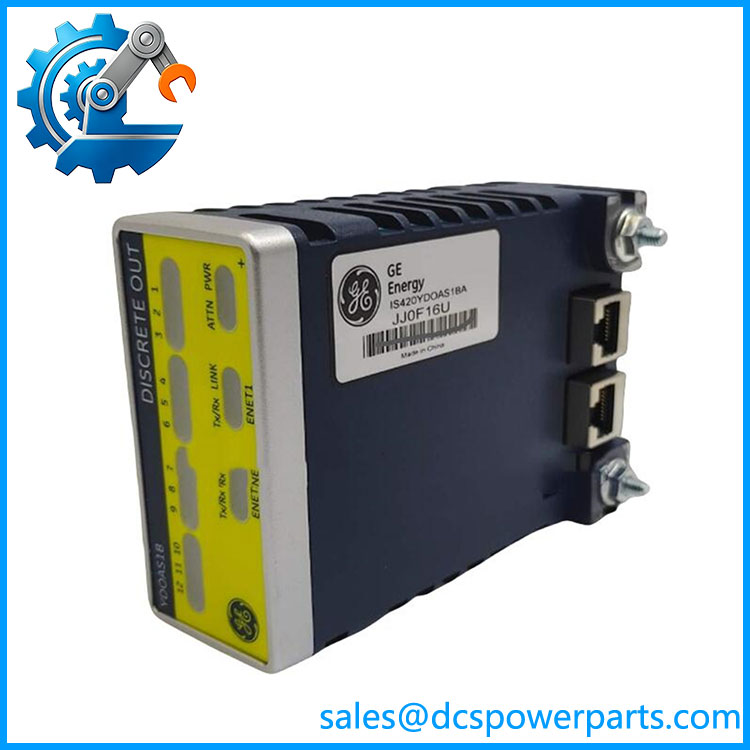
IS420YAICS1A
Turbine Control and Protection
In a turbine application, the pack can form part of the measurement path for process variables that must reach the safety controller. A fault should therefore be investigated at several levels: field transmitter, wiring, terminal board, I/O pack, I/O network, and controller configuration.
Simplex and TMR Architectures
The YAIC architecture supports simplex and TMR arrangements depending on the terminal board. In a TMR arrangement, three I/O packs are used, with each pack communicating through its own I/O network path.
Legacy Mark VIeS Maintenance
This is where the exact IS420YAICS1A number becomes important. Later YAIC versions such as IS420YAICS1B exist, but the A and B hardware should not be treated as automatically interchangeable. Available documentation explicitly warns that different YAIC hardware forms cannot simply be mixed on the same terminal board.
Related Products
- IS420YAICS1B — Later YAIC Analog I/O Pack configuration. It has the same general YAIC function but should not be assumed to be a drop-in replacement for S1A hardware.
- IS410TBAIS1C — Mark VIeS TMR-capable analog I/O terminal board associated with the YAIC architecture. GE documentation specifies one or three YAIC packs depending on configuration.
- IS410STAIS2A — Simplex Mark VIeS analog I/O terminal board associated with the YAIC family.
- IS200TBAIS1C — Earlier terminal-board designation appearing in YAIC compatibility documentation.
- IS200STAIS2A — Analog I/O terminal-board assembly associated with the YAIC architecture.
- IS220YAICS1A — Another YAIC-related Mark VIe designation found in GE documentation; the complete system architecture and hardware generation must be checked before considering it for replacement.
- IS220PAIC series — Mark VIe analog input packs serving a different functional role; do not confuse PAIC with YAIC.
Engineer’s Guide — Field Pitfalls to Avoid
1. Do not confuse YAIC with PAIC.
The YAIC is an analog input/output pack with two analog outputs. PAIC is a different Mark VIe analog I/O family. The names are close enough to cause procurement errors.
2. Match the terminal-board revision.
The YAIC pack is directly connected to its terminal board through the DC-37 interface. GE documentation specifies particular terminal-board combinations for the S1A architecture.
3. Do not mix A and B hardware casually.
The later IS420YAICS1B is not proof of interchangeability with IS420YAICS1A. Documentation specifically notes hardware-form compatibility restrictions.
4. Verify the redundancy architecture.
A simplex installation uses one YAIC pack, while a TMR arrangement uses three packs with separate network paths. Do not remove one member of a TMR set without understanding the resulting system state.
5. Check the configured signal type.
A terminal position may represent a voltage input, 4–20 mA input, ±1 mA input, or analog output depending on the channel and system configuration. Never assume every terminal is a generic 4–20 mA point.
6. Preserve the I/O network assignments.
The two RJ-45 connections are part of the Mark VIeS I/O network architecture. Record ENET1/ENET2 connections before removal and verify the controller-side configuration after replacement.
7. Do not substitute by enclosure appearance.
Mark VIe and Mark VIeS packs share similar physical packaging. Functional designation, hardware revision, terminal board, firmware/software compatibility, and safety architecture matter more than appearance.
FAQ
What is GE ?
is a YAIC Analog I/O Pack used in the GE Mark VIeS Functional Safety System. It interfaces analog field signals with the I/O Ethernet network and associated analog terminal board.
How many analog channels does support?
The YAIC architecture supports 10 analog inputs and 2 analog outputs. The first eight inputs can support ±5 V, ±10 V, or 4–20 mA configurations, while the final two support ±1 mA or 4–20 mA configurations.
What power supply does the YAIC use?
The YAIC I/O pack uses 28 VDC control power. The power connection is separate from the RJ-45 I/O network connections.
Does support TMR?
Yes, the YAIC architecture supports TMR when used with an appropriate TMR-capable terminal board. In a TMR configuration, three I/O packs are used, with separate I/O network connections.
Can IS420YAICS1B replace ?
Do not assume so. The A and B versions represent different hardware configurations, and GE documentation identifies compatibility restrictions between YAIC hardware forms and terminal boards. Verify the exact Mark VIeS system documentation before making the substitution.
What terminal board is used with ?
The YAIC S1A architecture is documented with compatible analog I/O terminal boards including the TBAIS1C and applicable STAIS configurations. The exact board should be checked from the installed system because simplex and TMR arrangements use different terminal-board configurations.
What should be checked before purchasing a replacement?
Match , the terminal-board part number and revision, simplex/TMR architecture, I/O network arrangement, firmware/configuration, and physical connector condition. For a used unit, verify actual inventory condition and functional test status rather than relying on a stock photograph.