Description
Key Technical Specifications
| Parameter | Specification |
|---|---|
| Manufacturer | ABB |
| Model | AX670 |
| Order Number | 3BSE000566R1 |
| Alternative Product Reference | 1CSD292730-501 |
| Product Type | Analog mixed module |
| Product Family | S600 I/O |
| Control System Association | Advant OCS with Master software |
| Function | Analog input/output |
| Channel Count | Verify against the applicable hardware documentation |
| Signal Ranges | Verify against the module manual |
| Resolution and Accuracy | Not independently verified |
| Supply Voltage | Not independently verified |
| Communication Interface | Confirm from the installed S600 I/O architecture |
| Operating Temperature | Verify against the manufacturer’s specifications |
| Installation | Compatible S600 I/O system configuration |
Specification note: Some third-party listings report 16 channels, a 12-bit converter, and specific voltage and current ranges, but these figures are not established by the ABB product-detail record reviewed here. Do not use them as confirmed procurement specifications without checking the original manual.
Application Scenarios & Pain Points
A failed analog I/O module can interrupt process monitoring or control even when the rest of the controller remains operational. With legacy S600 I/O, identifying the exact hardware and signal configuration is the first step toward avoiding a second outage.
- Process measurement: Suitable for analog signal handling in a compatible S600 I/O configuration. Verify the supported sensor types and signal ranges before connecting field instruments.
- Industrial process control: Relevant to installations that use analog measurements and output commands within an Advant OCS architecture.
- Legacy system maintenance: A candidate replacement when the original bill of materials identifies AX670, 3BSE000566R1.
- Control cabinet refurbishment: Useful when retaining the installed I/O architecture is preferable to redesigning the system, provided the replacement remains supported by the existing hardware and configuration.
Field note: Before replacing the module, record the affected channel numbers and compare the controller diagnostics with the field signal. After installation, verify each affected input or output against a known reference before returning the process to automatic control.
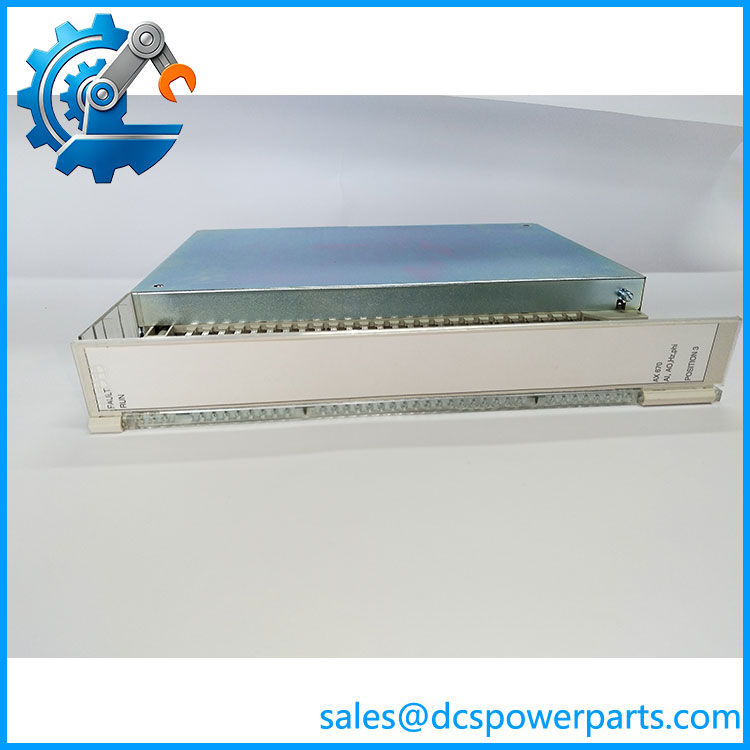
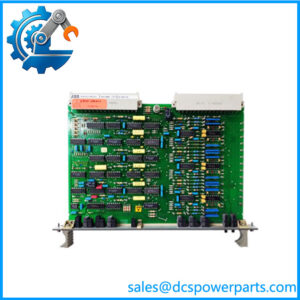
AX670
Related Products
The following products and hardware categories are relevant to ABB S600 I/O maintenance. Confirm exact part numbers and compatibility against the installed system documentation before treating any item as a replacement.
- ABB AX670 — 3BSE000566R1: The original analog mixed module. Use the complete order number when sourcing a like-for-like spare.
- ABB I/O modules: The wider module family used for analog and other I/O functions in compatible Advant OCS configurations. Select the exact module according to the required signal type.
- ABB I/O terminal units: Provide the physical wiring interface for compatible I/O modules. Verify terminal assignments and module-specific compatibility before reuse.
- ABB Advant OCS controller hardware: Executes the control logic and manages the applicable I/O configuration. Controller compatibility must be checked separately from the module’s physical fit.
- ABB I/O analog input modules: Intended primarily for acquiring field measurements. These are not substitutes when the application requires analog output functionality.
- ABB I/O analog output modules: Generate analog control signals for compatible field devices. Their output ranges and channel arrangements must match the application.
- ABB I/O digital input modules: Acquire discrete signals such as equipment status and switch contacts; they do not replace analog measurement channels.
- ABB I/O digital output modules: Control compatible discrete loads or interface circuits rather than generating continuously variable analog commands.
The exact order numbers for alternative modules and terminal units should be selected from the installed system’s parts list rather than inferred from the AX670 designation.
The Engineer’s Guide: Field Pitfalls to Avoid
Warning 1 — Confusing analog mixed I/O with a dedicated input or output module
A mixed module’s channel arrangement may differ from that of a dedicated analog input or output card.
How to avoid it:
- Record which channels are used for inputs and which are used for outputs.
- Confirm the supported signal type and range for each channel.
- Compare the replacement’s documentation with the original system configuration before wiring.
Warning 2 — Assuming that the terminal unit is interchangeable
A module that physically fits an assembly may still have different terminal assignments or electrical requirements.
How to avoid it:
- Identify the installed terminal unit by its full part number.
- Check the original wiring diagrams and terminal assignments.
- Label conductors before removal and verify the connections before restoring power.
Warning 3 — Ignoring revision and condition differences
A used module may have damaged contacts, corrosion, or a history of repair that is not visible in a listing photograph.
How to avoid it:
- Request photographs of the actual module label and connectors.
- Confirm hardware revision and stock condition in writing.
- Request a test report that identifies the functions tested.
- Use ESD-safe handling and follow the site’s approved shutdown and commissioning procedures.
Frequently Asked Questions (FAQ)
1. What is the ABB AX670 3BSE000566R1 used for?
The AX670 is an analog mixed module in ABB’s I/O family for Advant OCS control-system applications. It handles analog I/O functions, with the exact channel arrangement and supported electrical signals determined by the applicable hardware documentation.
2. Is the compatible with every ABB Advant OCS system?
No. Compatibility depends on the installed I/O arrangement, controller configuration, terminal unit, and engineering documentation. Confirm the original module’s complete part number and system configuration before ordering a replacement.
3. What are the ‘s channel count and signal ranges?
These details should be verified from the applicable ABB manual. Third-party listings give inconsistent channel counts and electrical specifications. For a reliable replacement decision, match the documented input/output arrangement, voltage or current ranges, and required accuracy to the installed application.
4. Can I replace the without changing the control-system configuration?
A like-for-like replacement may allow the existing configuration to be retained, but this must be verified. Check the module’s hardware revision, I/O assignment, terminal wiring, and controller configuration. Follow the approved commissioning procedure and validate the affected channels before returning the process to service.
5. How can I confirm whether an is new or refurbished?
Ask for photographs of the actual unit, its complete label, and the connectors. Request a written condition declaration and, for refurbished stock, a test report describing the checks performed. A visual inspection alone cannot establish that every analog channel functions correctly.
6. What warranty is available for the ?
Warranty coverage depends on the supplier and the condition of the specific unit. Confirm the warranty duration, coverage exclusions, return procedure, and remedy for a failed unit in writing. Do not assume that surplus or refurbished inventory carries the same terms as a factory-new part.
7. How quickly can I source an replacement?
Lead time depends on verified physical stock, condition, inspection requirements, and shipping arrangements. Before committing to an outage schedule, request confirmation of the exact order number, hardware revision, test status, and expected dispatch date.
For a more reliable compatibility check, the most useful records are the original label, the installed terminal-unit number, and the relevant I/O configuration documentation.