Description
Technical Specifications
| Parameter | Specification |
|---|---|
| Product Model | PW301 |
| Manufacturer | Yokogawa |
| Product Type | DCS power supply module |
| Product Family | Associated by suppliers with legacy CENTUM systems |
| Input Voltage | Reported as 100–200 VAC for one listing; verify nameplate |
| Input Frequency | 50/60 Hz reported by suppliers; verify exact variant |
| Output Voltage | Requires confirmation from the specific module documentation |
| Output Current | Requires confirmation |
| Communication Protocol | Not confirmed; this is a power-supply module |
| Installation Method | Rack/system-specific installation; verify hardware configuration |
| Operating Temperature | Not confirmed for the exact variant |
| Protection Rating | Not confirmed |
| Product Condition | Confirm new, surplus, or refurbished status with the supplier |
Product Overview
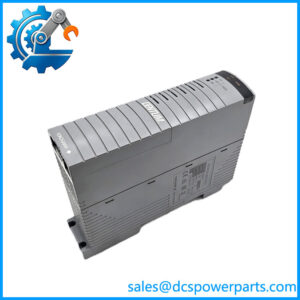
The Yokogawa PW301 is a power supply module intended for use in compatible industrial control-system hardware. Within a DCS installation, the power supply is a critical part of the control architecture because connected processors, I/O assemblies, and other electronic modules depend on their specified power source to operate correctly. A failed or incompatible replacement can prevent a control station from starting or cause unexpected system alarms.
For maintenance teams supporting legacy Yokogawa installations, identifying the correct PW301 variant is the first step in planning a replacement. The model number alone may not establish every compatibility requirement. Style designations, hardware revisions, rack configuration, and electrical ratings should be checked against the unit currently installed. Supplier listings associate this model with older CENTUM systems, but the exact supported platform should be confirmed before ordering.
Procurement decisions should be based on verifiable hardware details rather than generic descriptions. In particular, published listings provide conflicting input-voltage and output information for the PW301. Do not assume that every unit accepts a universal AC input or provides the same DC output rails. Compare the nameplate, connector arrangement, and applicable documentation before installation. If the unit is offered as refurbished, request details of its inspection and functional testing.
For plants maintaining older DCS equipment, a correctly matched PW301 can be a useful spare for repair work and planned maintenance. The key is to establish that the offered unit matches the existing installation electrically and mechanically.
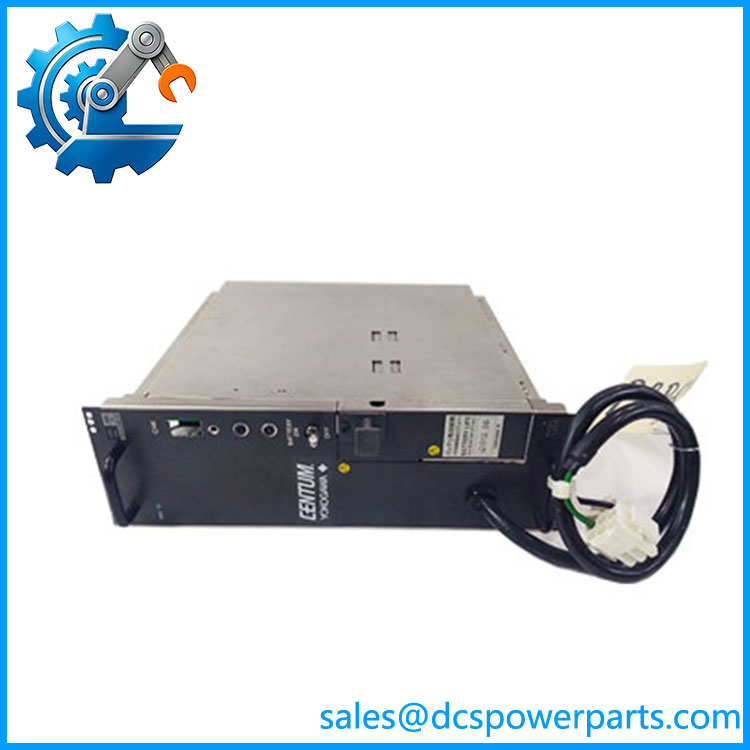
PW301
Major Features and Advantages
1. Supports maintenance of legacy control equipment
The PW301 is relevant to facilities that continue operating compatible Yokogawa control hardware. Keeping a verified replacement available can help maintenance teams respond to power-supply failures without immediately undertaking a wider system replacement.
2. Power delivery for compatible system hardware
A DCS power supply provides the electrical power required by its intended hardware assembly. The precise output rails, current capacity, and load limits of the must be established from the applicable specification. These values should not be inferred from another Yokogawa power-supply model.
3. Model-specific replacement planning
Using the complete model and style designation helps reduce the risk of ordering an electrically or mechanically unsuitable part. The original module’s labels, connectors, and mounting arrangement should be recorded before procurement.
4. Support for planned spare-parts management
For legacy installations, procurement teams can document the exact installed variant, the verified electrical requirements, and the test evidence required for incoming spares. This improves traceability and reduces uncertainty during urgent maintenance.
5. Condition and test transparency
For used or refurbished units, ask for clear information about the product’s condition, inspection process, and functional test results. A clean enclosure or successful power-on check alone does not demonstrate that the module meets every original operating specification.
Typical Applications
The may be considered for the following maintenance activities, provided the intended system and hardware version are confirmed:
- Legacy DCS maintenance: Replacing a failed power supply in a compatible Yokogawa control installation.
- Control-cabinet repair: Restoring power to the applicable system assembly after a diagnosed supply failure.
- Planned shutdown work: Preparing a verified spare before a scheduled maintenance window.
- Spare-parts inventory: Maintaining traceable replacement stock for aging control-system hardware.
- Equipment assessment: Checking the condition and compatibility of a power module during a control-system service review.
- Repair planning: Comparing the installed module’s ratings and physical configuration with a proposed replacement.
These applications are conditional on the actual module specification and the system in which it will be installed. The should not be treated as a universal power supply for all Yokogawa DCS platforms.
Related Products
The following are related equipment references or possible comparison points, not confirmed direct substitutes.
| Model or family | Relationship |
|---|---|
| -S4 | A style-specific designation appearing in supplier listings for the family. Confirm the suffix on the physical unit. |
| PW302-S4 | Listed by a supplier as a related power-supply model; interchangeability requires verification. |
| Yokogawa CENTUM-XL/µXL | Legacy control-system family associated with some listings. |
| Yokogawa CENTUM CS 3000 | A platform referenced by some suppliers; verify exact hardware compatibility. |
| Yokogawa CENTUM VP | Also named in some third-party listings, but compatibility should not be assumed without documentation. |
Installation and Maintenance
Before installing a Yokogawa , compare the replacement with the existing module and the system’s approved hardware documentation.
- Confirm the identification. Record the complete model, style designation, revision, and nameplate ratings.
- Verify electrical requirements. Confirm the AC input range, frequency, DC output rails, and rated current for the exact unit. Do not rely on conflicting third-party specifications.
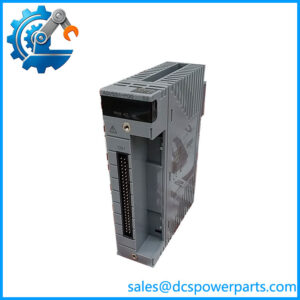
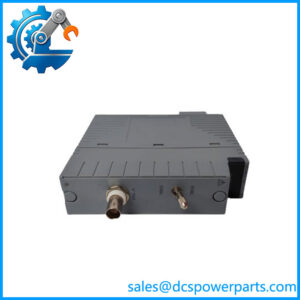
- Check physical compatibility. Inspect the module dimensions, connectors, mounting features, and rack requirements.
- Apply site safety procedures. Isolate power and follow the facility’s lockout/tagout and electrical-safety requirements before removal or installation.
- Inspect the replacement. Check for damaged connectors, corrosion, contamination, and signs of overheating.
- Commission methodically. Follow the approved system procedure and verify power indications, system alarms, and the status of connected hardware.
- Document the result. Record the installed module identification and any applicable inspection or test results.
Do not assume hot-swapping, redundant operation, or automatic failover is supported for the specific installation without confirmation from the applicable manufacturer instructions. For critical process equipment, use qualified personnel and the site’s approved maintenance procedure.
Product Assurance
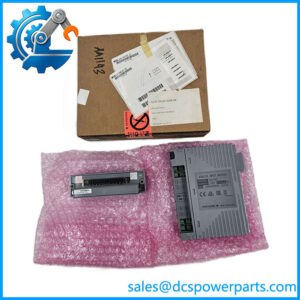
When sourcing a , request the full product identification and a clear description of its condition. For refurbished equipment, ask which functional tests were performed, whether the output was checked under an appropriate load, and whether test records are available. If the supplier cannot provide these details, treat the condition and remaining serviceability as unverified.
Before approving a replacement, confirm the input rating, output capacity, physical interface, and compatibility with the installed control system. Where a supplier proposes a substitute, request documented evidence of suitability rather than relying on a similar model number.
Procurement recommendation: Treat the Yokogawa as a configuration-sensitive legacy spare. Verify the complete part designation and electrical specification before ordering, and establish the unit’s condition and test history before returning it to service.