Description
Product Overview
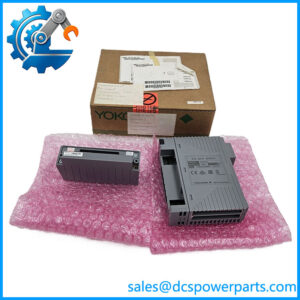
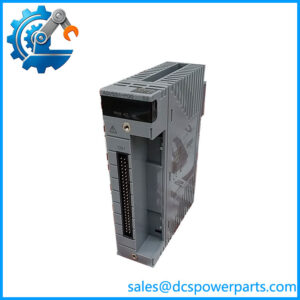
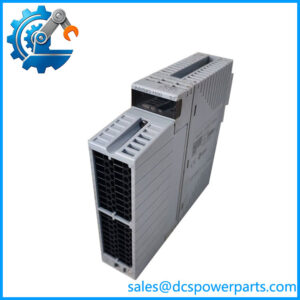
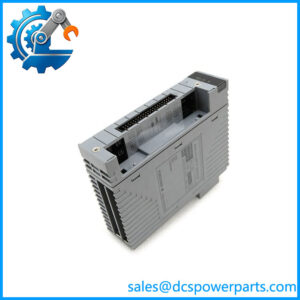
The Yokogawa CP345 is a processor board associated with legacy CENTUM CS distributed control system installations. It is identified in equipment records as a CP345 Style S1 processor board, with an association to CENTUM CS 3000 R3. In this type of DCS architecture, processor hardware forms part of the field control station’s execution and communication infrastructure. Its correct identification is important when maintaining an existing control station, planning hardware replacement, or checking compatibility with the installed station configuration.
The Yokogawa CP345-S1 is also associated with V-Net station-address identification. Equipment listings show board identifiers AS S9781DE-00 and AS S9771DE-01, with S9770DE-02 appearing as an additional board marking. These identifiers should be recorded during procurement because the CP345 designation alone may not describe every board or subassembly included in a particular unit. The exact relationship between the board markings and the supplied assembly should be confirmed from the physical nameplate and applicable Yokogawa documentation.
For maintenance teams, the Yokogawa CP345 should be sourced by matching the complete model, Style S1 designation, board identifiers, and hardware revision. A processor board from another CENTUM generation may have a similar physical appearance but a different station role or interface arrangement. The product is identified as discontinued in available equipment records, making condition verification and functional testing important. Electrical ratings, memory capacity, processor type, and detailed communication specifications remain unverified and should not be assumed from the model number alone.
Product Introduction (Non-Templated)
A processor-board failure in a legacy DCS station can interrupt control execution or station communication while the wider plant network remains operational. Replacing the board requires accurate identification of the station configuration and associated hardware—not simply matching the CP345 designation.
For this unit, pay particular attention to the Style S1 designation and the AS S9781DE-00 / AS S9771DE-01 board markings. Record the installed station address and configuration before removal. Confirm the replacement against the original assembly and the applicable CENTUM CS documentation.
Key Technical Specifications
| Parameter | Specification |
|---|---|
| Product Model | |
| Style | S1 |
| Manufacturer | Yokogawa |
| Product Type | DCS processor board |
| System Association | CENTUM CS / CENTUM CS 3000 R3 |
| Station Network Context | V-Net |
| Board Identifier 1 | AS S9781DE-00 |
| Board Identifier 2 | AS S9771DE-01 |
| Additional Board Marking | S9770DE-02 |
| Processor Architecture | Not verified |
| Processor Frequency | Not verified |
| Memory Capacity | Not verified |
| Supply Voltage | Not verified |
| Power Consumption | Not verified |
| Communication Interfaces | Confirm against exact board revision |
| Station Address | Application-specific; verify installed configuration |
| Mounting | Confirm against original station hardware |
| Operating Temperature | Not verified |
| Firmware Compatibility | Confirm against CENTUM CS software release |
| Lifecycle | Discontinued in available product records |
Identification note: Some equipment listings describe as a dual-port processor board for CENTUM CS 3000 R3, but the detailed electrical and interface specifications have not been established from an authoritative technical manual.
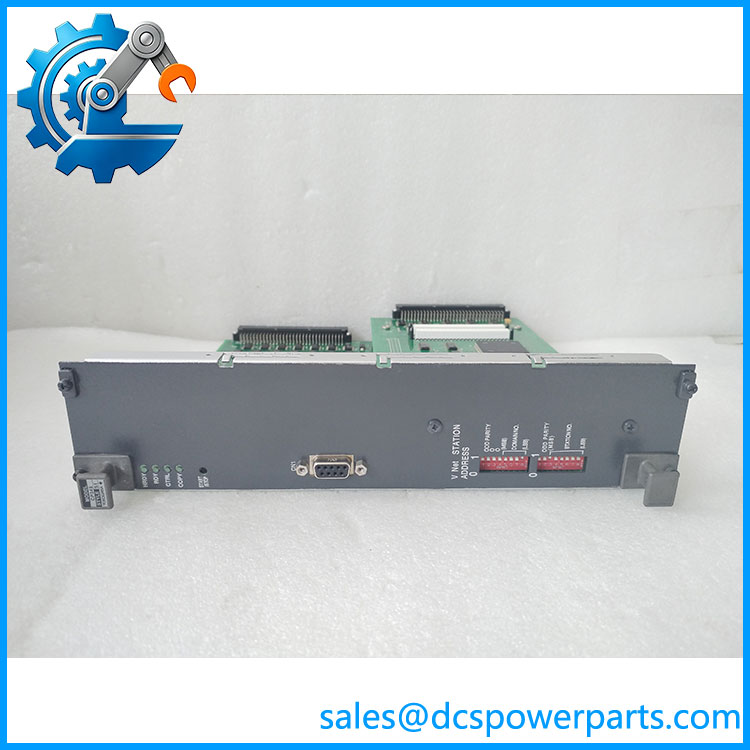
CP345
Major Features and Advantages
CENTUM CS processor-board application
The is identified as processor hardware for a legacy Yokogawa DCS environment. Correct board identification helps maintenance teams preserve the installed station architecture.
Style S1 hardware identification
The S1 designation provides an additional identification level beyond the basic model. This is useful when comparing installed and replacement boards.
V-Net station association
The board is associated with V-Net station-address markings. Station addressing and network configuration should be documented before a board replacement to reduce commissioning errors.
Board-level traceability
The identifiers AS S9781DE-00 and AS S9771DE-01 help distinguish the documented board assembly. Matching these markings can reduce the risk of receiving a visually similar but incorrectly configured product.
Legacy DCS maintenance support
For an established CENTUM CS installation, maintaining the original processor-board configuration may reduce the scope of a broader control-system migration. This requires verification of hardware revision and system software compatibility.
Revision-conscious procurement
Since detailed electrical specifications remain unverified, purchasing should be based on the complete identification label, board markings, and functional-test evidence rather than generic descriptions.
Related Products
The following are related Yokogawa CENTUM processor and control-system components. They are not confirmed direct replacements for .
- CP333D-S3 – Yokogawa CENTUM CS/VP processor module, Style S3.
- CP334D-S3 – Related CENTUM CS/VP processor module.
- CP401-10 – Yokogawa processor module for a different control-system configuration.
- CP451-11 – Yokogawa processor unit used in another controller configuration.
- CP701-S1 – Yokogawa field controller CPU module.
- VF702-S1 – Yokogawa V-Net/IP control bus interface card.
- RB301-S2 – Yokogawa remote I/O bus interface master card.
Verify system generation, board style, station configuration, and hardware compatibility before considering any of these components for replacement.
Frequently Asked Questions
Q1: What is the Yokogawa used for?
The is identified as a processor board for legacy Yokogawa CENTUM CS control-system installations, including equipment records associated with CENTUM CS 3000 R3.
Q2: Is the same as -S1?
-S1 identifies the Style S1 version of the processor board. Confirm the complete model and style marking on the physical board before ordering.
Q3: What do AS S9781DE-00 and AS S9771DE-01 mean?
These are board identifiers appearing in S1 equipment listings. They should be recorded when matching a replacement. Confirm their exact assembly relationship using the original board labels and technical documentation.
Q4: Can I hot-swap the ?
Do not assume hot-swap support. Follow the approved CENTUM CS maintenance procedure, verify the station redundancy arrangement, and establish a safe process state before removing the processor board.
Q5: Does the support firmware v3.1?
A generic firmware v3.1 compatibility claim cannot be confirmed. Check the installed CENTUM CS release, processor-board revision, and applicable Yokogawa software documentation.
Q6: What should I verify before purchasing a replacement?
Check the model, Style S1 marking, board identifiers, station address, connector condition, hardware revision, and functional-test results. Request photographs of both sides of the board where possible.
Q7: Is the Yokogawa discontinued?
Available product records identify the as discontinued. Procurement should therefore include explicit condition disclosure, revision verification, and warranty confirmation.
Procurement and Quality Control Notes
For Yokogawa , the main procurement risk is receiving a processor board with a different style, board assembly, or station configuration.
Before shipment, request:
- Clear photographs of the nameplate.
- Confirmation of Style S1.
- Photographs showing AS S9781DE-00 and AS S9771DE-01 markings, where applicable.
- Confirmation of hardware revision and serial number.
- Inspection of connectors, edge contacts, and PCB condition.
- Power-on or functional-test documentation.
- Confirmation of the tested station configuration.
- Written condition classification: new, unused, refurbished, or used.
- Warranty terms and return conditions.
Engineering recommendation: Match the complete board identification and station configuration before approving a replacement. Do not rely on the model designation alone, particularly when maintaining a legacy CENTUM CS 3000 R3 installation.