Description
Technical Specifications
| Parameter | Specification |
|---|---|
| Model | AFV30D-A41252 |
| Manufacturer | Yokogawa |
| DCS platform | CENTUM VP |
| Unit type | Duplexed Field Control Unit |
| Control processor | CP471-compatible standard type |
| Network | Dual-redundant Vnet/IP |
| Field I/O | FIO-compatible |
| Power input | 220–240 VAC, 50/60 Hz |
| Power consumption | Approximately 230 VA |
| Power configuration | Dual-redundant power supplies |
| Processor configuration | Two identical processor modules for duplexed operation |
| Mounting | 19-inch rack |
| READY contact output | Normally closed/common contact arrangement; rated up to 30 VDC, 0.3 A |
| Memory backup | Battery backup for main memory, up to 72 hours; minimum recharge time 48 hours |
| Explosion protection | Basic type, no explosion protection |
| Revision requirement | R6.01 or later |
Important power-supply distinction: The exact suffix A41252 identifies the 220–240 VAC version. Do not assume that 100–120 VAC or 24 VDC specifications found for other AFV30 variants apply to this model. Confirm the nameplate and site power arrangement before installation.
Product Overview
The Yokogawa AFV30D-A41252 is a duplexed Field Control Unit used in Yokogawa’s CENTUM VP distributed control system. The FCU performs field control station functions and coordinates control execution and communications with compatible field I/O hardware. It is designed for installations that require a redundant controller architecture rather than a standalone I/O card. The unit supports Vnet/IP and FIO and is configured for CP471-compatible processor modules.
The model code defines important procurement and installation details. AFV30D identifies the duplexed FCU family; A denotes the standard type for CP471; 4 specifies dual-redundant Vnet/IP and power supplies; 2 specifies 220–240 VAC input; 5 indicates the basic version without explosion protection; and the final 2 indicates the R6.01-or-later configuration. These details matter when replacing an installed unit because a similar AFV30 model may have a different input supply, protection option, or hardware/software requirement.
In the duplexed configuration, two identical processor modules and two power-supply modules are used. The design supports controller availability if a component fails, but redundancy depends on the complete installation: compatible hardware, correct configuration, healthy power sources, and working network paths are all necessary. The AFV30D-A41252 should therefore be selected against the existing system documentation, not by model-family name alone.
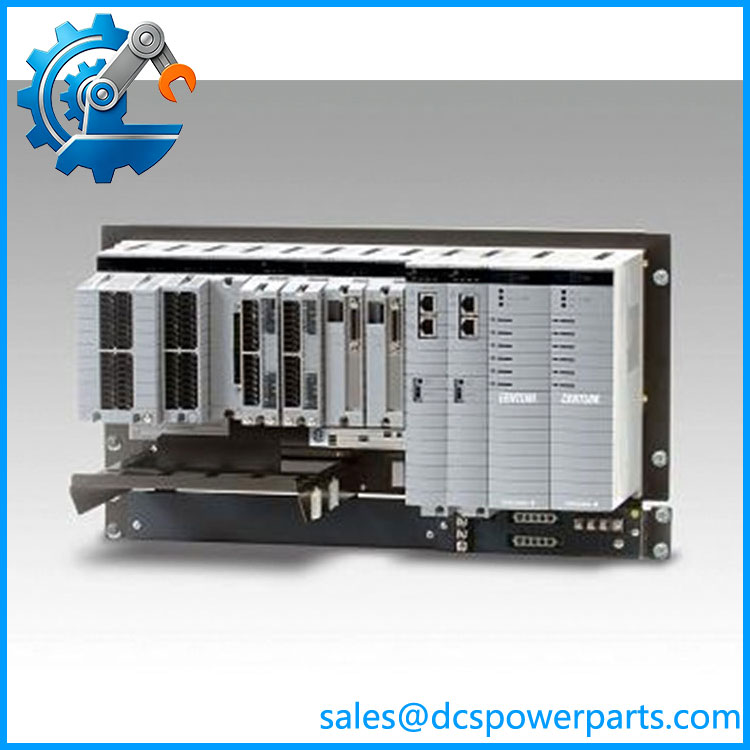
AFV30D-A41252
Major Features and Advantages
1. Duplexed control architecture
The AFV30D-A41252 supports a dual-processor configuration using identical compatible processor modules. This architecture is intended to maintain control-system availability when a supported failure occurs. Actual changeover behavior depends on the installed configuration and must be verified using the approved CENTUM VP maintenance procedure.
2. Dual-redundant Vnet/IP communications
The unit supports dual-redundant Vnet/IP. This provides two network paths for supported control-system communication. Network redundancy does not eliminate all communication risks: switch configuration, cable routing, network topology, and the health of connected equipment must also be considered during maintenance.
3. Redundant power supplies
The FCU supports two power-supply modules in the duplexed arrangement. The A41252 suffix specifies the 220–240 VAC input version. Before installation, verify the site supply, protective devices, grounding, and the exact ratings of the power-supply modules fitted to the unit. Do not substitute a DC-input or lower-voltage AC variant based solely on the shared AFV30D designation.
4. FIO system integration
The unit is designed for use with compatible FIO hardware and supports field control station configurations that use the relevant I/O and bus equipment. The number and type of connected I/O modules depend on the system design. Yokogawa’s specifications describe configurations with up to 13 ESB or optical ESB bus node units and up to eight I/O modules under the applicable configuration rules. Confirm the current system manual for the exact installation.
5. Power-failure memory protection and diagnostics
The published FCU specifications describe battery backup for main memory for up to 72 hours, with a minimum battery recharge time of 48 hours. A READY contact is also provided, with a documented maximum rating of 30 VDC and 0.3 A. These functions assist with system status monitoring and retention of main memory during power interruption, but battery condition and contact wiring should be checked during maintenance.
Applications
The Yokogawa – is intended for compatible CENTUM VP control installations in continuous-process industries. Typical environments include oil and gas facilities, chemical and petrochemical plants, power generation, and other process operations that rely on distributed control stations. Its role is to execute field control station functions and connect the control application with compatible field I/O and system communications.
In a process plant, the FCU may be part of the control architecture responsible for coordinating measurements, control logic, operator commands, and equipment status. The specific loops and sequences are defined by the plant’s application and engineering configuration. The FCU itself should not be confused with an individual analog input, analog output, or discrete I/O card.
The duplexed architecture is relevant where continued control availability is important. A redundant configuration can reduce the impact of certain processor, power-supply, or communication failures, provided that the standby hardware is healthy and the system has been engineered and maintained correctly. It does not remove the need for planned maintenance, fault investigation, or testing of the redundancy arrangement.
The – may also be used as a replacement unit during planned maintenance or recovery from an FCU fault. In such cases, compatibility with the installed CP471 processor modules, Vnet/IP network, FIO configuration, and CENTUM VP revision should be established before procurement. The suffix specifies a basic version without explosion protection, so it must not be selected for a location requiring a certified explosion-protected configuration.
Related Products
| Model | Relh |
|---|---|
| -A41250 | Related standard-type configuration; confirm the exact protection and revision suffix before considering substitution. |
| Exact 220–240 VAC, dual-redundant Vnet/IP and power-supply configuration described on this page. | |
| -A414E2 | Related configuration associated with a 24 VDC supply and explosion-protection option; not a direct substitute without engineering approval. |
| AFV30S | Related simplex FCU family; it differs from the duplexed architecture. |
| CP471 | Compatible processor-module family specified for the standard type. |
| PW481 | Compatible power-supply module option documented for FCU configurations. |
| PW482 | Another documented FCU power-supply option; confirm input ratings and compatibility. |
| PW484 | Additional documented power-supply option for applicable FCU configurations. |
| ANB10 | ESB bus node family used in compatible FIO system configurations. |
| ANB11 | Optical ESB bus node family used where the system design requires optical ESB connectivity. |
Installation and Maintenance
Before replacing k, record the full model code, nameplate ratings, installed CP471 processor revisions, power-supply modules, CENTUM VP revision, and network configuration. Confirm that the replacement is the 220–240 VAC version and that the installation requires the basic, non-explosion-protected type. Check the applicable system drawings and approved Yokogawa documentation before changing any hardware.
Follow the site’s isolation and electrical-safety procedures before handling the FCU or its power connections. Inspect the rack, grounding points, connectors, and network cabling for damage, contamination, or corrosion. Confirm that the processor and power-supply modules are the correct models and that both sides of the redundant arrangement are configured as required.
After installation, verify startup status, READY contact behavior, Vnet/IP communications, FIO connectivity, and the expected state of both processor and power-supply modules. Test redundancy only under an approved procedure with the process in a suitable state. Do not force a controller transfer or interrupt a live supply without authorization and a documented risk assessment.
If the FCU fails to start or reports communication faults, check the supply voltage, module seating, processor compatibility, software revision, network configuration, and FIO connections before diagnosing the FCU as defective. Record the results and retain the removed hardware until the replacement has passed the site’s acceptance checks.
Product Assurance
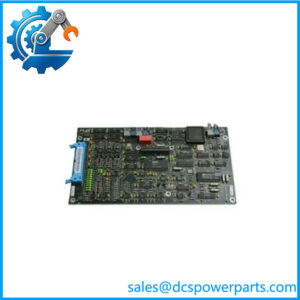
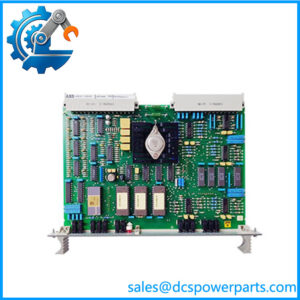
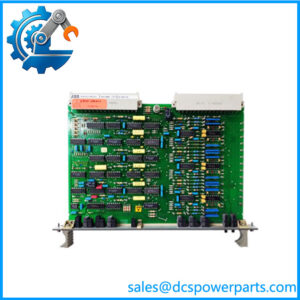
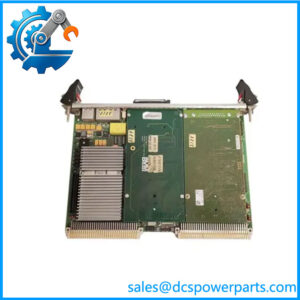
For procurement, verify m nameplate and request photographs of the model code, connectors, and fitted modules. Ask the supplier to state whether the unit is new, used, refurbished, or repaired and to provide available traceability and test records. The model designation alone does not establish the condition of the supplied unit.
For used or refurbished equipment, request evidence of functional checks covering power-up, processor status, network communication, and the available READY contact. Where practical, require verification of the redundant configuration using an approved test procedure. A visual inspection or basic power-on test is not sufficient to demonstrate successful controller operation or redundant changeover.
Before acceptance, confirm the 220–240 VAC input specification, compatibility, applicable R6.01-or-later requirement, and the non-explosion-protected designation. If a supplier proposes another AFV30 variant, require written confirmation of compatibility with the existing CENTUM VP configuration.
Procurement recommendation: k is a duplexed CENTUM VP Field Control Unit for 220–240 VAC installations with redundant Vnet/IP and power supplies. Match the complete suffix, verify the software and hardware revision, and request documented functional testing before installation.