Description
Technical Specifications
| Parameter | Specification |
|---|---|
| Manufacturer | Yokogawa Electric Corporation |
| Product Model | AAI143-H50 S1 |
| Product Type | HART analog input module |
| Number of Channels | 16 |
| Input Signal | 4–20 mA DC |
| Supported Transmitter Type | Two-wire transmitter input; confirm channel configuration and applicable documentation |
| HART Communication | Supported |
| Maximum Allowable Input Current | 24 mA in the documented AAI143 specification |
| Input Resistance | Approximately 270–350 Ω when powered, depending on input current |
| Field-to-System Isolation | 1500 V AC for 1 minute |
| Channel-to-Channel Isolation | No insulation between channels; isolation is between field and system sides |
| Data Update Period | 10 ms |
| Accuracy | ±16 µA |
| Transmitter Supply | At least 19.0 V at 20 mA; no more than 25.5 V at 0 mA in the documented specification |
| Transmitter Supply Current Limit | 25 mA |
| Maximum Current Consumption | Approximately 230 mA at 5 V DC and 540 mA at 24 V DC |
| Approximate Weight | 0.3 kg |
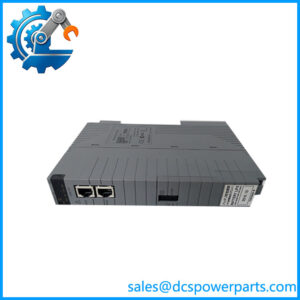
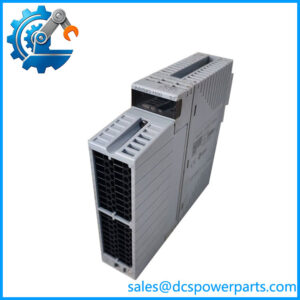
| Connection Options | Compatible terminal block or dedicated cable interface, depending on order configuration |
The electrical specifications above are based on Yokogawa’s published AAI143 documentation. Verify the exact H50 S1 configuration and associated connection hardware against the installed module’s nameplate and applicable manual.
Model identification note: Yokogawa documentation identifies the -H suffix as the HART communication option and 5 as the version without explosion protection. The precise meaning of the additional S1 designation should be confirmed against the actual unit and order code rather than assumed to indicate a particular firmware revision or bundled adapter.
Product Overview
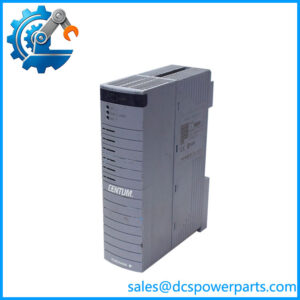
The Yokogawa AAI143-H50 S1 is a 16-channel analog input module designed to acquire 4–20 mA process signals in compatible Yokogawa distributed control systems. It converts current signals from field transmitters into measurement data that the Field Control Station can use for process monitoring, regulatory control, alarms, and sequence logic. The -H option adds HART communication capability, allowing compatible smart instruments to provide digital information alongside their analog process signal.
The module is intended for applications that collect measurements such as pressure, flow, liquid level, and temperature from transmitters with current-loop outputs. Its 16-channel capacity allows multiple signals to be handled within a single I/O module, reducing the number of individual modules needed in a compatible node. The published data update period is 10 ms, and the specified accuracy is ±16 µA. These figures describe module performance under the manufacturer’s stated conditions; actual loop response also depends on transmitter behavior, signal filtering, wiring, and control-system configuration.
HART functionality can help maintenance personnel access supported instrument variables and diagnostics without relying exclusively on the 4–20 mA process value. However, HART support does not mean every instrument command or protocol feature is available in every installation. Firmware, communication package, field-device capability, and system configuration should be checked before commissioning digital instrument access.
For replacement procurement, verify the complete AAI143-H50 S1 designation, terminal interface, system compatibility, and the module’s actual condition. Do not assume the S1 marking guarantees a particular accessory package or that every AAI143 variant supports the same communication and installation options. Matching the original configuration is especially important when the module is part of an established process-control installation.
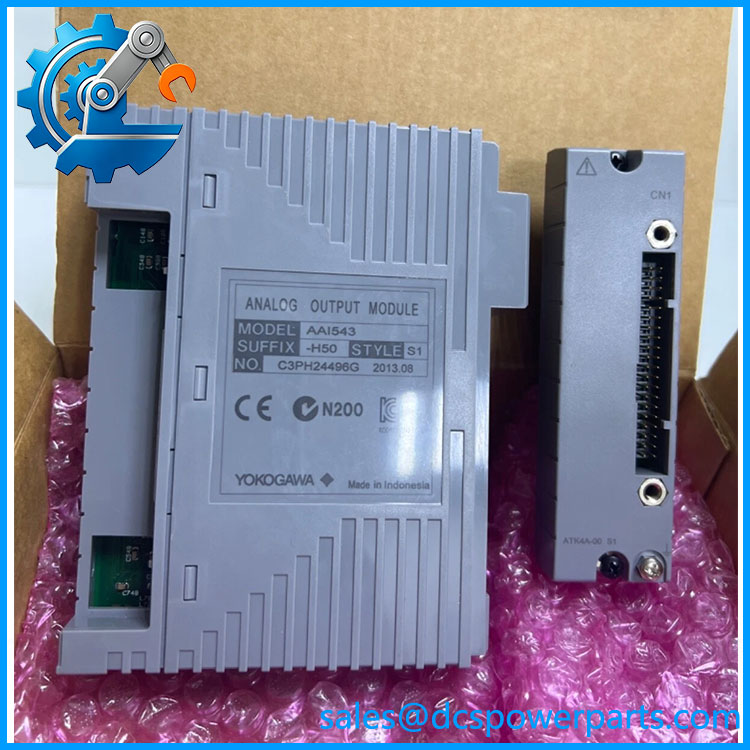
AAI543-H50-S1-2
Major Features and Advantages
16-channel current input
The -H50 S1 provides 16 input channels for 4–20 mA DC signals. It can acquire measurements from multiple field transmitters through a compatible Yokogawa I/O arrangement. Each channel must be configured and wired according to the connected transmitter type and the applicable installation documentation.
HART digital communication
The -H option supports HART communication for compatible field instruments. This provides access to supported digital instrument information in addition to the analog process signal. It can assist maintenance staff with device identification, diagnostics, and access to additional process variables, subject to the installed HART communication package and device capabilities.
Defined measurement performance
Yokogawa’s published specification lists an accuracy of ±16 µA and a 10 ms data update period. The input resistance varies with loop current and the input protection circuit. These parameters should be evaluated against the measurement requirements of the application, particularly where signal accuracy and transmitter voltage margin are important.
Field-to-system isolation
The module’s documented field-to-system withstand rating is 1500 V AC for one minute. This is an isolation withstand-test value, not a permissible continuous operating voltage. The specification also distinguishes field-to-system isolation from channel-to-channel insulation; do not assume that the 16 input channels are individually galvanically isolated from one another.
Integrated transmitter supply
The documented module specification provides a transmitter supply for supported two-wire loop arrangements. The available voltage depends on loop current and must be considered together with the transmitter’s minimum operating voltage and external wiring drop. Verify the complete loop voltage budget before connecting or replacing a transmitter.
Practical maintenance and replacement
The module can be a useful spare for installations that require the same 16-channel current-input and HART functions. Its suitability depends on matching the installed model, interface accessories, system configuration, and firmware requirements. A base-model match alone does not establish that an offered module has passed functional testing or is interchangeable in every application.
Applications
The Yokogawa -H50 S1 is suitable for compatible DCS installations that collect 4–20 mA measurements from process instrumentation. Typical measurements include pressure, flow, level, and temperature when the corresponding transmitter provides a supported current-loop output. The module transfers acquired measurement data to the control system for display, alarming, trending, and use in configured control strategies.
In a process plant, a current-input module often serves as the link between field transmitters and the controller’s measurement database. For example, a pressure transmitter can send a 4–20 mA signal representing process pressure. The module acquires the signal, and the configured control system scales and uses the value according to the engineering setup. Correct scaling, loop wiring, transmitter configuration, and channel assignment remain necessary; the module does not independently validate the process measurement.
The HART option is useful where smart transmitters provide supported digital information in addition to their analog measurement. Maintenance teams may use this information to help identify instruments and investigate diagnostic conditions. Actual access depends on the instrument, the module’s supported HART implementation, the system software, and the communication configuration. Do not assume that every HART command or device-specific function will be available simply because the module has the -H designation.
The module is also relevant to planned maintenance and spare-parts programs. When replacing a failed unit, engineers should compare the model suffix, terminal interface, channel wiring, and relevant system requirements. If the installation uses remote I/O or dedicated cable interfaces, firmware and interface compatibility should be checked before the replacement is released for use.
For commissioning, verify representative input values against a calibrated source or an approved loop-test procedure. Check the expected engineering-unit scaling in the control system and confirm that HART diagnostics work where required. These checks help separate a module fault from problems in the field transmitter, wiring, configuration, or loop power.
Related Products
| Model | Relationship |
|---|---|
| Base 16-channel isolated 4–20 mA analog input module family | |
| -H | HART-enabled variant of the family |
| AAI543-H | HART-enabled 16-channel analog output module |
| AAI135-H | HART-enabled 8-channel isolated analog input module |
| AAI835-H | HART-enabled analog I/O module with input and output channels |
| AAV144 | 16-channel analog input module for voltage signals |
| ATA4S-00 | Compatible pressure-clamp terminal block option, subject to configuration |
| ATA4D-00 | Compatible dual pressure-clamp terminal block option |
| ATK4A-00 | KS cable interface adapter for supported configurations |
| ACCC01 | Connector cover option for compatible MIL cable arrangements |
These products are related by signal type, I/O function, or connection hardware. They are not all direct substitutes for the -H50 S1. Confirm the applicable Yokogawa hardware documentation before changing module or accessory types.
Installation and Maintenance
Before installin S1, confirm the complete model code and the connection arrangement used by the host I/O node. Check the field wiring drawings, terminal block or cable adapter, channel assignments, and the required HART functionality. The module’s HART option should be matched to the installed system’s software and firmware requirements.
Follow the site’s approved isolation and lockout procedures before disconnecting field wiring. Label each loop before removal, and record transmitter type, polarity, channel number, and configured measurement range. For two-wire transmitters, check the loop’s power budget, including the transmitter’s minimum terminal voltage and the voltage drop across the module and field wiring.
Inspect the module connector, terminal blocks, and conductors for loose connections, corrosion, or physical damage. Do not assume that a connection accessory used with another variant is compatible with this exact model. Where intrinsically safe circuits are involved, follow the applicable Yokogawa instructions and the site’s hazardous-area design; the documented specification warns against using a Zener barrier with the relevant configuration and calls for an appropriate isolation barrier for intrinsically safe applications.
After installation, use an approved loop-test procedure to verify representative channels. Check the signal value, engineering-unit scaling, alarms, and control-system diagnostics. If HART communication is required, confirm that the system can retrieve supported device information from the connected instrument. A valid analog reading alone does not prove that HART communication is configured correctly.
Document the replacement model, interface accessories, test results, and any configuration changes. If a signal remains incorrect, investigate the transmitter, loop wiring, power supply, scaling, and system configuration before attributing the fault to the module.
Product Assurance
For the Yok S1, product assurance begins with confirming the complete model designation and the actual connection configuration. Request clear photographs of the nameplate, connectors, and overall condition, then compare them with the installed unit and the site’s spare-parts records.
The published specifications establish the family’s intended signal type and general performance, but they do not prove the condition of a particular unit. New surplus, used, and refurbished modules should be identified accurately. Any functional-testing claim should state what was tested, the test setup, and the results available for review.
For critical process applications, request inspection or test records where available, confirm warranty and return conditions, and establish the expected delivery lead time. If HART communication is essential to the application, ask whether it was tested and under which system or test conditions. Visual inspection alone cannot establish successful analog acquisition or digital communication.
Before final acceptance, verify compatibility with the installed I/O hardware, terminal interface, firmware, and field wiring. This approach helps reduce the risk of installing a module that appears correct but does not meet the site’s operational requirements.