Description
Woodward MRA4 Directional Feeder Protection Relay
Product Overview
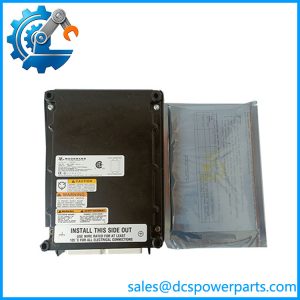
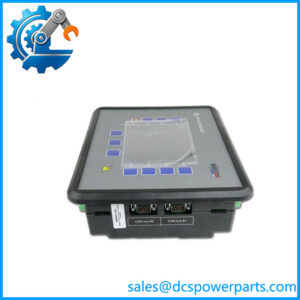
The Woodward MRA4 is a numerical directional feeder protection relay within the HighPROTEC family. Its primary job is to determine not only how much current is flowing, but also the direction of fault current relative to the protected feeder. That distinction is critical on interconnected networks, parallel feeders, ring systems, and generator applications where a conventional non-directional overcurrent relay may not provide sufficient selectivity. Woodward documents MRA4 for incoming and outgoing feeder protection, network protection, and generator protection.
The Woodward MRA4 combines directional phase and ground-fault protection with measurement, switchgear control, programmable logic, event recording, disturbance recording, and communications. Depending on the hardware configuration, the relay can be supplied with 8 or 16 digital inputs and 6 or 13 binary output relays. Current inputs are available for 1 A or 5 A systems, with separate hardware options for sensitive ground-current measurement.
For an engineering replacement, the word MRA4 alone is not enough. Woodward’s ordering structure differentiates current-input arrangements, enclosure/mounting, I/O quantity, communication protocol, and interface type. An MRA4 with IEC 61850 Ethernet is not equivalent from a system-integration standpoint to an without communications or one equipped with RS-485. The complete catalog number, revision, and installed configuration should therefore be treated as part of the equipment identity.
Product Introduction — Non-Templated
A directional relay earns its place when fault current can flow from more than one electrical direction. On a simple radial feeder, non-directional overcurrent protection may be sufficient; on interconnected distribution systems, that assumption can break down quickly. Woodward adds directional decision-making to a broader numerical protection platform while retaining feeder control, measurement, recording, and communications functions.
The relay is particularly relevant to medium-voltage feeder protection, network protection, incoming/outgoing feeders, and generator backup protection. Woodward also provides commissioning functions and Smart view software for parameterization and disturbance evaluation.
Key Technical Specifications
| Parameter | Specification |
|---|---|
| Product Model | MRA4 |
| Manufacturer | Woodward |
| Product Family | HighPROTEC |
| Product Type | Directional feeder protection relay |
| Hardware I/O Variants | 8 digital inputs / 6 binary outputs or 16 digital inputs / 13 binary outputs |
| Phase Current Input | 1 A or 5 A nominal |
| Ground Current Input | 1 A or 5 A nominal |
| Sensitive Ground Current | Available as a hardware option |
| Directional Protection | Phase and ground directional overcurrent functions |
| Overcurrent Protection | ANSI 50 / 51 |
| Directional Overcurrent | ANSI 67 |
| Ground Overcurrent | ANSI 50N / 51N |
| Directional Ground Protection | ANSI 67N |
| Negative Sequence | ANSI 46 |
| Voltage Protection | ANSI 27 / 59 |
| Frequency Protection | ANSI 81U/O |
| Breaker Failure | ANSI 50BF |
| Automatic Reclosing | ANSI 79 |
| Thermal Protection | ANSI 49 |
| Voltage/Frequency Functions | Configuration dependent |
| Communications | Modbus RTU, IEC 60870-5-103, Modbus TCP, PROFIBUS-DP, IEC 61850 and other options depending on hardware |
| Communication Interfaces | RS-485, Ethernet, fiber-optic, or D-sub/other configuration-dependent interfaces |
| Mounting | Door mounting or 19-inch flush mounting, configuration dependent |
| Configuration Software | Smart view |
| Operating Temperature | Configuration/documentation dependent; verify against the exact hardware revision |
| Firmware | Must be read from the actual relay; not established from “” alone |
The I/O and communication variations above are taken from Woodward’s product/order information. The protection-function list is also configuration dependent; the full platform contains a substantially larger function set than every individual purchased hardware configuration necessarily exposes.
Major Features / Practical Advantages
Directional Phase Overcurrent Protection
The defining feature of the is directional protection. ANSI 67 functions allow the relay to discriminate faults based on current direction in combination with the relevant voltage reference. This is useful when power can flow in either direction through a feeder or when several feeders are electrically interconnected.
In practical commissioning work, this means the CT and VT connections deserve as much attention as the protection settings. A relay can have perfectly reasonable 67 settings and still make the wrong directional decision if phase sequence, CT polarity, or voltage connections are incorrect.
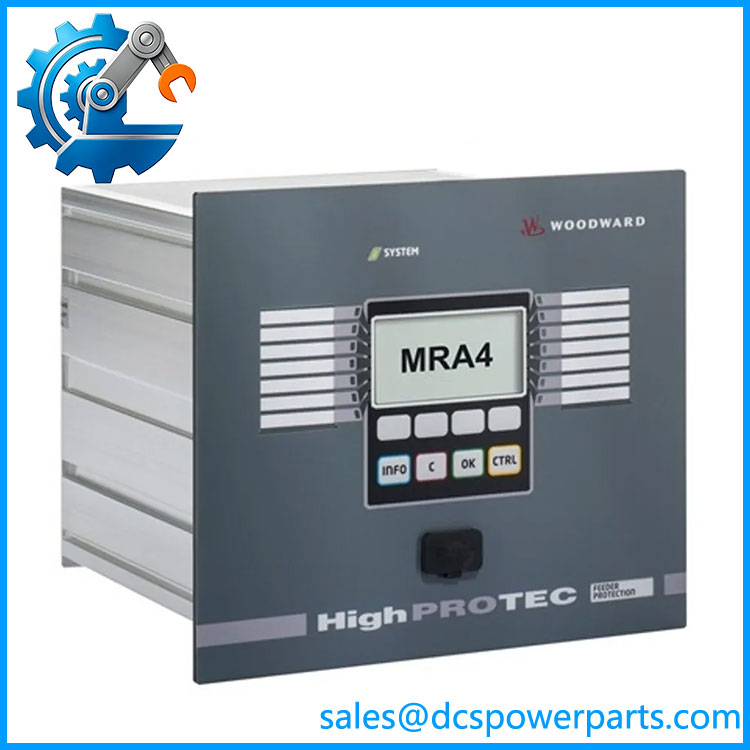
woodward MRA4
Directional Ground-Fault Protection
The also supports directional ground-fault protection through ANSI 67N functions. Standard and sensitive ground-current input configurations are available, so the hardware must match the grounding arrangement and CT scheme used by the installation.
Sensitive-ground versions are particularly relevant where conventional residual-current measurement does not provide sufficient resolution. Do not substitute the sensitive and standard input versions simply because their external housing appears similar.
Wide Protection Function Set
includes conventional phase and ground overcurrent functions along with negative-sequence, voltage, frequency, thermal, breaker-failure, loss-of-voltage, and other protection functions. The documented functional overview also includes functions associated with inrush, cold-load pickup, switch-on-to-fault, automatic reclosing, and voltage/frequency-related protection.
That makes the relay useful as a protection platform rather than a single-purpose directional element.
Feeder and Generator Applications
Woodward specifically identifies incoming and outgoing feeder protection, network protection, and generator protection as applications. Generator applications require particular care because the direction of active and reactive power can change during operating conditions and faults. The protection philosophy should therefore be established before selecting directional elements and polarizing quantities.
Switchgear Control
The relay includes switchgear-management functions for control and supervision of the associated circuit breaker or switchgear. This reduces the need to build every breaker-control function externally in PLC logic, although plant interlocks and hardwired protection trips should still be reviewed independently.
Programmable Logic
supports programmable logic that can combine protection states, digital inputs, timers, control signals, and relay outputs. Older protection installations often accumulate auxiliary relays and hardwired interlocks over many years. A configurable numerical relay can consolidate some of that logic, but any migration should preserve the original trip philosophy rather than simply reproducing wiring point-for-point.
Disturbance and Event Recording
The provides event and disturbance recording functions. Woodward also documents commissioning support including a built-in fault simulator and Smart view software for parameterization and evaluation. These functions are valuable during protection testing because they provide evidence of what the relay actually measured and how the protection elements responded.
Multiple Communication Options
The ordering system provides several communication configurations, including RS-485 protocols, Ethernet-based Modbus TCP, PROFIBUS-DP, and IEC 61850. The 2015/2016 Woodward price documentation identifies separate hardware choices for these interfaces.
Do not specify “ with IEC 61850” unless the complete catalog number confirms the IEC 61850 hardware. The model family alone does not prove the communication interface.
Related Products
- MRI4 — Non-directional feeder protection relay in the HighPROTEC family. It is intended for feeder applications where directional protection is not required; its hardware and communication options should still be matched by complete order code.
- MRM4 — HighPROTEC motor protection relay designed around motor-specific protection requirements rather than general feeder directional protection.
- MRMV4 — Motor protection variant with broader voltage-related measurement and protection capability.
- MRDT4 — HighPROTEC transformer differential protection relay for transformer protection applications; not a direct functional replacement for .
- MRU4 — HighPROTEC voltage and frequency protection relay for applications where voltage/frequency protection is the primary requirement.
- MFR300 — Woodward multifunction protection and measurement platform used in power-management applications; architecture and application differ from .
- HighPROTEC Smart view — Common Woodward software environment used for parameterization, commissioning, and evaluation across supported HighPROTEC devices.
FAQ
Is Woodward a PLC or DCS I/O module?
No. is a numerical directional feeder protection relay. Its digital inputs and relay outputs can exchange signals with a PLC, DCS, or SCADA system, but the protection calculations and trip functions are executed within the relay itself.
What is the main difference between and MRI4?
The key functional distinction is directional protection. is designed for directional feeder protection, while MRI4 is the non-directional feeder protection member of the HighPROTEC family. For a network with possible bidirectional fault-current flow, the directional functions can be an important part of the protection philosophy.
Can I hot-swap the ?
It should not be treated as a hot-swappable PLC module. Removing a protection relay can leave the feeder without its intended protection and control functions. Plan isolation, backup protection, testing, and commissioning before removing the installed relay.
Does support IEC 61850?
Selected hardware configurations do. Woodward’s ordering information lists an IEC 61850 Ethernet communication option. Confirm the exact catalog number before specifying IEC 61850 for an existing installation.
Does support 1 A and 5 A CTs?
Yes. Woodward’s ordering information identifies phase-current and ground-current hardware for 5 A/1 A nominal inputs, with a separate sensitive-ground-current option. The replacement must match the installed CT secondary rating.
Does support firmware version 3.1?
The model designation alone does not establish firmware version. Read the firmware information from the actual relay and compare it with the applicable configuration/software requirements. A replacement should not be commissioned solely because its front label says .
Can replace an MRI4?
Not automatically. adds directional protection capability, but a replacement requires checking CT/VT wiring, protection settings, I/O assignments, communications, logic, and the complete order code. The engineering question is not whether both belong to HighPROTEC; it is whether the replacement reproduces the required protection scheme.
Can be used for generator protection?
Yes. Woodward explicitly lists generator protection among the application areas. Generator protection settings, however, need to be coordinated with the generator, transformer, network, CT/VT ratios, grounding arrangement, and upstream/downstream protection.
How should a replacement be verified?
Record the complete CAT No., hardware variant, serial number, revision, current-input rating, communication interface, mounting arrangement, firmware, and existing settings. Woodward provides a product-history lookup that specifically instructs users to use the product label’s serial number and part number when checking product information.
Procurement Note
For Woodward , the full ordering code is more important than the short model designation. Woodward’s documented variants distinguish between 8-input/6-output and 16-input/13-output hardware, standard versus sensitive ground-current measurement, mounting arrangements, and multiple communication interfaces.
For a like-for-like replacement, obtain a clear photograph of the complete nameplate and record the existing CAT No., REV., S/N, current-transformer ratings, VT connections, communication protocol, and firmware information. Woodward maintains a product-history lookup specifically for identifying product information from the part number and serial number.
One field issue deserves emphasis: directional protection is highly dependent on correct measurement wiring. Before energization, verify CT polarity, phase sequence, VT polarity, phase-to-phase/phase-to-ground voltage connections, directional characteristic, and the intended forward direction. Then test the actual trip path, breaker-failure logic, blocking inputs, and SCADA indications.
For procurement purposes, do not substitute an MRI4, variant, or another HighPROTEC relay based only on physical dimensions. Protection relays are configuration-specific devices; matching the housing while missing the CT input, communication board, I/O count, or directional protection configuration can create a much larger commissioning problem than the original component failure.