Description
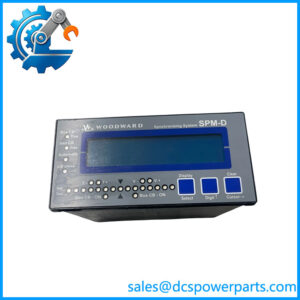
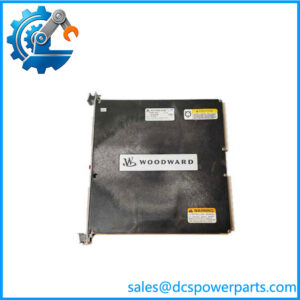
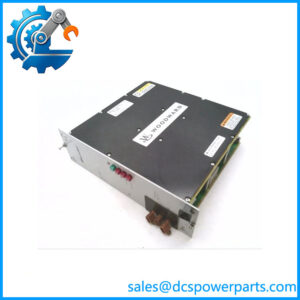
Woodward 8440-1849 MFR 15 Multifunction Relay
Product Overview
The Woodward 8440-1849 is an MFR 15 multifunction relay designed for generator protection, synchronization, measurement, and control. Woodward describes the MFR 15 as combining a synchronizer, load and power-factor control through discrete outputs, and generator protection and control in one unit. The exact functions available depend on the ordered package and option code.
The complete configuration associated with Woodward 8440-1849 is MFR1515B/BCIZMPMPSSBSB01UUSU07. The “15” configuration corresponds to the MFR 15 family with three current measurements, while the detailed option string determines additional functions. Woodward’s MFR 15 documentation describes 1 A and 5 A CT variants, 100 VAC and 400 VAC PT variants, selectable mounting arrangements, analog outputs, pulse output, communication, and multiple generator-protection functions.
This distinction is important during procurement. A generic MFR 15 description does not automatically define every capability of an individual 8440-1849 unit. The suffix configuration must be retained because options such as analog outputs, Modbus communication, load sharing, reverse-power protection, overcurrent protection, and synchronization functions can depend on the ordered package.
For legacy generator switchgear, the Woodward 8440-1849 is primarily relevant as a replacement or spare for an installed MFR 15 system. Woodward’s legacy replacement information identifies 8440-1849 as an obsolete MFR-15 H8-generation product and points toward the 8440-1936 easYgen-3500-5/P2 family or an LSG combination as a modern replacement direction rather than treating the old relay as a current-generation product.
Product Introduction
Generator protection and synchronization are combined in the MFR 15 architecture rather than being split across several independent relay functions. The unit measures generator voltage, current, frequency, active power, reactive power, and power factor, while selected packages add synchronization and power-management functions.
For a legacy replacement, the complete option code matters more than the base number. The 8440-1849 configuration belongs to the older H8-generation MFR 15 family, and Woodward’s replacement documentation explicitly treats it as obsolete.
Key Technical Specifications
| Parameter | Value |
|---|---|
| Product Model | 8440-1849 |
| Manufacturer | Woodward |
| Product Family | MFR 15 |
| Full Configuration | MFR1515B/BCIZMPMPSSBSB01UUSU07 |
| Product Type | Multifunction Relay / Generator Protection & Control |
| Primary Functions | Synchronization, generator protection, load and power-factor control |
| CT Input Configuration | 5 A secondary |
| PT Input Configuration | 100 VAC secondary |
| Standard Supply | 24 VDC |
| Supply Range | 18–30 VDC |
| Intrinsic Consumption | Up to 12 W |
| Operating Temperature | -20°C to +70°C |
| Storage Temperature | -40°C to +85°C |
| Humidity | 95%, non-condensing |
| Maximum Altitude | 2,000 m |
| Pollution Degree | 2 |
| Communication | RS-485 / Modbus RTU where specified by option package |
| Analog Outputs | Package-dependent; MFR 15 documentation identifies configurable current outputs |
| Mounting | Flush mounting for the documented B configuration |
| Generation | H8 microprocessor generation |
| Lifecycle | Obsolete / legacy |
The electrical and environmental values above come from Woodward’s MFR 15 documentation. The 8440-1849-specific CT/PT and option configuration comes from Woodward’s legacy cross-reference.
Major Features / Practical Advantages
Multifunction generator protection
The MFR 15 combines measurement, protection, synchronization, and generator control functions in one relay platform. Documented protective functions include three-phase over/undervoltage, over/underfrequency, voltage asymmetry, overload, reverse/reduced power, unbalanced load, reactive-power monitoring, and independent time-overcurrent protection.
That makes the 8440-1849 more than a basic synchronizer. It can sit directly within generator switchgear and provide several layers of electrical protection and control.
8440-1935
Synchronization and sync-check
The MFR 15 architecture includes synchronization and sync-check functions for generator-breaker control. Voltage and frequency balancing can be used to prepare the generator for breaker closing, while the relay monitors the relevant electrical conditions before synchronization.
For an operating generator plant, this is a critical distinction from a relay intended only for protection. Replacement engineering must verify synchronization logic, breaker interface, dead-bus requirements, and any external synchronizing scheme.
Generator measurement
The MFR 15 measures generator voltage, current, frequency, active power, reactive power, apparent power, and power factor. The documented MFR 15 family supports three current measurements, which are used for generator power and protection calculations.
The 8440-1849 configuration is associated with 5 A CT inputs and 100 VAC PT inputs. These values should be confirmed against the physical nameplate before replacing an installed unit because MFR 15 products were available with other CT/PT combinations.
Load and power-factor control
The MFR 15 combines protection with basic generator power-management functions. Depending on the package, the relay can provide active-power load sharing, power-factor control, and discrete raise/lower outputs for voltage, frequency, kW, and kvar control.
The exact capability should be checked against the complete option string rather than assumed from “MFR 15” alone.
Configurable analog outputs
Woodward’s MFR 15 documentation identifies configurable analog outputs in the SY and SYN packages, with output ranges including -20/0/4 to +20 mA. These can be used for generator measurements or control-system interfacing depending on configuration.
This is useful when integrating the relay into an older plant DCS or PLC, but the presence and number of analog outputs must be confirmed from the specific option code.
RS-485 / Modbus RTU
The MFR 15 family supports an RS-485 interface with Modbus RTU slave functionality in the applicable package. The SYN-I package specifically documents RS-485/Modbus RTU Slave communication.
For an 8440-1849 replacement, check the actual configured communication option before assuming that every MFR 15 unit has Modbus enabled.
Legacy H8-generation hardware
Woodward’s cross-reference identifies 8440-1849 as an MFR-15 unit from the older H8 microprocessor generation and records its last-time-buy period as ending January 23, 2015.
That matters for spare planning. A plant that still depends on this relay should maintain configuration records and consider a controlled migration plan rather than waiting until the remaining installed spare inventory is exhausted.
Related Products
- MFR 15 — The underlying Woodward multifunction relay family combining generator protection, synchronization, measurement, and power-management functions.
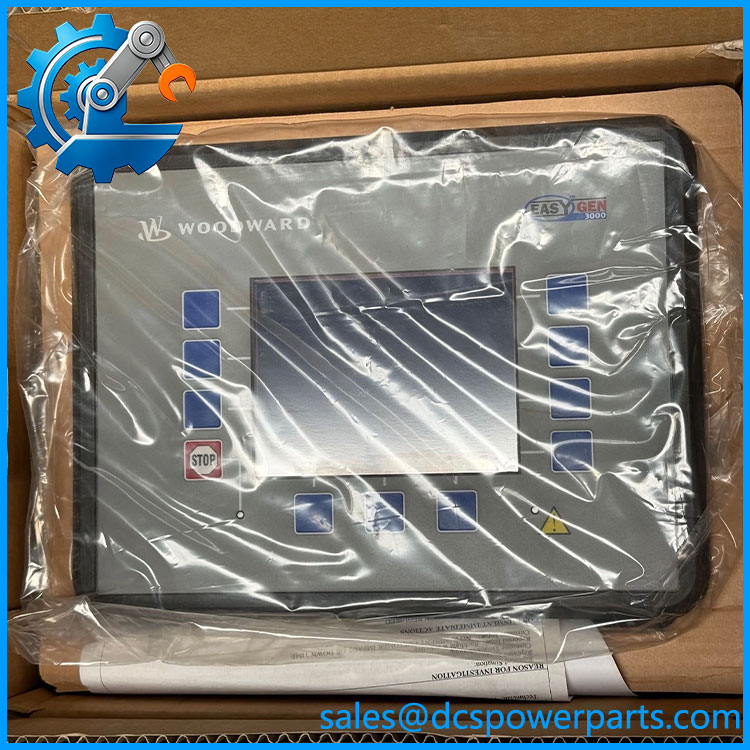
- 8440-1936 — Woodward’s easYgen-3500-5/P2 family identified as a similar modern replacement direction for 8440-1849. It should not be treated as a drop-in hardware substitute without engineering review.
- 8444-1074 — LSG-related replacement combination identified by Woodward’s legacy cross-reference for the 8440-1849 application.
- 8444-1075 — Alternative LSG-related replacement combination listed for the same legacy MFR 15 configuration.
- 8440-1846 — Another legacy MFR 15 configuration with a different option package. Do not assume its functions match 8440-1849.
- 8440-1852 — MFR-2S11B legacy multifunction relay, intended for a different MFR family and application configuration.
- 8440-1722 — MFR 15 configuration with 400 VAC and 1 A CT measurement inputs, demonstrating why the CT/PT suffix must be checked before substitution.
FAQ
Can I replace 8440-1849 with any MFR 15 relay?
No. The MFR 15 family contains numerous CT, PT, mounting, communication, and functional options. The complete configuration MFR1515B/BCIZMPMPSSBSB01UUSU07 should be matched against the replacement before procurement.
Can I hot-swap the 8440-1849?
Do not assume live replacement is permitted. This is a generator protection and synchronization relay connected to CT/PT circuits and breaker-control wiring. Follow the site’s approved isolation and maintenance procedure before removing it.
What CT input does this particular 8440-1849 use?
The documented configuration is MFR1515B, corresponding to the MFR 15 5 A CT variant and 100 VAC PT configuration. The physical nameplate should still be checked before replacement because MFR 15 units were produced in multiple electrical configurations.
Does 8440-1849 support Modbus RTU?
The MFR 15 family supports RS-485/Modbus RTU in the applicable package, particularly the SYN-I configuration. The specific 8440-1849 option string should be verified before promising a Modbus interface on a replacement unit.
Does this support firmware v3.1?
The part number alone does not establish firmware v3.1 compatibility. The MFR 15 documentation contains different hardware/software generations, so firmware and configuration should be verified against the installed unit and project documentation rather than inferred from the 8440-1849 number.
Is 8440-1849 still a current Woodward product?
No. Woodward’s legacy cross-reference identifies 8440-1849 as obsolete, with the last-time-buy period ending January 23, 2015. Woodward’s documented replacement direction points toward newer easYgen/LSG combinations rather than a current-production MFR 15 equivalent.
Is 8440-1849 an engine control module?
No. It is an MFR 15 multifunction relay for generator protection, synchronization, measurement, and control. Descriptions calling it an “advanced engine control module” should not be used for technical procurement.
Can the 8440-1849 be used with a DCS?
It can provide interfaces such as analog outputs and RS-485/Modbus where those options are present. Integration depends on the exact MFR 15 package, configured outputs, communication option, and the DCS interface architecture.
Procurement Note
For a Woodward 8440-1849, procurement should begin with the complete configuration code, not simply “MFR 15.” The documented unit is MFR1515B/BCIZMPMPSSBSB01UUSU07, and that string captures hardware and functional options that affect compatibility.
Confirm the CT secondary, PT secondary, mounting arrangement, analog-output configuration, communication interface, synchronization requirements, protection functions, and breaker-control wiring before approving a substitute. A newer Woodward replacement may provide an engineering migration path, but it should not be represented as a plug-in replacement without checking the complete generator-control application.
For legacy spare inventory, request a clear photograph of the actual nameplate and option code. Confirm whether the unit is new surplus, refurbished, or previously installed, and preserve the existing parameter set before taking an installed relay out of service. With equipment this old, configuration data can be harder to replace than the hardware itself.