Description
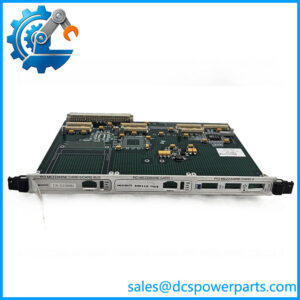
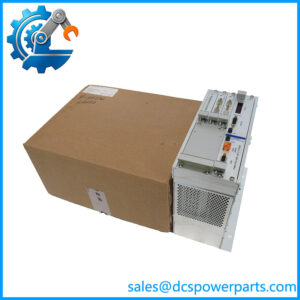
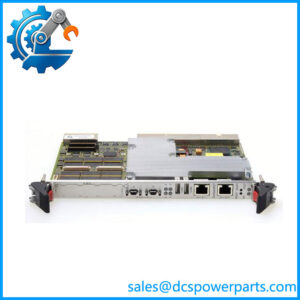
Watlow Anafaze CAS200 CLS216 16-Loop Temperature Controller
Key Technical Specifications
| Parameter | Specification |
|---|---|
| Manufacturer | Watlow Anafaze |
| Model | CAS200 CLS216 |
| Controller Family | CAS200 / CLS200 |
| Control Loops | 16 independent loops |
| Additional Pulse Loop | 1 |
| Maximum Channel Count | 17 including pulse loop |
| Input Types | Thermocouple, linear voltage, pulse input, depending configuration |
| Pulse Input Range | 0–2000 Hz |
| J Thermocouple Range | -212 to 760°C |
| K Thermocouple Range | -268 to 1371°C |
| T Thermocouple Range | -268 to 399°C |
| S Thermocouple Range | -18 to 1760°C |
| R Thermocouple Range | -18 to 1766°C |
| B Thermocouple Range | 660 to 1760°C |
| Digital Inputs | Up to 8 |
| Digital Outputs | Up to 35 |
| Ramp/Soak Profiles | Supported when the appropriate option is installed |
| Communications | Anafaze/AB protocol; serial communications |
| RTD Inputs | RTD1/RTD2 are specifically not available on CLS216/CAS200 |
| Control Method | Closed-loop PID/process control |
The OEM communication documentation is particularly useful here because it separates the CLS216/CAS200 configuration from other CLS200 variants. It identifies 16 control loops plus one pulse loop and states that the high- and low-resolution RTD inputs are not available on CLS216/CAS200.
Product Introduction
The Watlow Anafaze CLS216 is a high-density multi-loop process controller intended for applications requiring coordinated temperature control across multiple zones. The configuration provides 16 independent control loops plus a pulse loop, allowing one controller to handle a substantial number of thermal control points without using separate single-loop controllers.
Sensor selection depends on the configured controller and application. The documented / input set includes thermocouple types J, K, T, S, R and B, along with linear and pulse inputs. The OEM manual specifically excludes the RTD1 and RTD2 input types from /, so an assumption that every CLS200 input option applies here would be incorrect.
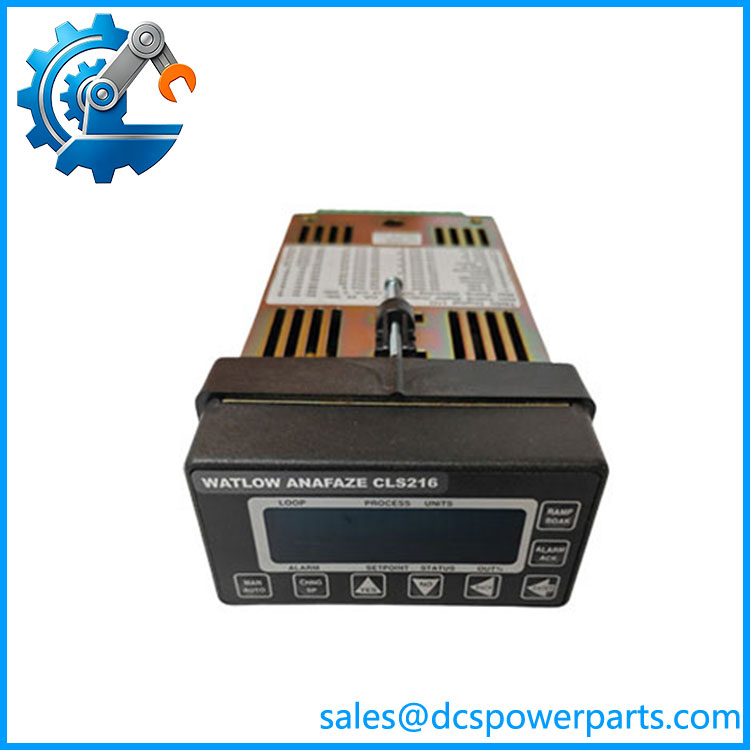
CAS200 CLS216
Application Scenarios & Field Pitfalls — Engineer’s Perspective
units are typically encountered in multi-zone thermal processing equipment, particularly where several heaters or process zones must be controlled from one centralized controller. They are suitable for applications such as plastics processing, extrusion equipment, industrial ovens, thermal processing machinery, and other equipment requiring multiple synchronized temperature loops.
Common Applications
- Plastic extrusion: Independent temperature control for multiple barrel or die zones.
- Industrial ovens: Multi-zone heating with separate PID parameters for each zone.
- Thermal processing equipment: Coordinated heating and temperature monitoring across multiple process sections.
- Machine heating systems: Centralized control where replacing many individual temperature controllers would add unnecessary panel complexity.
Field Pitfalls
1. is not simply a generic 16-channel analog input module.
Its primary role is closed-loop process control. Each loop has control parameters and can participate in heating/cooling and alarm functions according to the installed configuration.
2. Do not assume RTD compatibility.
The Watlow documentation explicitly states that the RTD1 and RTD2 input types are unavailable on /. If the existing machine uses RTDs, confirm the actual installed input configuration before replacement.
3. Firmware and optional features matter.
Ramp/soak and enhanced controller functions are option-dependent. The communication manual also identifies controller parameters whose availability depends on installed options. A replacement controller should therefore be checked against the original configuration rather than ordered by the designation alone.
4. Check the control output configuration.
A replacement needs to match the original heater-control hardware—such as solid-state relay drive, analog output, or relay-based control—rather than simply matching the number of temperature loops.
5. Preserve the original tuning data.
Before removing a functioning controller, record loop assignments, sensor types, PID values, alarm limits, output configuration, communication settings, and any ramp/soak programs. Re-entering the controller without this information can create significant commissioning work.
Related Products
- CLS204 — Four-loop CLS200 configuration; considerably lower loop count.
- CLS208 — Eight-loop CLS200 configuration.
- MLS316 — 16-loop controller configuration in the MLS300 family.
- MLS332 — 32-loop MLS300 configuration.
- — Controller platform associated with the 16-loop configuration.
- CLS200 — Watlow Anafaze multi-loop controller family.
- — The specific 16-loop controller configuration used with .
- CLS208 — Useful comparison when evaluating a lower-density replacement.
- MLS300 — Related multi-loop process-control family with different hardware/configuration characteristics.
Procurement Note
For a replacement, specify Watlow Anafaze together with the controller revision, firmware/options, sensor types, output configuration, communication arrangement, and existing loop assignments. The 16-loop designation alone does not establish complete interchangeability.
⚠️ Legacy equipment: Before commissioning a replacement, verify the original controller’s configuration and preserve all PID, alarm, profile, I/O, and communication parameters. If the unit has an unusual option package, the exact nameplate or configuration information should take priority over a generic listing.