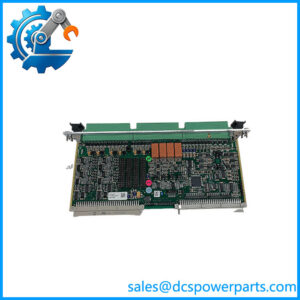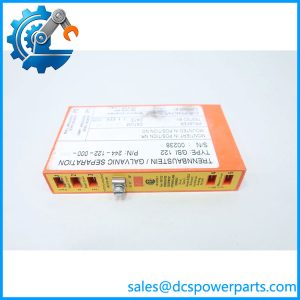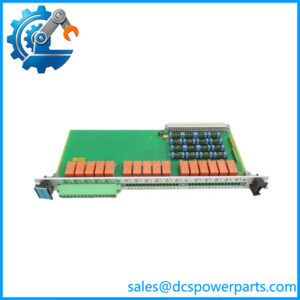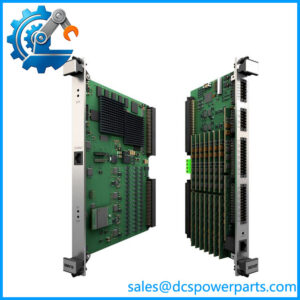
Description
Key Technical Specifications
| Parameter | Specification |
|---|---|
| Manufacturer | Vibro-Meter / Meggitt Sensing Systems |
| Product Family | VM600 |
| Module | XMV16 |
| VM600 Order Number | 600-003 |
| Full Ordering Number | 620-001-001-116 |
| Product Type | Extended Vibration Monitoring Module |
| Application | Machinery vibration and condition monitoring |
| Dynamic Channels | 16 |
| Tachometer Channels | 4 |
| Data Acquisition | 24-bit |
| Sampling | Synchronous or asynchronous |
| FFT Resolution | Up to 6,400 lines |
| FFT Processing | Up to 6,400 lines every 500 ms |
| Processed Outputs | Up to 20 per dynamic channel, depending on configuration |
| Software | VibroSight |
| Network Interface | On-board Ethernet |
| Card Pair | XMV16 + XIO16T |
| Rack Compatibility | VM600 ABE04x / ABE056 |
| Installation | XMV16 front; XIO16T rear |
| Configuration | Software configurable |
| Hot Swap | Supported according to published product descriptions |
The XMV16 provides 16 dynamic vibration channels and four tachometer channels, with simultaneous acquisition and 24-bit data processing. Published technical descriptions also specify configurable frequency bandwidth, spectral resolution, windowing, averaging, and high-resolution FFT analysis.
One procurement detail deserves attention: 600-003 is the VM600 ordering designation for the vibration-oriented XMV16, while 620-001-001-116 is the detailed module ordering number. The VM600 Mk2 generation uses different XMx16 ordering designations, so the rack generation should be confirmed before substitution.
Application Scenarios & Pain Points
A bearing fault, shaft imbalance, or rotor instability does not wait for a convenient maintenance window. The useful question is whether the monitoring system can capture enough synchronized data to distinguish a developing mechanical problem from an instrumentation issue.
- Gas and steam turbines: High-channel-count vibration acquisition is appropriate for monitoring multiple bearing and rotor measurement points together with shaft-speed references.
- Rotating machinery: Pumps, compressors, motors, fans, and other rotating assets can be monitored using configurable vibration-processing channels.
- Rotor-dynamics analysis: Synchronous acquisition and tachometer inputs provide the speed reference needed for order-related analysis.
- Condition-based maintenance: Spectral analysis and configurable processed outputs allow maintenance teams to track changes before a simple trip threshold is reached.
Brief Field Case
During a compressor investigation, a basic vibration alarm may only tell the operator that amplitude exceeded a threshold. An XMV16-based system can preserve considerably more information—spectral content, speed-related measurements, and processed vibration values—giving the reliability engineer a better basis for distinguishing imbalance, bearing behavior, or other mechanical changes.
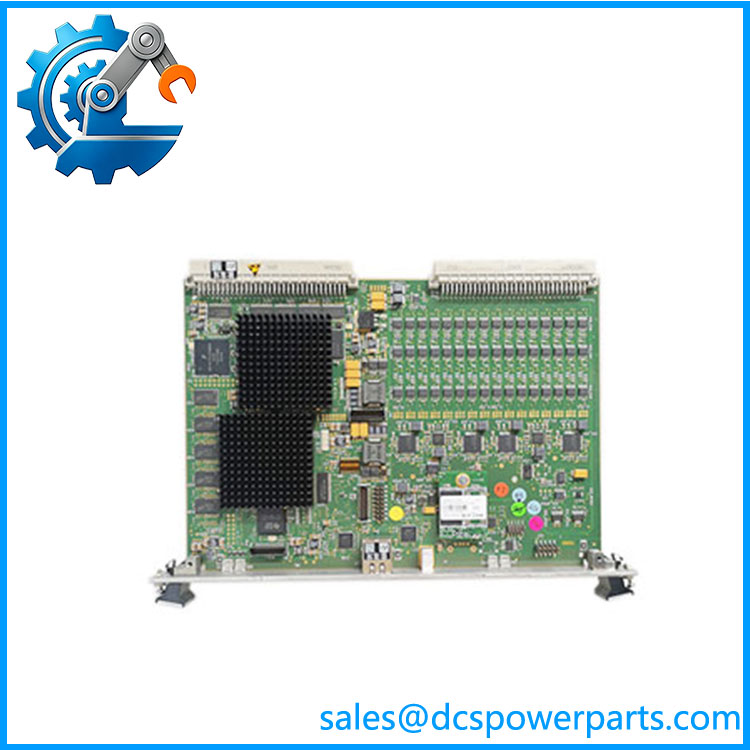
XMV16
Related Products
- Vibro-Meter / 620-001-001-116 — The subject extended vibration monitoring module. It handles the high-resolution acquisition and processing side of the VM600 monitoring system.
- Vibro-Meter XIO16T / 620-002-000-113 — The companion extended input/output module for the card pair. The XIO16T provides the physical field interface while the performs acquisition and processing.
- Vibro-Meter XIO16T / 620-003-111-112 — Related XIO16T ordering variant. Verify rack generation and hardware revision before using it as the companion I/O card.
- Vibro-Meter XMC16 / 600-002 — extended monitoring module intended for combustion monitoring rather than the vibration-specific application.
- Vibro-Meter XMVS16 / 600-016 — Vibration monitoring variant similar to but without support for the Raw bus. This difference can be decisive in an existing installation.
- Vibro-Meter XMVS16 / 600-054 — Mk2 version of the XMVS16 family. It should not be assumed interchangeable with the original 600-003 solely because the model names are similar.
- Vibro-Meter MPC4 — machinery protection card. It serves protection functions rather than the extended vibration-analysis role performed by .
- Vibro-Meter IRC4 — intelligent relay card for machinery protection. It handles protection-oriented relay and processed-output functions rather than replacing ‘s extended data acquisition.
- Vibro-Meter ABE04x — Standard rack family supporting the / arrangement. Rack compatibility must be confirmed before installing replacement cards.
The Engineer’s Guide: Field Pitfalls to Avoid
WARNING 1 — Do not confuse with .
The two cards form a functional pair, but they perform different jobs. is the extended monitoring/acquisition card; provides the corresponding input/output interface.
How to avoid it: Check both the front and rear card positions in the rack before ordering. If the failed card is in the rear position, you may actually need the .
WARNING 2 — Watch the 600-003 versus Mk2 distinction.
The original family lists = 600-003, while the Mk2 family uses separate XMx16 ordering codes.
How to avoid it: Record the rack model, card label, and complete ordering number. Do not substitute an Mk2 card solely because the model name contains “.”
WARNING 3 — Do not confuse with XMVS16.
The XMVS16 is similar to but is documented as lacking support for the .
How to avoid it: If the existing application uses Raw bus functionality, preserve the exact configuration rather than selecting the superficially similar XMVS16.
Frequently Asked Questions (FAQ)
What is the Vibro-Meter 620-001-001-116?
It is a extended vibration monitoring module used for high-resolution acquisition and processing of rotating-machinery vibration signals. The module provides 16 dynamic channels and four tachometer channels.
The 600-003 designation identifies the vibration-monitoring version within the original XMx16 family.
How many channels does the provide?
The provides 16 dynamic vibration channels plus four tachometer channels. The channels are individually configurable, allowing one card to handle a fairly substantial machinery-monitoring measurement set.
Does work by itself?
Not normally as a complete field-interface solution. The standard architecture uses an + pair. The is installed at the front of the rack, while the occupies the rear and provides the associated I/O interface.
When replacing a failed card, confirm whether the , , or both are actually involved in the fault.
What software is used with ?
The is designed to operate with VibroSight, which provides configuration, acquisition, analysis, and monitoring functions. Published descriptions also identify an on-board Ethernet controller for communication with the host system.
What is the difference between 600-003 and 600-016?
Both are vibration-monitoring modules, but the published ordering information identifies 600-016 as lacking Raw bus support.
That makes the distinction more than a cosmetic model-number change. If the existing installation uses Raw bus functionality, use the original specification.
Can the be hot-swapped?
Published product descriptions state that the supports live insertion and removal of cards.
For an operating turbine or compressor, however, I would still follow the site’s maintenance procedure and confirm the rack/system configuration before pulling the card. A theoretically hot-swappable module does not mean every application permits removal without consequences to the monitoring architecture.
What should I request when buying a replacement ?
For a production spare, request:
- Exact 600-003 / 620-001-001-116 identification.
- Clear front and rear photographs.
- Hardware revision.
- rack compatibility confirmation.
- compatibility confirmation.
- Power-up and diagnostic test.
- Dynamic-channel acquisition test.
- Tachometer-channel test.
- Ethernet communication test.
- VibroSight configuration/communication verification where practical.
- Condition and authenticity statement.
- Warranty documentation.
For a refurbished , a power-on test alone is weak evidence. The important question is whether the acquisition channels, tachometer inputs, processing functions, and host communication actually work. A vibration card can look perfectly clean on the bench while one acquisition path has a degraded front end.