Description
Product Overview
D28799-005 is a Triconex part number of a kind that behaves differently from everything else in the platform’s catalogue, and the honest starting point is that its function is not published anywhere the buyer can reach. There is no Triconex datasheet for it, no entry in the Trident or Tricon product specifications, and no official product page. What exists is a spare-parts listing in the same dealer inventories that carry CM2201 7400206-100, DI2301 7400208-020 and AT-2701FX 843-000844-00 — proximity that proves only that the number has been circulating in the secondary market for years, not what the part does.
The number’s shape is the first real evidence. Triconex builds its catalogue in distinct blocks: 4000xxx-xxx for module-level items, 3000xxx-xxx for assemblies inside a baseplate, 7400xxx-xxx for ordering numbers that map onto models, and 843-xxxxxx-yy for assemblies bought in from outside suppliers. D28799-005 sits outside all four. A five-digit numeric body preceded by a letter and followed by a three-digit item suffix reads like an engineering-drawing reference with a position on that drawing — the pattern a manufacturer uses when an assembly is defined by a drawing rather than by a product description. The suffix would then identify which item on that drawing is being ordered, which is precisely why the same body number can appear with different endings in a plant’s installed-base records.
If that reading is right, the practical consequences are clear, and they are the reason this article exists. An assembly-level number can denote a bracket, a harness, a fan, a connector kit, a chassis component, a power-distribution subassembly, or a populated board — all of which the same drawing-level numbering can express. It does not tell you which, and no amount of reseller prose will make it tell you. Two reseller pages, both in circulation, describe D28799-005 as a DIN-rail digital input module of 250 g, and as a redundant power supply interface with sixteen isolated 2 A channels in a 1.2 kg chassis module. A third calls it a core control module within the TMR logic solver; a fourth, on the same site that mislabels the AT-2701FX, calls it a heating-cable soft-start controller. Those are not four views of one part. They are four templates, and at most one of them touches the truth.
What can be said with confidence is narrower but useful: the part belongs to a Triconex safety system’s installed base, it has been procured as a spare for long enough to have accumulated reseller listings, and its suffix is an item position rather than a revision letter — a revision would normally appear as a letter appended to the assembly, the way 843-000844-00 REVD carries its D.
That means the buying decision cannot rest on a description. It rests on the OEM drawing the plant already owns, or on a physical comparison between the offered part and the failed one. Anyone offering D28799-005 without either is selling a number, not a part.
Technical Specifications
| Parameter | Value |
|---|---|
| Model | D28799-005 |
| Manufacturer | Triconex (Invensys; now Schneider Electric) |
| Platform | Triconex safety system — legacy installed base; platform generation not established for this number |
| Part-number class | Drawing/assembly reference with a three-digit item suffix; outside the 4000 / 3000 / 7400 / 843 series blocks |
| Official documentation status | No datasheet, no catalogue entry, no product page located in Triconex/Schneider public material |
| Function | Not published — candidates range from a hardware assembly to a populated board |
| Electrical parameters | Not published; not determinable from the part number |
| Mechanical parameters | Not published; dimensions and weight must be measured on the item in hand |
| Mounting and interface | Not published; connector type and mounting pattern are the practical identification clues |
| Certification | Not published for this number; do not assume SIL rating from platform association |
| Same-family markers | Reseller listings place it beside 7400206-100, 7400208-020, 9760-210 and 843-000844-00; co-listing is not functional evidence |
| Replacement rule | Match against the OEM drawing reference and the failed item; suffix and assembly revision both matter |
| Condition basis | Supplied against physical inspection and measurement, not against a description |
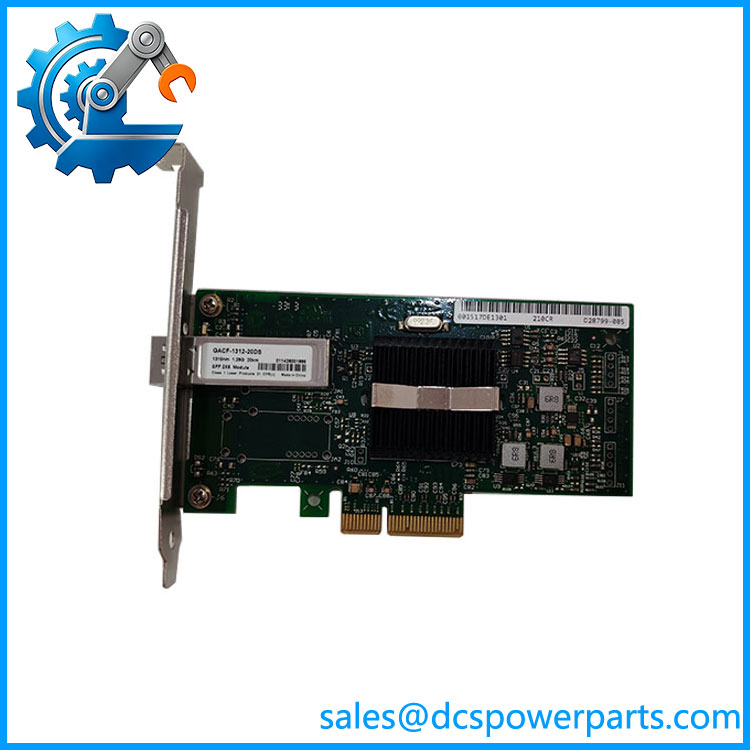
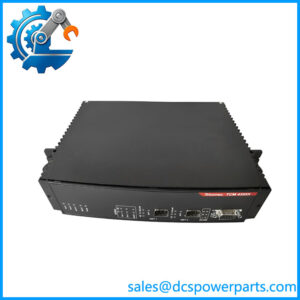
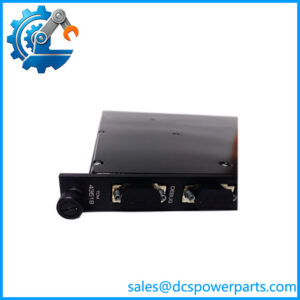
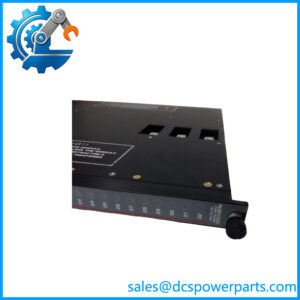
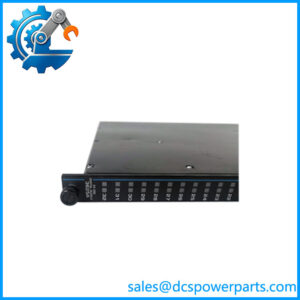
TRICONEX D28799-005
Key Features and Advantages
The number tells you where it sits in the documentation hierarchy. Reading D28799-005 against the platform’s known blocks — module numbers, baseplate assembly numbers, ordering numbers, bought-out assembly numbers — places it outside all of them, which is itself information: this is a drawing-defined item, and a drawing-defined item has to be matched by drawing, not by adjective.
A suffix that means position, not revision: the −005 ending is the item on the assembly, not a later revision of the same item. Once that is understood, a plant can check its own installed-base records for other endings of the same body number and discover what the family actually contains — often the fastest route to identifying a part nobody has a datasheet for.
Physical evidence outranks every listing: a nameplate, a silkscreen assembly number, a connector family, a mounting-hole pattern, a cable length, a weight on a scale. Each of those is a fact about the item; none of the reseller descriptions is. The verification list is short and can be done in an afternoon.
Co-listing as a warning rather than a clue: the same inventories that hold also hold genuine Trident baseplates, Tricon v9/v10 termination boards, third-party network cards and chassis parts. Being listed beside real parts says nothing about function — it says the seller stocks broadly.
No invented specification to defend later: this article gives no voltage, no channel count, no temperature range and no weight, because none can be sourced. A page that does give them, for this number, is inventing them; that is the practical test a buyer can apply to every other listing in the market.
A defensible procurement posture: buy against drawing reference and physical match, insist on photographs of the label and the connector face, ask for the assembly number silkscreened on the item, and treat “DIN rail, 24 VDC, 250 g” or “sixteen isolated 2 A outputs, 1.2 kg” as claims to be disproved rather than specifications to be relied on.
Limits, stated plainly: no function, no rating, no certification, no lifecycle status. The part is real in the secondary market and unidentifiable from public sources — and the article says so instead of choosing a template.
Applications
Service of an installed Triconex base where the OEM drawing specifies this number: the plant’s own documentation is the only authority, and the spare is bought to close a line item on a bill of materials rather than to add capability.
Obsolescence-driven spares holding: systems that have been running for twenty years accumulate assembly-level items that were never catalogued for public sale. A maintenance group that keeps the drawing set and the physical sample can still procure them; one that keeps only a model list cannot.
Replacement of a failed mechanical or electrical subassembly inside a chassis: fans, harnesses, connector kits and brackets are the class of item that most often carries a drawing-level number, and the class where a wrong purchase is discovered only at installation.
Retrofit and re-termination projects: when a column is rebuilt or an I/O position re-purposed, the hardware that comes out is often identified only by a drawing number, and matching it decides whether the position can be restored or must be redesigned.
Where it must not be used: as a specification source for a new installation, as evidence of a SIL rating, or as a substitute for a known part number on the strength of a reseller’s description. None of those applications survives contact with an audit.
Procurement due diligence in the secondary market: the correct use of this article is to force the seller to produce physical evidence — label photograph, connector face, silkscreen assembly number, measured weight — before a purchase order is raised for .
Related Products
4000094-310 / 4000094-320 Input Cable Assemblies — the cable-assembly class in the same platform, with published lengths and D-sub connectors, useful as a comparison when judging whether a candidate part is a harness. 4000093-310 / 4000093-320 Input Cable Assemblies — the sister cable assemblies to the above; note that even these carry published descriptions, which is what a genuine catalogued item looks like. CM2201 7400206-100 Communication Module Baseplate Kit — a catalogued carrier from the same ecosystem, with a complete published specification; the contrast with this number is instructive. DI2301 7400208-020 Digital Input Baseplate Kit — catalogued Trident baseplate, sold in the same inventories; a known part for comparison. 9760-210 (3000470-510) Current Input Terminal Board — Tricon v9/v10 termination hardware, documented, and frequently confused with Trident parts by the same sellers. 4000066-025 — another number circulating in these lists with an unpublished description; the same verification discipline applies. AT-2701FX 843-000844-00 — bought-out assembly under a Triconex number, identifiable because the board carries Allied Telesis’ own model; an example of a number that can be decoded. 3201 Communication Module and 3351 Analog Input Module — documented Trident modules, the reference standard for what a real specification looks like.
Installation and Maintenance
Before installation: do not proceed on a listing. Photograph the item’s label and any silkscreen assembly number, record the connector family and pin count, measure the mounting pattern, weigh the item, and compare all of it with the OEM drawing or with the failed part still in the cabinet. Confirm what the −005 suffix means on that drawing before assuming the body number alone identifies the part. Ask the supplier for those photographs and measurements in writing; a seller who cannot produce them is offering a number.
Installation: once the item is matched, treat it as an assembly rather than a module — check fastener torque, connector keying and any gasket or cover it carries, and confirm that clearances and airflow in the position are unchanged. Photograph the installation for the as-built file, and record the assembly reference alongside the serial or date information on the label, so the next replacement starts from evidence rather than from a marketplace search.
Maintenance: keep the drawing set and one physical sample of every assembly-level spare in the store, because this class of item cannot be re-identified from the number alone. Inspect such assemblies on planned outages for corrosion, cracked mountings, frayed harnesses and loose connector shells — failures that show up as intermittent faults attributed to modules. Where a number remains unidentified after verification, quarantine it under a hold tag rather than shelving it as a spare; in a bin without a verified drawing reference is a future mis-installation.
Warranty and Quality
Every is supplied against physical identification rather than against a product description, because no Triconex datasheet exists for this number and the reseller market describes it simultaneously as a 250 g DIN-rail digital input module, a 1.2 kg redundant power supply interface with sixteen isolated 2 A outputs, a core control module in the TMR logic solver, and a heating-cable soft-start controller. Each unit is photographed label-and-connector, measured for dimensions, mounting pattern and weight, checked for silkscreened assembly references and for evidence of prior repair, and compared against the customer’s drawing reference or returned sample before dispatch; where the match cannot be established, the item is reported as unconfirmed rather than shipped as a presumed function. A 12-month repair, replacement or refund commitment applies to the item as described and photographed. Technical support covers what this number actually raises: reading the drawing-reference numbering convention, mapping the −005 suffix to a position on the assembly, building the physical verification record a buyer needs, and separating a genuinely catalogued Triconex part from a number that only exists in the secondary market.