Description
Key Technical Specifications
| Parameter | Value |
|---|---|
| Manufacturer | Schroff |
| Model | MPS015 |
| Order Number | 13100205 |
| Product Type | AC/DC Power Supply |
| Input | 110/230 VAC class |
| Output Rails | +5 V, +12 V, -12 V |
| +5 V Output Current | 20 A |
| +12 V Output Current | 4 A |
| -12 V Output Current | 3 A |
| Rated Output Power | 150 W |
| Mounting/Application | 19-inch rack / electronic system |
| Typical Use | Industrial electronics, instrumentation, rack systems |
| Lifecycle | Legacy |
| Power Architecture | Multi-output DC supply |
The 20 A / 4 A / 3 A current ratings and 5 V / +12 V / -12 V rails are supported by the available MPS015 specification listing. The same source gives a 150 W rating.
Procurement warning: Some secondary listings give incorrect values such as “220 V operating voltage” and “50 kHz output frequency.” Those are not credible descriptions of a conventional MPS015 multi-output power supply and should not be used as technical specifications.
Product Introduction
Schroff MPS015 13100205
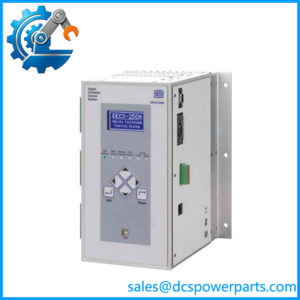
The Schroff MPS015 13100205 is a multi-output AC/DC power supply intended for rack-based electronic equipment. Its documented output arrangement is +5 V at 20 A, +12 V at 4 A, and -12 V at 3 A, with a total rated output of approximately 150 W.
This output combination is particularly relevant to older industrial computers, instrumentation, VME-based equipment, and electronic control racks that require several DC rails from a common AC source. For a legacy system, retaining the original supply format can be considerably simpler than redesigning the rack power architecture.
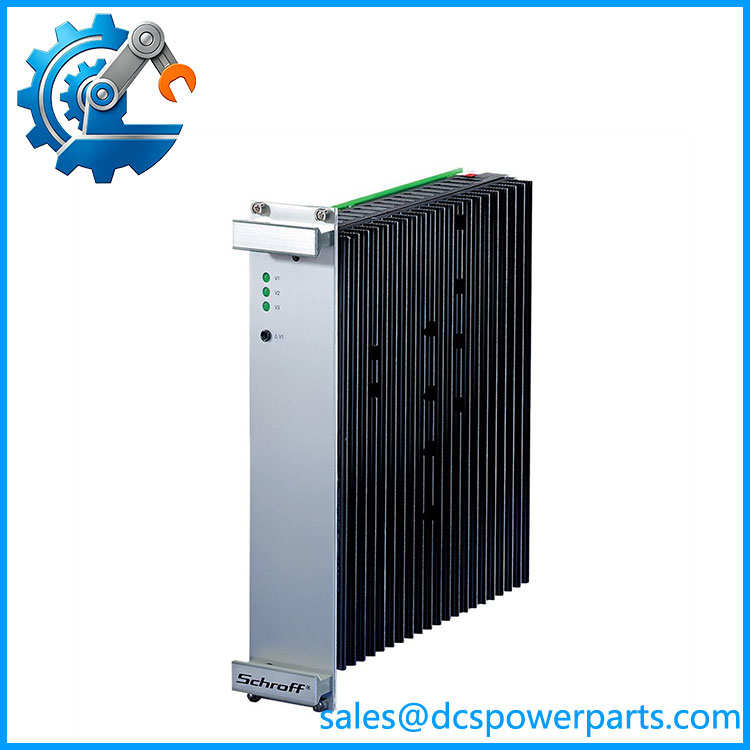
MPS015
Application Scenarios & Field Pitfalls
Engineering Pain Point
When an old VME or instrumentation rack begins producing multiple unrelated faults at once, engineers often start replacing individual boards. Check the power supply first. A weak +5 V rail can cause several digital boards to reset, disappear from the bus, or report apparently unrelated communication failures.
Typical Applications
- VME / Industrial Computing — Supplying +5 V logic and auxiliary ±12 V rails to legacy rack-based computers and interface cards.
- Instrumentation Systems — Powering electronic measurement and control assemblies requiring multiple DC voltages.
- Industrial Automation — Supporting older rack-based controller and interface systems.
- Test Equipment — Multi-rail DC supply for instrumentation and embedded electronic assemblies.
Technical Pitfalls to Avoid
- Measure the +5 V rail under load.
The MPS015 is capable of 20 A at +5 V. A supply can measure correctly with no load and still exhibit unacceptable voltage sag when the rack is populated. - Do not assume a 5 V failure means the CPU board is bad.
Legacy VME systems are particularly sensitive to the +5 V rail. Check supply voltage at the rack/backplane connector, not just at the power supply terminals. - Verify all three rails.
Do not check +5 V alone. The documented provides +12 V and -12 V as well. A missing auxiliary rail can affect analog, serial, or interface hardware even when the digital logic remains powered. - Confirm the AC input configuration.
The available product information identifies the as a 110/230 VAC supply. Confirm the actual installed input arrangement before energizing a replacement. - Check rack loading before substitution.
Calculate the total +5 V demand of the installed boards. A replacement supply must meet the required current on each individual rail, not merely the total wattage. - Inspect connector heating.
High-current +5 V distribution can produce significant connector losses. Discolored terminals, hardened insulation, or localized heating should be investigated before putting a replacement supply into service. - Check cooling and airflow.
A 150 W rack supply operating in a confined cabinet depends on adequate ventilation. Dust buildup and failed fans can accelerate capacitor aging and output instability. - Do not use generic “150 W” supplies as automatic substitutes.
The important specifications are the individual 5 V / +12 V / -12 V current ratings, mechanical format, connector pinout, input arrangement, and protection characteristics. - Check electrolytic capacitors on older units.
These are legacy power supplies. Increased ripple or intermittent startup can be an aging-capacitor problem rather than a catastrophic semiconductor failure. - Verify polarity before connecting the rack.
The presence of a -12 V rail makes polarity verification especially important. A wiring error can damage multiple boards simultaneously.
Related Products
- Schroff MPS022 13100203 — Related Schroff MPS-series power supply. It belongs to the same general legacy power-supply family but has different electrical specifications. Do not substitute it solely because the model numbers are similar.
- Schroff PSM115 — Another Schroff power-supply family used in rack-based electronic systems. It is a different supply design and must be evaluated by output voltage/current and mechanical compatibility.
- Schroff 11098-140 — Schroff power-supply unit from the same broader rack-power ecosystem. It may be relevant when maintaining legacy Schroff cabinets but is not established as a direct replacement.
- Schroff 13100-141 — MAXPOWER PRO CompactPCI power supply. It serves a newer/different rack architecture and should be considered for controlled system modernization rather than direct replacement.
- Schroff MAX 315 IMS — Higher-capacity Schroff power-supply platform. It can be relevant to rack modernization where the original power budget is insufficient, but the system backplane and mechanical interface must be redesigned or verified.
- Schroff 13105029 / PSG224 — Schroff test-system power module. It belongs to the test-system power family and may be encountered in related instrumentation installations, but its electrical configuration differs from .
- Schroff 13100102 — Another Schroff power-supply part number used in legacy electronic systems. Exact voltage/current ratings should be checked against the target rack before considering substitution.
- Schroff 13100-174 — Related Schroff power-supply hardware. It is useful as a reference when identifying older Schroff rack power architectures, but it is not automatically interchangeable with .