Description
Product Overview
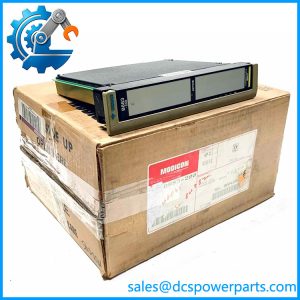
The Schneider Electric 140CPU65150 is a Modicon Quantum CPU designed for demanding PLC control applications where deterministic processing and controller redundancy are important. The CPU provides approximately 20 MIPS processing performance and supports 140 KB of program memory, with 7168 internal registers. It belongs to the Quantum 140CPU65xxx family and is designed for use with the Quantum backplane architecture, supporting local and distributed I/O configurations. The 140CPU65150 also supports Hot Standby operation, allowing two appropriately configured Quantum CPUs to maintain control availability when the primary controller becomes unavailable.
For Schneider Electric 140CPU65150, the Hot Standby capability is a major consideration when evaluating the module for an operating plant. The redundancy architecture requires matching CPUs, compatible firmware, correct configuration, and the appropriate Quantum Hot Standby infrastructure; simply installing a second CPU does not create a functioning redundant system. The processor also supports a broad range of Quantum system functions, including discrete and analog I/O management, distributed I/O communications, Modbus Plus, and application program execution.
The Schneider Electric 140CPU65150 is particularly useful for maintaining established Quantum installations where a complete controller migration would introduce unnecessary commissioning risk. Schneider lists this product as part of the Quantum platform, making it a practical spare for existing systems built around the same CPU family. When sourcing a replacement, confirm the exact catalog number, hardware revision, firmware level, memory requirements, Hot Standby topology, and programming environment before placing it into a live control system.
Product Introduction
A redundant PLC system can fail its transfer test even when both CPUs are electrically healthy if their firmware and configuration do not match. 140CPU65150 combines 20 MIPS processing performance with 140 KB program memory and Quantum Hot Standby capability.
For a Modicon Quantum Hot Standby replacement, compare firmware, application configuration, CPU revision, and redundancy topology before commissioning. The processor belongs to an established Quantum architecture rather than being a generic replacement CPU.
Key Technical Specifications
| Parameter | Value |
|---|---|
| Manufacturer | Schneider Electric |
| Model | 140CPU65150 |
| Product Family | Modicon Quantum |
| Product Type | Hot Standby CPU |
| CPU Class | Quantum 140CPU65xxx |
| Processing Performance | 20 MIPS |
| Program Memory | 140 KB |
| Register Memory | 7168 registers |
| Discrete I/O Capacity | Up to 64K I/O depending on system configuration |
| Distributed I/O | Supported |
| Hot Standby | Supported |
| Modbus Plus | Supported through Quantum architecture |
| Serial Communications | Supported through compatible communication interfaces |
| Backplane | Quantum local rack/backplane |
| Programming Environment | Unity Pro / EcoStruxure Control Expert family, subject to version |
| Application | Process control, machine control, redundant PLC systems |
| Installation | Quantum CPU rack |
| Condition | New Surplus — verify revision and firmware before deployment |
Schneider’s product documentation identifies the 140CPU65150 as a Quantum Hot Standby CPU with 140 KB memory and specifies the 20 MIPS processing class.

140CPU65150
Related Products
- 140CPU65150 — The main Quantum Hot Standby CPU covered here. It is intended for redundant control applications where controller availability is important.
- 140CPU65260 — Higher-capability Quantum CPU in the same broad 140CPU65 family. It can provide greater application capacity, but compatibility must be assessed rather than assumed from the family number.
- 140CPU67160 — Higher-performance Quantum CPU family member used where greater processing and application resources are required. It is an alternative architecture rather than a blind replacement.
- 140CPU43412A — Earlier Quantum CPU family used in established installations. It can be relevant when evaluating legacy compatibility but differs substantially in processing and memory capabilities.
- 140CPU31110 — Quantum CPU for lower-complexity applications. It is useful for comparison but does not provide the same Hot Standby capability and capacity.
- 140CHS11100 — Quantum Hot Standby module used in applicable redundant configurations. The redundancy system requires the correct supporting hardware in addition to the CPU pair.
- 140CRP31200 — Quantum remote I/O processor. It complements the CPU by handling remote I/O network communication within supported Quantum architectures.
- 140NOE77101 — Quantum Ethernet communication module. It adds Ethernet-based communications to a Quantum rack where the application requires network connectivity.
- 140NOC78000 — Quantum Ethernet communication module for Ethernet/IP and related industrial-network applications. It provides a different communications role from the CPU itself.
Frequently Asked Questions
What is Schneider Electric 140CPU65150 used for?
The 140CPU65150 is a Modicon Quantum PLC CPU with Hot Standby capability.
Its primary responsibilities include:
- Executing the application program
- Processing I/O data
- Managing PLC memory
- Coordinating distributed I/O
- Handling system communications
- Supporting controller redundancy
Schneider specifically identifies the product as a Quantum Hot Standby CPU with 140 KB memory.
How much memory does 140CPU65150 have?
The CPU provides 140 KB of program memory and 7168 registers. Its published processing performance is 20 MIPS.
When replacing an existing CPU, compare the actual application size and memory allocation rather than relying only on the nominal program-memory number.
Does 140CPU65150 support Hot Standby?
Yes. Hot Standby is one of the defining functions of the 140CPU65150.
A redundant Quantum installation normally uses two appropriately configured CPUs, along with the required redundancy hardware and communications architecture.
The critical point is that the CPUs must be compatible in terms of:
- CPU model.
- Firmware.
- Application configuration.
- Hot Standby settings.
- Network architecture.
- I/O configuration.
A mismatched pair can prevent the expected redundancy transfer even if both processors operate independently.
Can I replace 140CPU65150 with another Quantum CPU?
Not automatically.
A different Quantum CPU may have a similar physical format but still differ in:
- Program memory
- Processing performance
- Firmware support
- Hot Standby capability
- I/O limits
- Communication functions
- Unity Pro / Control Expert compatibility
For a production replacement, the safest starting point is a like-for-like 140CPU65150, followed by a documented compatibility review if another CPU is being considered.
Will I lose my PLC logic when replacing 140CPU65150?
The physical CPU replacement does not automatically transfer your application program from the old processor.
Before replacement, back up and document:
- PLC application
- Hardware configuration
- CPU firmware
- Hot Standby settings
- I/O configuration
- Network parameters
- Register assignments
- Retentive data requirements
For a redundant installation, verify the backup on the standby CPU before attempting a controlled transfer to the new processor.
Does 140CPU65150 support Unity Pro?
The 140CPU65150 is associated with Schneider’s Unity Pro programming environment, now continued under the EcoStruxure Control Expert product family.
The important procurement issue is software revision. Do not assume that the newest Control Expert release will behave identically with every historical Quantum CPU firmware revision. Match the engineering software, CPU firmware, and existing application before commissioning.
Can I hot-swap the 140CPU65150?
Do not assume that the CPU can simply be pulled from an energized Quantum rack.
Whether a module can be replaced under power depends on the specific Quantum architecture, rack configuration, redundancy arrangement, and approved maintenance procedure. For a production system, follow Schneider’s installation requirements and the plant’s electrical isolation procedure.
How should I test a New Surplus 140CPU65150?
For a New Surplus CPU, I would test more than startup LEDs.
Recommended acceptance sequence:
- Verify the exact 140CPU65150 catalog number.
- Record hardware revision and firmware version.
- Inspect the backplane connector.
- Install it in a compatible Quantum test rack.
- Verify normal CPU initialization.
- Establish programming-software communication.
- Load a controlled test application.
- Verify memory operation and register access.
- Exercise representative local/distributed I/O.
- Test applicable communication ports.
- If intended for redundancy, pair it with a compatible CPU and verify Hot Standby synchronization.
- Perform a controlled primary/standby transfer.
- Review diagnostic and fault information.
- Record the complete test results.
Procurement note: for the 140CPU65150, firmware compatibility deserves particular attention. A physically correct CPU can still create commissioning work if its firmware does not align with the existing Quantum application or Hot Standby partner.