Description
Product Overview
Reliable communication between industrial controllers, distributed I/O, and field devices depends on using the correct network hardware for the installed automation architecture. The RHUB200-5 model designation suggests a hub-type component, but the manufacturer, protocol, and exact function cannot be established reliably from the part number alone. It would be premature to classify it as an Ethernet switch, serial hub, fieldbus coupler, or controller accessory without supporting documentation.
For maintenance and procurement teams, identification should begin with the complete nameplate, manufacturer logo, catalog or assembly number, and connector layout. These details help distinguish devices that may share similar model-number conventions but use different electrical interfaces or communication protocols. If the RHUB200-5 belongs to a legacy control system, the host controller model and installed network architecture are equally important. Connector compatibility by itself does not establish electrical or protocol compatibility.
Before approving a replacement, obtain the applicable datasheet or system manual and confirm the supply voltage, supported interfaces, operating temperature, mounting requirements, and diagnostic indicators. Where the component participates in a redundant or safety-related network, also verify its permitted role in that architecture. The RHUB200-5 should not be specified as a direct replacement for another hub until the manufacturer and functional equivalence are documented.
Product Introduction (Non-Templated)
Incorrectly identifying a communication module can lead to wiring changes, network faults, and avoidable commissioning delays. The RHUB200-5 requires manufacturer and interface verification before its precise application in a PLC or DCS installation can be stated.
For a legacy automation replacement, confirm the nameplate, host-system model, port arrangement, and communication protocol. These checks establish whether the component matches the installed equipment rather than merely resembling the original unit.
Key Technical Specifications
| Parameter | Value |
|---|---|
| Model | RHUB200-5 |
| Manufacturer | Unconfirmed |
| Product Type | Provisional communication hub |
| Catalog Number | RHUB200-5; additional part number unconfirmed |
| Port Count | Unverified |
| Communication Protocol | Unverified |
| Working Voltage | Unverified |
| Interface Type | Unverified |
| Operating Temperature | Unverified |
| Installation Method | Unverified |
| Protection Rating | Unverified |
| Condition | Confirm with supplier |
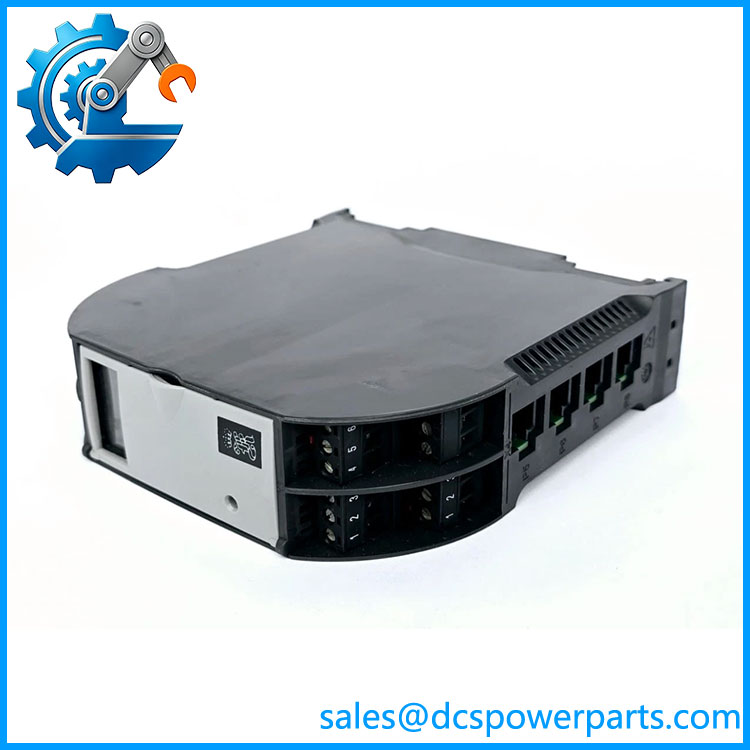
RHUB200-5
Related Products
Exact related models cannot be responsibly listed until the manufacturer and product family are identified. The following component categories can help establish the correct replacement path:
- Matching unit — The preferred starting point for like-for-like replacement, subject to verification of the complete part number and revision.
- Compatible network hub — A potential alternative if the original device is discontinued; port characteristics, topology, and protocol must match.
- Industrial Ethernet switch — Suitable only if the original device performs Ethernet switching and the network design permits substitution.
- Serial communication hub — Relevant only if the original component distributes serial communications rather than Ethernet traffic.
- Fieldbus coupler — A different device class used to connect fieldbus networks to compatible I/O or control systems.
- Communication interface module — May provide a dedicated controller-to-network connection, but is not necessarily interchangeable with a standalone hub.
- Redundant network module — Relevant where the installed architecture requires redundant communication paths and fault monitoring.
These are identification categories, not confirmed compatible products.
Frequently Asked Questions (FAQ)
1. Who manufactures the ?
The manufacturer has not been reliably established from the model designation alone. Check the front label, rear nameplate, PCB markings, and any accompanying equipment documentation before assigning a brand.
2. Is the compatible with my existing PLC or DCS?
Compatibility depends on its actual function and communication interface. Confirm the host controller, protocol, electrical specifications, and network topology before purchasing a replacement.
3. Can I hot-swap the ?
Do not assume live replacement is supported. Check the manufacturer’s service instructions and determine whether removing the device interrupts controller communications or a redundant network path. Isolate power when required by the applicable procedure.
4. Does the support Ethernet or a fieldbus protocol?
That information remains unverified. The connector type and number of ports can provide clues, but they cannot conclusively identify the supported protocol. Obtain the datasheet or clear photographs of the connectors and nameplate.
5. How can I verify a new-surplus ?
Request photographs of the actual unit, identification markings, packaging, and any available traceability or inspection records. Ask the supplier to disclose prior installation, repair, and testing history and to provide written warranty terms.
6. Can I use a newer hub as a replacement?
Possibly, but only after confirming functional equivalence. Differences in network topology, isolation, timing, diagnostic behavior, and redundancy support can affect system operation even when the connector layout appears similar.
7. What information is needed to identify the exact ?
A clear photograph of the product label or the manufacturer’s name is the most useful next step. If available, include the full part number, any suffix or revision, and the equipment in which the module is installed. With that information, the specifications and suitable related models can be narrowed down without inventing technical details.