Description
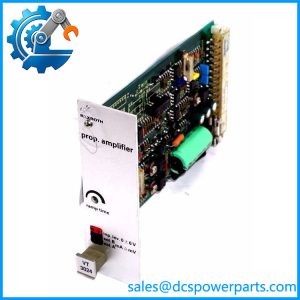
Bosch Rexroth VT-VSPD-1-22/V0/1-0-1 | Digital Proportional Valve Amplifier
Key Technical Specifications
| Parameter | Specification |
|---|---|
| Product Model | VT-VSPD-1-22/V0/1-0-1 |
| Manufacturer | Bosch Rexroth |
| Product Family | VT-VSPD |
| Product Type | Digital proportional valve amplifier |
| Valve Application | Proportional valves without electrical position feedback |
| Supply Voltage | 24 VDC |
| Operating Voltage Range | 18–35 VDC |
| Current Consumption | <2 A |
| Current Command Input | 4–20 mA, 100 Ω load |
| Differential Voltage Input | 0 ±10 V, input resistance >50 kΩ |
| Potentiometer Input | 0 ±10 V, input resistance >100 kΩ |
| Output Stage | Proportional solenoid drive |
| Output Frequency | Configuration-dependent |
| Ramp Time | 20 ms–5 s; switchable to 0.2–50 s |
| Operating Temperature | 0–50°C |
| Approx. Weight | 0.17 kg |
| Electronics Format | VT-VSPD proportional amplifier card |
| Configuration | Variant-specific; verify original card parameters |
The documented VT-VSPD-1-22 specification lists 24 VDC operation, 18–35 VDC operating limits, less than 2 A current consumption, 4–20 mA input with a 100 Ω load, ±10 V differential/potentiometer inputs and selectable ramp ranges.
Configuration caution: the public documentation I found does not expose enough reliable information to decode every field of -22/V0/1-0-1. Do not infer the final 1-0-1 configuration from the .../0-0-1 variant.
Product Introduction
The Bosch Rexroth VT-VSPD-1-22/V0/1-0-1 is a digital proportional valve amplifier used to control hydraulic proportional valves. It receives an analog command from a PLC, controller or other automation device and regulates the electrical drive signal required by the proportional valve. The VT-VSPD family is intended for applications without electrical valve-position feedback.
The -22 configuration supports common industrial command formats including 4–20 mA and ±10 V signals. Its configurable ramp functions are particularly important in hydraulic machinery because they control how quickly the commanded valve output changes. The amplifier should therefore be considered part of the hydraulic control loop rather than simply an analog signal converter.
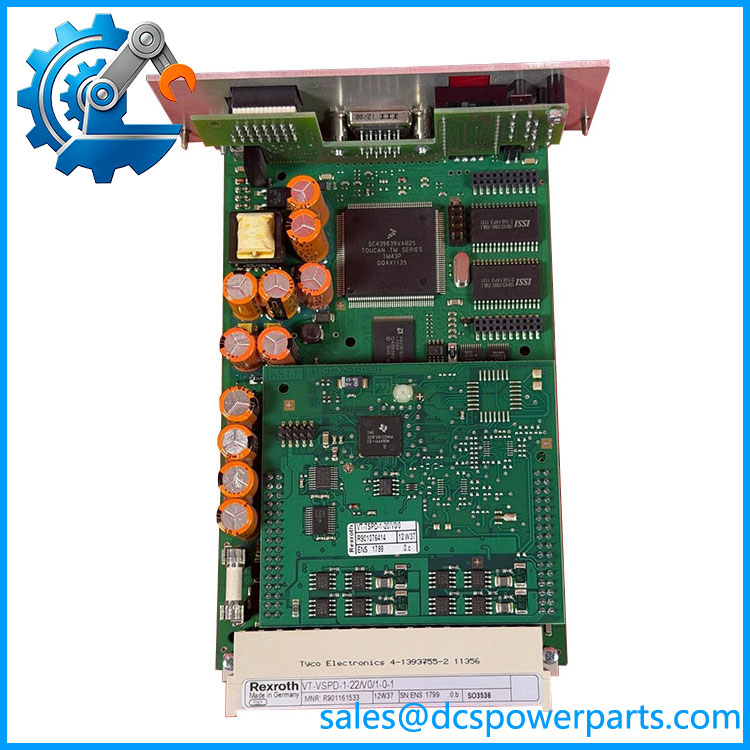
VT-VSPD-1-22V01-0-1
Application Scenarios & Field Pitfalls — The Engineer’s Perspective
Engineering Pain Point
A frequent replacement error is selecting a VT-VSPD amplifier based only on the VT-VSPD-1-22 prefix while ignoring the complete configuration suffix. Two cards can have the same basic family and supply voltage but different input, output or parameter settings. The .../1-0-1 code should therefore remain intact throughout procurement and commissioning.
Typical Applications
- Industrial hydraulic proportional control where PLC or machine-controller signals must drive proportional solenoids.
- Hydraulic pressure and flow regulation using proportional valves.
- Machine-tool and forming equipment requiring controlled hydraulic actuator movement.
- Legacy Rexroth hydraulic cabinets using dedicated proportional amplifier cards.
The exact model is publicly listed as a Rexroth VT-VSPD-1-22/V0/1-0-1 card, while the closely documented -22 variant is described as a proportional amplifier supporting 4–20 mA and ±10 V command inputs.
Technical Pitfalls to Avoid
- Do not substitute the
.../0-0-1version without verification.
The exact requested model isVT-/V0/1-0-1, while another commonly documented version isVT-/V0/0-0-1. The final configuration code is different. - Verify the command signal.
The -22 documentation supports 4–20 mA and ±10 V inputs. Check the machine wiring and original parameterization before applying a command signal. - Check the hydraulic valve coil.
The amplifier must be matched to the actual proportional solenoid. Coil resistance, required current, valve type and hydraulic function should be checked against the valve documentation. - Preserve ramp settings.
The documented ramp range extends from milliseconds to tens of seconds depending on the selected range. Changing these values can substantially alter cylinder acceleration, deceleration and pressure response. - Do not treat it as a closed-loop position amplifier.
VT-VSPD is associated with proportional-valve applications without electrical position feedback. Feedback-equipped valve applications require a different amplifier architecture. - Verify the original card wiring before energizing.
The amplifier is an interface between the machine controller and hydraulic valve. A wiring error on command, enable, supply or solenoid connections can result in uncontrolled hydraulic movement.
Related Products
- Bosch Rexroth VT-/V0/0-0-1 — Same basic -22 amplifier configuration but with a different final configuration code; do not assume direct interchangeability.
- Bosch Rexroth VT-VSPD-1-23/V0/1-0-1 — Closely related -23 configuration from the same digital proportional amplifier family; electrical and parameter differences require verification.
- Bosch Rexroth VT-VSPD-1-24/V0/1-0-1 — Related VT-VSPD configuration with a different ordering code; confirm command and output configuration before substitution.
- Bosch Rexroth VT-VSPD-1-2X/V0/1-0-1 — Family-level configuration reference appearing in Rexroth component records; the
2Xdesignation should not be treated as a substitute for the exact -22 code. - Bosch Rexroth VT-VSPA1 — Analog proportional amplifier family; similar hydraulic application but different electronics architecture.
- Bosch Rexroth VT-VRPD-1 — Digital amplifier family for proportional valves with electrical position feedback; not an automatic replacement for VT-VSPD.
- Bosch Rexroth VT-VRPA — Proportional valve amplifier family associated with feedback-equipped hydraulic applications; verify valve and feedback architecture before considering substitution.
- Bosch Rexroth VT-MSPA1 — Modular analog amplifier family used for proportional hydraulic control; different hardware platform.
Procurement and Replacement Note
For procurement, use the complete identifier VT-/V0/1-0-1. A supplier should confirm the physical label, revision and complete ordering code rather than supplying a generic VT- card.
Before replacement, verify the proportional valve model, solenoid coil resistance/current, command signal, enable logic, ramp settings, amplifier configuration, cabinet wiring and card interface. The closely documented VT-/V0/0-0-1 is not automatically equivalent to the requested .../1-0-1 version.
For an existing hydraulic machine, preserve the original amplifier parameters before removal whenever possible. That information can be critical to restoring the original hydraulic response after the card is installed.