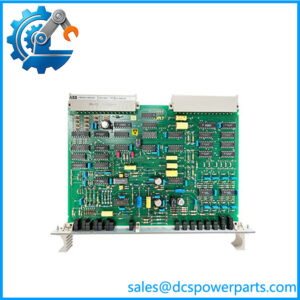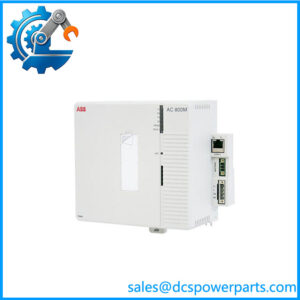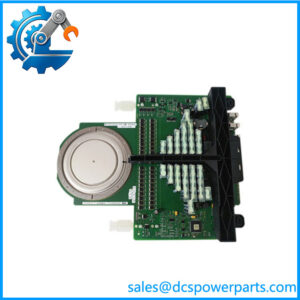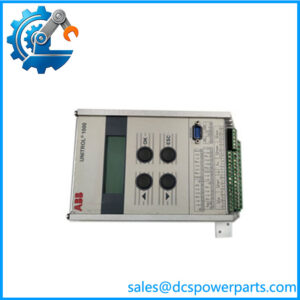
Description
Key Technical Specifications
| Parameter | Value |
|---|---|
| Product Model | PCD235B1101 |
| Order Number | 3BHE032025R1101 |
| Manufacturer | ABB |
| Product Type | Excitation Controller Module |
| Application | Generator excitation control |
| System Family | ABB UNITROL excitation systems |
| Main Function | Field excitation regulation and control signal processing |
| Control Target | Synchronous generator excitation current |
| Controller Architecture | Digital control module |
| Input Signals | Generator feedback and excitation system measurements |
| Output Signals | Excitation control commands |
| Installation | ABB excitation control cabinet |
| Communication | System-dependent internal ABB communication interfaces |
| Typical Equipment | Turbine generators, hydro generators, industrial synchronous machines |
Application Scenarios & Pain Points
Excitation control problems often appear during operating transitions. A generator may run at steady load, but voltage recovery after load changes becomes slow, reactive power control drifts, or excitation alarms begin appearing.
Typical applications:
- Power Generation Plants: Used in generator excitation systems to regulate field current and maintain generator terminal voltage.
- Hydroelectric Stations: Supports excitation control for large synchronous generators where stable voltage response is required during rapid load changes.
- Industrial Power Systems: Applied in plants using synchronous motors or generators requiring controlled excitation management.
- Utility Generator Maintenance: Used as a spare control module for installed ABB excitation equipment where system replacement is not practical.
Field note: A generator unit showed unstable voltage recovery during load switching. Initial checks focused on the AVR settings and power section, but feedback processing pointed toward the excitation controller. After replacing the PCD235B1101 module and restoring the original parameters, the excitation response returned to normal.
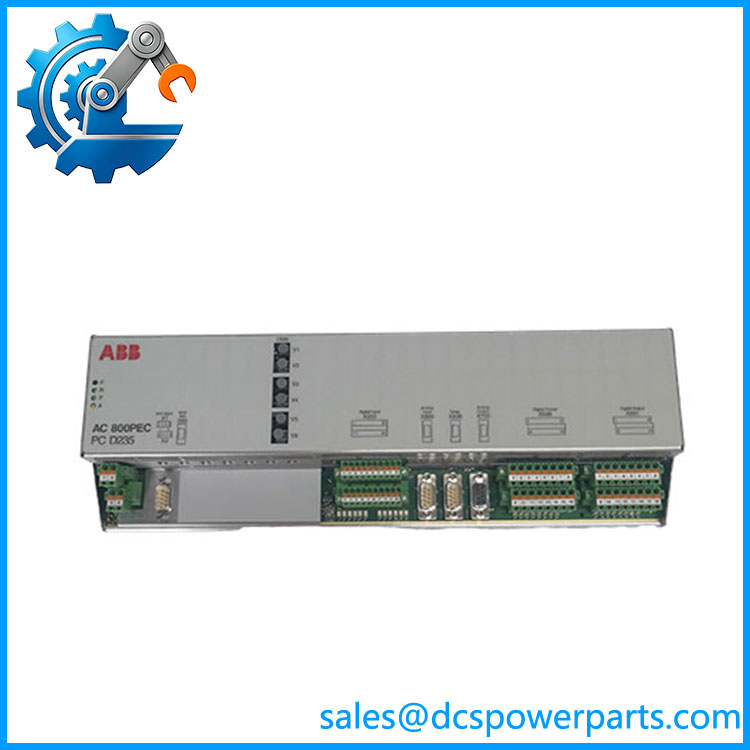
PCD235B1101 3BHE032025R1101
Related Products
- ABB PCD235B101 3BHE032025R0101 — Related PCD235 controller variant. Used in similar excitation control architectures but requires verification of hardware revision and cabinet configuration before substitution.
- ABB PCD237A101 3BHE028915R0101 — Auxiliary controller module used with excitation systems for additional control and interface functions.
- ABB PCD230A101 3BHE022291R0101 — Communication/control module associated with ABB UNITROL 6000 platforms. Used for system communication and measurement tasks.
- ABB PCD231B101 3BHE025541R0101 — Converter control interface module used in UNITROL excitation systems.
- ABB PCD530A102 3BHE041343R0102 — Controller board used in newer UNITROL 6000 X-power generation platforms.
- ABB UNITROL 6000 System — Complete excitation platform integrating controllers, power electronics, and measurement components.
- ABB UNITROL 1020 — Compact excitation regulator platform for smaller synchronous generators.
The Engineer’s Guide: Field Pitfalls to Avoid
⚠️ Firmware and Parameter Mismatch
A replacement controller can power up normally but fail to regulate correctly when the stored excitation parameters do not match the generator application.
How to avoid: Save controller parameters, excitation limits, voltage settings, and tuning values before removal.
⚠️ Incorrect Module Revision Replacement
ABB excitation systems often contain similar-looking controller boards with different hardware functions.
How to avoid: Confirm the complete order number, PCB revision, cabinet drawings, and installed system type.
⚠️ Poor Connector and Backplane Inspection
Excitation cabinets operate in electrically noisy environments. Dirty contacts can create intermittent faults that resemble controller failure.
How to avoid: Inspect connectors for oxidation, contamination, and mechanical damage before installation.
Frequently Asked Questions (FAQ)
What is the ABB PCD235B1101 3BHE032025R1101 used for?
The PCD235B1101 is an excitation controller module used in ABB generator excitation systems. It processes feedback information and controls excitation output to maintain generator operating conditions.
Is the PCD235B1101 a PLC CPU?
No. It is a dedicated excitation control module. Its application is focused on generator excitation regulation rather than general PLC sequence control.
Which ABB systems use the PCD235B1101?
The module is associated with ABB excitation system platforms, particularly UNITROL-related architectures. Exact compatibility depends on the installed cabinet design and system generation.
Can I replace a without software changes?
Not always. The hardware replacement may require restoring excitation parameters, calibration values, and controller configuration from the original system backup.
What symptoms indicate a failing ?
Typical symptoms may include:
- Unstable generator voltage
- Excitation alarms
- Incorrect field current response
- Communication faults within the excitation cabinet
- Failed startup synchronization
What should be checked before purchasing this ABB module?
Confirm:
- Complete part number: 3BHE032025R1101
- Existing UNITROL system type
- Controller revision
- Firmware compatibility
- Parameter backup availability
- Cabinet slot position
Is a refurbished ABB suitable for generator service?
A tested refurbished unit can be suitable when controller operation, I/O response, communication functions, and compatibility with the installed excitation system are verified before installation.