Description
Product Overview
The Panametrics XMTC-62-12-0-XMTC-CAL-411S belongs to the XMTC family of thermal conductivity transmitters designed for continuous measurement of binary or pseudo-binary gas mixtures. Rather than measuring gas concentration through a chemical reaction, the transmitter detects differences in thermal conductivity between the sample gas and a reference gas. Its sensor electronics convert that difference into a concentration-related signal for use by a process control system. Typical XMTC applications include hydrogen monitoring in generator cooling systems, hydrogen measurement in nitrogen-based furnace atmospheres, and selected carbon dioxide, helium, methane, or other gas-mixture applications where the constituents have sufficiently different thermal conductivities. The actual gas pair and calibrated measurement range must match the installed configuration.
In a typical installation, the XMTC transmitter operates with a suitable sample-conditioning arrangement that delivers a clean, representative gas sample within the specified flow, pressure, and temperature limits. Its isolated 4–20 mA output can be connected to a compatible PLC, DCS, recorder, or gas-monitoring system. The standard published XMTC specifications include a 24 VDC supply and a nominal response time of 20 seconds to reach 90% of a step change, although the final system response also depends on sample transport and conditioning.
For procurement, the full model string Panametrics XMTC-62-12-0-XMTC-CAL-411S should be treated as a configuration-specific identification, not proof that every XMTC transmitter is interchangeable. Confirm the measurement gas pair, calibrated span, reference-gas arrangement, enclosure certification, electrical connections, and calibration records before using it as a direct replacement. The XMTC family is discontinued, so replacement planning should account for existing wiring, sample-system design, control-system scaling, and any changes required when evaluating the successor XMTCpro.
Product Introduction
When gas purity affects generator protection, furnace atmosphere control, or process quality, a replacement transmitter must match the original calibration—not just the model family. The Panametrics XMTC-62-12-0-XMTC-CAL-411S is associated with the XMTC thermal conductivity gas-analysis platform, which provides concentration measurement for compatible binary gas mixtures.
Before installation, verify the original calibration sheet, gas combination, measurement span, reference-gas setup, and output scaling. These details determine whether the unit can operate correctly with the existing sample system and PLC/DCS input.
Key Technical Specifications
| Parameter | Specification |
|---|---|
| Product Model | XMTC-62-12-0-XMTC-CAL-411S |
| Manufacturer | Panametrics / GE Measurement & Control legacy line |
| Product Family | XMTC |
| Product Type | Thermal conductivity binary gas transmitter |
| Measurement Principle | Comparison of sample and reference gas thermal conductivity |
| Power Supply | 24 VDC ±2 VDC, 1.2 A maximum per published XMTC specifications |
| Analog Output | Isolated 4–20 mA |
| Maximum Output Load | 800 Ω, per published XMTC specifications |
| Typical Response Time | 20 seconds to 90% of a step change |
| Published Accuracy | ±2% of span |
| Published Linearity | ±1% of span |
| Published Repeatability | ±0.5% of span |
| Typical Sample Flow | 0.1–4.0 SCFH; 0.5 SCFH nominal |
| Gas Compatibility | Application- and calibration-dependent |
| Enclosure | Confirm weatherproof or explosion-proof version from nameplate |
| Calibration Code | XMTC-CAL-411S; exact calibration meaning requires original documentation |
| Product Lifecycle | Legacy/discontinued XMTC family |
The electrical and performance values above are published XMTC-family specifications, not confirmation that every value applies to this exact suffix configuration. Confirm the unit-specific documentation before commissioning.
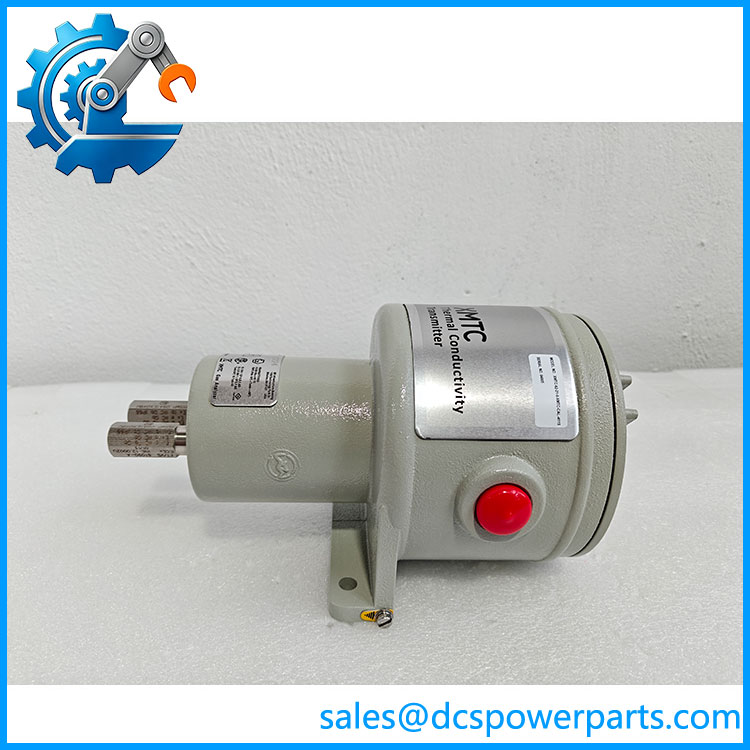
XMTC-62-12-0-XMTC-CAL-411S
Related Products and System Components
- XMTC-42-21 — Another XMTC configuration. Compare ordering codes, gas range, reference arrangement, and enclosure before considering substitution.
- XMTC-52-11 — Related XMTC model designation; compatibility with the target configuration must be verified.
- XMTC-62-11 — A related model in the same transmitter family. The differing suffix may indicate a different configuration; do not assume matching calibration.
- XMTCpro — Successor product family identified by Panametrics. Evaluate it as a potential modernization option, not an automatic drop-in replacement.
- TMO2D-TC — Optional display and control product associated with XMTC installations. Check the precise interface and compatibility requirements for the existing system.
- XDP — Explosion-proof gas transmitter display family. Confirm the required transmitter interface, power arrangement, and certification before pairing it with an XMTC.
- 24 VDC power supply — Supports the XMTC transmitter when the installed system does not provide a suitable supply. Verify voltage tolerance and startup current capacity.
- Gas sample-conditioning system — Delivers a representative sample at the required pressure, temperature, and flow. Its design must suit the process gas and analyzer configuration.
- PLC/DCS analog input channel — Receives the transmitter’s 4–20 mA signal. Confirm input type, loop arrangement, scaling, and fault-response behavior.
Frequently Asked Questions
1. What does the Panametrics XMTC-62-12-0-XMTC-CAL-411S measure?
It is associated with the XMTC thermal conductivity transmitter family, which measures concentration in compatible binary or pseudo-binary gas mixtures. Typical applications include hydrogen in generator cooling gas or furnace atmospheres, but the exact gas pair must be established from the unit’s calibration documentation.
2. Can I use this model as a direct replacement for another XMTC transmitter?
Not based on the family name alone. Compare the full part number, calibrated gas mixture, measurement span, reference-gas arrangement, enclosure, and wiring. A transmitter with a different calibration may produce a plausible-looking 4–20 mA signal while reporting an incorrect concentration.
3. What does the
The available documentation confirms the XMTC family and its calibration-dependent operation, but does not establish the exact decoding of this complete suffix. Request the original order record or calibration sheet and compare it with the unit’s serial number. Avoid assigning a gas range or calibration type from the suffix alone.
4. Can I connect the XMTC directly to a PLC or DCS?
The XMTC family provides an isolated 4–20 mA output suitable for compatible control-system inputs. Confirm the input’s current-loop arrangement, configured engineering range, alarm limits, and signal-failure handling. The transmitter’s calibration must agree with the scaling configured in the PLC or DCS.
5. Can this transmitter be hot-swapped while the process is running?
Do not assume that it can. Isolate power and follow the site’s approved maintenance procedure before disconnecting the transmitter. More importantly, opening the sample system can release process gas or introduce air into the measurement path. Hazardous-area certification, gas hazards, and process continuity requirements must all be considered.
6. How can I verify a new-surplus unit’s authenticity and condition?
Ask for clear nameplate photographs, the complete part number, serial number, enclosure markings, and any available factory calibration or service records. For used or surplus equipment, request a documented functional test and disclose whether the unit has been powered, calibrated, or repaired. New-surplus status alone does not establish current calibration accuracy.
7. Does this model support a particular firmware version, such as v3.1?
A firmware version cannot be confirmed from the supplied part number alone. Request the transmitter’s identification and configuration records, and verify the applicable manual and software tools. Before commissioning, document any parameter changes and validate the output against known calibration gas or an approved reference procedure.
Procurement recommendation: Treat this as a configuration-specific legacy gas analyzer. The most important missing document is the original calibration record for ; obtain it before approving the unit as a direct replacement.