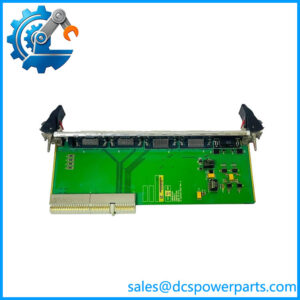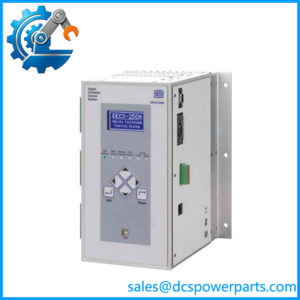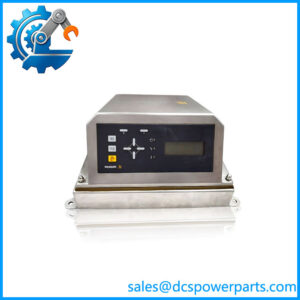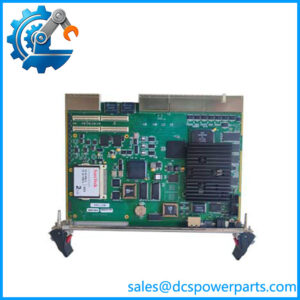
Description
Notifier RP-2002E Agent Release Control Panel
Product Overview
The Notifier RP-2002E is a conventional six-zone fire alarm and agent-release control panel designed for systems where fire detection must be integrated with suppression equipment, notification appliances, supervisory devices, and controlled releasing circuits. It is part of the RP-2002 family and is intended for single- and dual-hazard agent-releasing applications in commercial, industrial, and institutional facilities. Unlike a conventional PLC controller, the RP-2002E is purpose-built for supervised fire detection and suppression logic, with dedicated alarm, supervisory, trouble, pre-discharge, discharge, and abort functions.
The RP-2002E provides six programmable initiating device circuits and four programmable output circuits. The output circuits can be configured for notification appliance or releasing functions, while three Form-C relays provide programmable alarm, trouble, and supervisory contacts. The panel also provides 24 VDC special-application power outputs and continuously supervises wiring, AC power, the battery charger, and battery condition.
A major distinction is the E suffix. The RP-2002E is designed for 220/240 VAC input, whereas the standard RP-2002 uses the lower-voltage AC configuration. Current certification records also identify RP-2002E as a six-loop maximum panel with 220 VAC, 50/60 Hz primary power and a two-battery arrangement in the listed configuration.
For replacement work, this is not a board that should be selected purely by physical appearance. Releasing-panel configuration, detection-zone wiring, notification circuits, agent-release interfaces, abort inputs, timing parameters, and connected suppression equipment all need to be checked before commissioning.
Product Introduction
Suppression systems have very little tolerance for configuration mistakes. The RP-2002E combines six conventional initiating circuits with four programmable output circuits, three Form-C relays, supervised power functions, and dedicated agent-release logic in one wall-mounted panel.
The key electrical distinction is simple: RP-2002E uses 220/240 VAC, while the standard RP-2002 is the 110/120 VAC version. The panel provides up to 7.0 A of total 24 VDC output-circuit current in the documented configuration.
Key Technical Specifications
| Parameter | Specification |
|---|---|
| Product Model | RP-2002E |
| Manufacturer | Notifier by Honeywell |
| Product Type | Agent Release Control Panel |
| System Type | Conventional fire alarm / releasing |
| Initiating Device Circuits | 6 programmable Style B/Class B |
| Output Circuits | 4 programmable Style Y/Class B |
| Output Function | NAC or releasing circuit, depending configuration |
| Relay Outputs | 3 programmable Form-C |
| Main AC Supply | 220/240 VAC |
| AC Frequency | 50/60 Hz |
| AC Current | Approximately 2.085 A at 240 VAC in the documented FLPS-7 configuration |
| DC Output Voltage | 24 VDC |
| Total Output-Circuit Current | 7.0 A |
| LCD | 80-character backlit display |
| Event History | 256 events |
| Remote Annunciators | Up to 8 |
| Auxiliary Power | Resettable and non-resettable 24 VDC outputs |
| Battery Configuration | 12 VDC batteries, two units in the documented configuration |
| Installation | Wall-mounted cabinet |
| Operating Temperature | 0 to 49°C / 32 to 120°F in published product data |
| Relative Humidity | 93 ±2% RH, non-condensing |
| Primary Application | Single- and dual-hazard agent releasing |
| Standards / Listings | UL, FM and applicable regional approvals; verify exact installed configuration |
The published RP-2002E electrical data specifies 240 VAC, 50 Hz and approximately 2.085 A for the FLPS-7 configuration. Other certification records identify the main supply as 220 VAC, 50/60 Hz. The exact site installation should therefore be checked against its nameplate and approval documentation rather than treating one catalog value as universal.
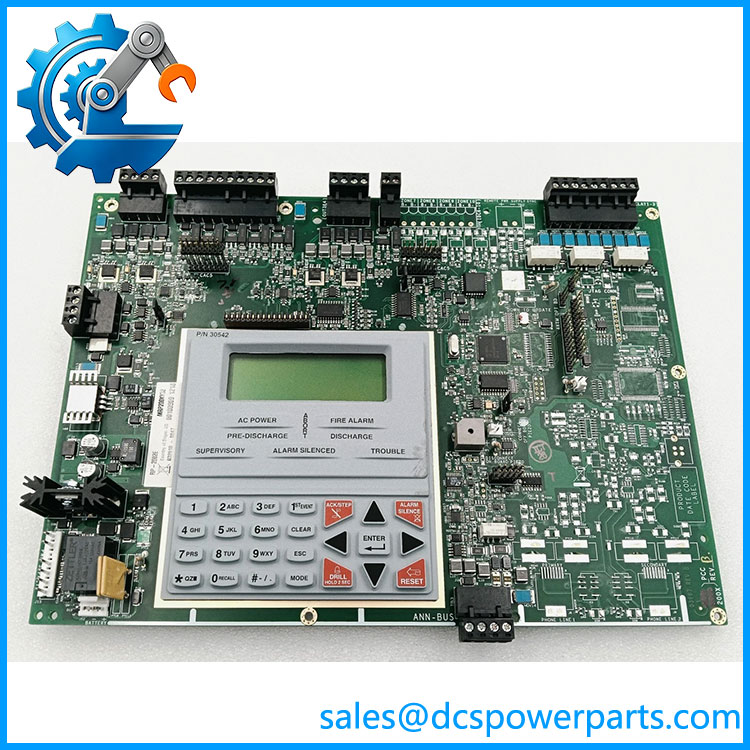
RP-2002E
Major Features / Practical Advantages
1. Six-Zone Conventional Detection
The RP-2002E provides six programmable initiating device circuits. These circuits can accommodate compatible conventional smoke detectors and other initiating devices such as pull stations, waterflow devices, tamper switches, and normally open alarm contacts. Compatibility must be checked against the applicable Notifier device compatibility documentation.
This architecture is useful for legacy suppression installations because the panel does not require an addressable fire alarm loop for basic detection. Each zone is supervised and can be configured according to the suppression-system requirements.
2. Dedicated Agent Releasing Functions
The RP-2002E was designed specifically for agent-release applications rather than ordinary building notification alone. It can control releasing circuits while managing the associated pre-discharge, discharge, abort, alarm, supervisory, and trouble indications.
That distinction matters during replacement. A generic fire alarm panel may provide similar-looking alarm outputs but still lack the exact releasing logic, supervision, timing, and approval required by the existing suppression system.
3. Four Programmable Output Circuits
Four output circuits can be programmed as notification appliance circuits or releasing circuits. This gives the installer flexibility in allocating outputs between horns/strobes and suppression equipment.
Output programming should be documented before replacement. A physically identical panel with different programming is not equivalent from a system-commissioning standpoint.
4. Three Form-C Relays
Three programmable Form-C relays are provided. The factory configuration associates them with Alarm, Trouble, and Supervisory functions. These contacts can be used for auxiliary control or remote notification as permitted by the system design.
5. 24 VDC Special-Application Power
The panel includes resettable and non-resettable 24 VDC power outputs. The documented RP-2002 series specification provides 7.0 A total output-circuit current. This capacity should not be interpreted as unrestricted auxiliary load capacity; the connected fire alarm and releasing equipment must remain within the applicable output limitations.
6. Supervised Power and Field Wiring
The RP-2002E supervises more than initiating zones. The panel monitors field wiring, AC voltage, battery charging, and battery level. This allows many common wiring and power faults to be reported as trouble conditions rather than remaining hidden until an actual fire event.
7. 80-Character LCD and Event History
The front panel includes an 80-character backlit LCD together with dedicated control functions such as acknowledge, alarm silence, system reset/lamp test, and drill. The system also stores up to 256 historical events.
For maintenance teams, the event history is useful when investigating intermittent zone, power, supervisory, or releasing faults. Before replacing a panel, preserving available event information can help establish whether the panel itself failed or was reporting a field problem.
8. Remote Annunciator Support
The RP-2002 series supports optional ANN-BUS devices, including remote LCD annunciation and relay/LED modules. The product documentation identifies capacity for up to eight annunciator devices.
This should be checked during a replacement because removing an installed annunciator network from the configuration can create secondary system faults even when the main panel appears to operate normally.
Related Products
- RP-2002 — 110/120 VAC version of the same six-zone agent-release control-panel family.
- RP-2002C — Related RP-2002 series configuration documented for different regional/system requirements.
- MRP-2002E — Agent Release Control System variant using the RP-2002E platform architecture.
- N-CAC-5X — Class A converter module for converting applicable Class B initiating and output circuits.
- 4XTM — Transmitter module for supervised remote-station and reverse-polarity applications.
- N-ANN-80 — Remote LCD annunciator for displaying RP-2002 system information.
- N-ANN-I/O — LED driver interface for remote indication.
- N-ANN-RLY — Relay module for additional remote relay functions.
- System Sensor i3 detectors — Compatible conventional detector family documented for RP-2002 applications.
- FLPS-7 — Power-supply assembly used in the documented RP-2002/RP-2002E configuration.
FAQ
What is the Notifier RP-2002E used for?
It is a six-zone conventional fire alarm and agent-release control panel intended for single- and dual-hazard suppression applications. It combines fire detection, notification, supervision, and controlled releasing functions.
What is the difference between RP-2002 and RP-2002E?
The principal distinction is the AC input configuration. RP-2002 uses 110/120 VAC, while RP-2002E is designed for 220/240 VAC. The two should not be treated as direct electrical substitutes without checking the complete installation.
How many detection zones does RP-2002E have?
The panel provides six programmable initiating device circuits. These are conventional circuits rather than a modern addressable SLC architecture.
Can I hot-swap the RP-2002E?
No hot-swap assumption should be made. This is a complete fire suppression control panel connected to mains power, standby batteries, detection circuits, notification appliances, and potentially agent-release equipment. Replacement requires an approved fire-system maintenance procedure and appropriate isolation of connected circuits.
Does RP-2002E support conventional smoke detectors?
Yes. Honeywell/Notifier documentation identifies compatibility with conventional two-wire and four-wire smoke detectors as well as other initiating devices. System Sensor i3 conventional detectors are specifically supported in the documented system.
Does RP-2002E have programmable releasing circuits?
Yes. Four output circuits can be programmed as notification appliance circuits or releasing circuits, depending on the application configuration.
Does RP-2002E have an LCD?
Yes. The panel provides an 80-character backlit LCD for system information and control functions.
Does RP-2002E support firmware v3.1?
The RP-2002E model number does not establish a firmware version such as v3.1. The product documentation reviewed does not provide sufficient evidence to assign a specific firmware version to an individual panel. Do not approve a replacement based on firmware assumptions alone.
What should be checked before replacing an RP-2002E?
Check the complete panel model, main supply, battery arrangement, six-zone wiring, four output assignments, releasing circuits, abort inputs, notification appliances, Form-C relay usage, remote annunciators, and programmed timing parameters.
For a suppression system, also preserve the existing cause-and-effect documentation. A replacement panel that powers up normally can still be incorrectly configured for the connected suppression equipment.
Is New Surplus RP-2002E automatically equivalent to an installed panel?
No. New Surplus describes condition, not configuration. Verify the exact RP-2002E revision, power-supply assembly, approval markings, board revision, installed accessories, and required programming before commissioning.
Procurement Note
The Notifier RP-2002E should be sourced as a complete fire suppression control-panel assembly, not as a generic PLC or ordinary fire alarm controller. The critical identification point is the 220/240 VAC E-version, combined with the six-zone, four-output releasing architecture.
Before issuing a purchase order, document the existing panel’s nameplate, main PCB revision, power-supply assembly, battery specification, field wiring, output assignments, annunciator network, and releasing configuration. Photograph the terminal blocks and configuration labels before disconnection.
One practical warning: do not substitute the standard RP-2002 120 VAC version simply because the enclosure and control layout appear identical. The RP-2002E is specifically the 220/240 VAC version, and current certification records continue to distinguish the two models.