Description
Product Overview
The National Instruments SCXI-1520 is an 8-channel universal strain/bridge input module designed for signal conditioning and measurement of bridge-based sensors. It belongs to the NI SCXI platform and is intended for applications where strain gauges, load cells, pressure transducers, torque sensors, and similar Wheatstone-bridge devices need controlled excitation and signal conditioning before acquisition by a compatible DAQ system.
Unlike a simple analog input card, the NI SCXI-1520 provides the conditioning functions required around a bridge sensor. Depending on the measurement configuration, these include bridge completion, excitation, filtering, offset adjustment, and shunt calibration. This allows the sensor interface to be handled close to the signal source before the conditioned signal reaches the acquisition hardware.
The National Instruments SCXI-1520 is particularly useful in older test and measurement installations where an SCXI chassis is already part of the system. It should not be treated as a standalone USB DAQ device. The module depends on the SCXI architecture and compatible acquisition hardware, terminal blocks, cabling, and NI software. For replacement work, the exact SCXI chassis configuration and existing sensor wiring should be checked before substituting the module.
Technical Specifications
| Parameter | Specification |
|---|---|
| Manufacturer | National Instruments |
| Model | SCXI-1520 |
| Part Number | 777316-20 |
| Product Family | SCXI |
| Product Type | Universal Strain/Bridge Input Module |
| Number of Channels | 8 |
| Primary Measurement | Strain / Bridge Sensors |
| Sensor Interface | Wheatstone Bridge |
| Typical Sensors | Strain gauges, load cells, pressure and torque transducers |
| Signal Conditioning | Bridge completion, excitation, filtering, calibration |
| Shunt Calibration | Supported |
| Offset Nulling | Supported |
| Excitation | Programmable/configuration dependent |
| Analog Acquisition | Requires compatible DAQ hardware |
| System Interface | SCXI backplane |
| Chassis | SCXI chassis required |
| Software | NI measurement software/configuration dependent |
| Mounting | SCXI module slot |
| Status | Legacy/discontinued |
Main Features and Advantages
Universal Bridge Conditioning
The SCXI-1520 is designed around the practical requirements of bridge measurements rather than simply providing eight generic voltage inputs. This makes it appropriate for sensors whose output is relatively small and whose measurement quality depends on excitation, bridge completion, and signal conditioning.
Eight Measurement Channels
Eight independent channels allow several strain gauges or bridge transducers to be connected within a single SCXI module. The actual sensor configuration depends on the bridge type and the selected terminal/accessory hardware.
Bridge Completion
For quarter-bridge strain-gauge measurements, appropriate bridge-completion circuitry is important because the sensor itself does not contain the complete Wheatstone bridge. The SCXI-1520 provides circuitry intended to support these measurement arrangements.
Excitation Management
Bridge sensors require a stable excitation source. The module’s excitation capabilities reduce the need for separate external excitation hardware in compatible configurations.
Shunt Calibration
Shunt calibration is particularly useful in strain measurement systems because it provides a way to verify the measurement chain without physically loading the structure. This is valuable for test stands, machine monitoring, and production measurement systems.
Signal Filtering
Bridge signals can be susceptible to electrical noise, particularly in industrial environments with motors, drives, and switching equipment. Appropriate filtering can improve measurement stability before the signal reaches the acquisition hardware.
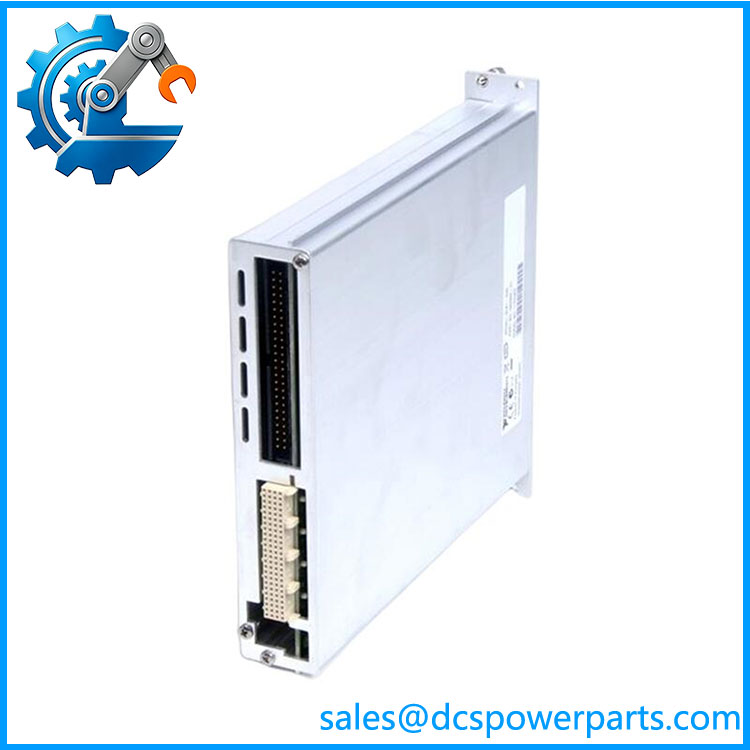
SCXI-1520
Application Scenarios
- Strain-gauge measurement
- Load-cell test systems
- Force measurement
- Pressure transducer measurement
- Torque measurement
- Mechanical test stands
- Materials testing
- Structural testing
- Automated production test
- Legacy SCXI-based instrumentation
Engineer’s Guide: Field Pitfalls
WARNING 1 — is not a standalone DAQ
The module is part of the SCXI signal-conditioning architecture. It requires compatible SCXI chassis and acquisition hardware.
Do not purchase the module as a direct replacement for a USB or PCI analog-input device.
WARNING 2 — Check bridge configuration
A quarter-, half-, and full-bridge sensor does not use the same wiring arrangement.
Before replacement, document:
- Bridge type
- Excitation voltage
- Sensor resistance
- Signal polarity
- Wiring configuration
- Terminal block
- Shunt-calibration wiring
WARNING 3 — Excitation and sensor specifications must match
A replacement measurement module should not be connected to an existing bridge sensor until the sensor’s excitation requirements and allowable excitation current have been verified.
WARNING 4 — Terminal hardware matters
The SCXI module and its terminal block form part of the measurement interface. If the existing terminal block uses a particular bridge-completion or signal-routing arrangement, replacing only the module may not reproduce the original measurement configuration.
WARNING 5 — Calibration should not be skipped
A used may power up normally while having degraded relay/contact, excitation, or analog-conditioning performance. For precision strain measurements, a functional test followed by calibration verification is preferable to a simple power-on test.
Frequently Asked Questions
What is NI ?
The is an 8-channel universal strain/bridge signal-conditioning and input module for the SCXI instrumentation platform.
What sensors can it measure?
It is intended for bridge-based sensors such as:
- Strain gauges
- Load cells
- Pressure transducers
- Torque sensors
- Other Wheatstone-bridge transducers
Is an analog input module?
It performs analog measurement functions, but its main distinction is bridge-specific signal conditioning. It should not be compared directly with a generic voltage-input SCXI module.
Does it provide sensor excitation?
Yes, excitation is part of the module’s bridge-measurement functionality, with the exact available configuration depending on the sensor and system setup.
Does it support shunt calibration?
Yes. Shunt calibration is one of the important functions associated with the and is useful for checking the strain measurement chain.
Can it connect directly to a computer?
No. It operates within the NI SCXI architecture and normally works with compatible SCXI chassis and DAQ hardware.
What should be checked when purchasing a used ?
I recommend verifying:
- Exact identification.
- Module revision.
- SCXI chassis compatibility.
- All eight channels.
- Bridge excitation output.
- Bridge-completion circuitry.
- Analog signal path.
- Shunt-calibration function.
- Terminal-block compatibility.
- Software/DAQ compatibility.
- Calibration status.
- Evidence of stable operation under representative bridge-sensor loads.
Bottom line: The is an 8-channel SCXI module built specifically for strain and bridge-based measurements. Its value is in the combination of bridge excitation and signal conditioning rather than raw analog-input channel count. For a replacement in an existing test system, the sensor wiring, terminal block, SCXI chassis, DAQ hardware, and calibration configuration should all be matched before installation.