Description
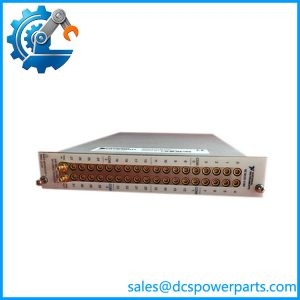
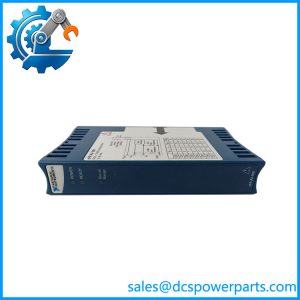
NI SCXI-1140 Product Description
Key Technical Specifications
| Parameter | Specification |
|---|---|
| Manufacturer | National Instruments |
| Model | SCXI-1140 |
| Part Number | 776572-40 |
| Product Family | SCXI |
| Product Type | Differential Amplifier / Signal Conditioning Module |
| Number of Channels | 8 |
| Input Configuration | Fully differential |
| Input Voltage Range | ±10 V maximum signal range |
| Maximum Output Voltage | ±10 V |
| Gain Settings | 1 / 10 / 100 / 200 / 300 / 500 / 600 / 700 / 800 |
| Gain Selection | DIP-switch programmable |
| Input Impedance | 100 GΩ |
| Input Offset Voltage | ±100 µV maximum |
| Input Bias Current | ±100 pA typical; ±10 nA maximum |
| Common-Mode Range | ±12 V at zero differential input; ±7 V at full-scale output |
| Input Noise Density | 12 nV/√Hz |
| Output Noise Density | 75 nV/√Hz |
| Channel Output Slew Rate | 15 V/µs |
| Maximum Input Protection | ±30 V powered on; ±15 V powered off |
| Architecture | Track-and-hold + 8:1 multiplexer |
| Operating Temperature | 0 to 50°C |
| Operating Humidity | 5–90% RH, noncondensing |
| Power Dissipation | 4 W |
| Front Connector | 96-pin DIN C |
| Rear Connector | 50-pin male ribbon cable |
| Dimensions | 1.2 × 6.8 × 8.0 in |
| Status | No longer available |
The original NI manual specifies nine gain selections, from 1 through 800, with each channel configured independently through DIP switches. It also specifies ±10 V maximum output, high input impedance, and differential input circuitry designed for both high-level and low-level AC/DC signal conditioning.
Product Introduction
The NI SCXI-1140 is an eight-channel differential amplifier module designed for the SCXI signal-conditioning platform. Its principal function is to amplify and simultaneously sample eight analog input signals before transferring the held values to a connected data-acquisition device. This architecture reduces interchannel timing differences and is useful when phase relationships between measured signals are important.
Each channel of the NI SCXI-1140 contains an instrumentation amplifier and track-and-hold stage, followed by multiplexing circuitry. Gain is selected independently through onboard DIP switches, while the SCXIbus and rear signal connector provide the interface to the larger acquisition system. NI documents compatibility with MIO-16 DAQ boards and several older NI DAQ platforms, making the SCXI-1140 primarily a legacy signal-conditioning component, rather than a standalone modern DAQ device.
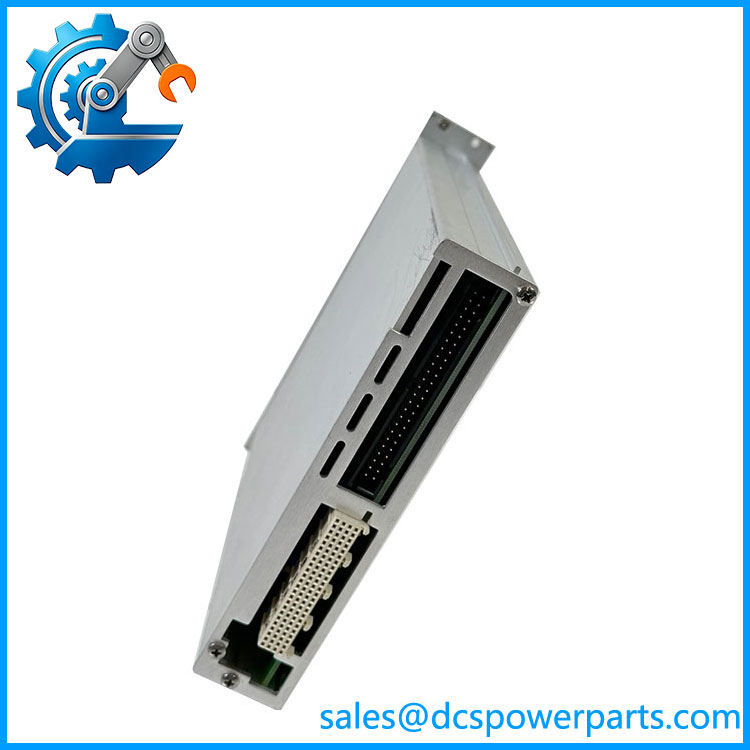
SCXI-1140
Application Scenarios & Field Pitfalls — The Engineer’s Perspective
Engineering Pain Point
When maintaining an older SCXI test rack, the amplifier module is only one part of the measurement chain. The SCXI-1140 depends on the SCXI chassis, DAQ hardware, signal cabling, gain configuration, grounding jumpers, and acquisition software. Replacing it with a conventional analog-input card can change sampling behavior and eliminate the simultaneous sample-and-hold function that the original test application may depend on.
Typical Applications
- Multi-channel dynamic measurement — simultaneous acquisition where channel-to-channel timing is important.
- Signal conditioning — amplification of low-level and high-level AC/DC analog sources before DAQ conversion.
- Strain and sensor measurement — use in SCXI signal-conditioning architectures with appropriate upstream conditioning.
- Laboratory and production test systems — legacy automated test equipment requiring eight synchronized analog channels.
- Multi-module SCXI systems — cascaded signal-conditioning arrangements using other SCXI modules.
Technical Pitfalls
1. Do not confuse the SCXI-1140 with a standalone DAQ card.
The SCXI-1140 is a signal-conditioning module. Its analog outputs are intended to be read by connected DAQ hardware through the SCXI architecture. It does not provide the same role as a PCI/PXI multifunction DAQ board.
2. Simultaneous sampling is the important feature.
The eight track-and-hold amplifiers capture the channels simultaneously and then hold those values while the DAQ device reads them. This preserves the relative timing of the input signals much better than sequentially scanning eight independent inputs.
3. Gain is configured on the hardware.
The SCXI-1140 uses DIP-switch-selectable gains. When replacing a used module, photograph or document the original switch positions before removing it. An electrically functional replacement with different gain settings can produce measurement errors that initially look like a sensor or DAQ problem.
4. Differential input wiring must be handled correctly.
The eight channels use fully differential inputs. NI notes that non-ground-referenced sources require the appropriate input-bias-current path; otherwise drift and possible saturation can occur. This is particularly important when troubleshooting older field wiring that has been modified over the years.
5. Grounding jumpers matter.
The module uses configuration jumpers including W12 to determine the relationship between SCXIbus guard, chassis ground, and DAQ-board analog ground. Changing these connections without documenting the original installation can introduce ground-loop or reference problems.
6. Do not treat ±30 V as the normal operating input range.
The ±30 V figure is the maximum powered-on overvoltage protection specification. The normal signal/output architecture is based around ±10 V operation. Applying the protection limit continuously is not equivalent to operating the amplifier at ±30 V.
7. Filtering is not built into the SCXI-1140.
NI specifically documents cascading the SCXI-1140 with the SCXI-1142 when filtering is required. The SCXI-1142 is a separate eight-channel lowpass Bessel filter module.
8. Check the SCXI chassis and DAQ architecture.
The SCXI-1140 can multiplex its channels through the SCXIbus into a DAQ channel, or operate in parallel configurations where the held outputs are routed to separate DAQ inputs. The existing chassis wiring and acquisition configuration therefore need to be documented before changing the module.
9. Software compatibility is a real issue with this hardware generation.
NI lists the SCXI-1140 as no longer available. Older installations may use Traditional NI-DAQ and legacy LabVIEW-based applications. NI’s current SCXI documentation shows that some SCXI configurations remain supported in DAQmx, while others are Traditional-DAQ-only; the exact chassis/DAQ combination should therefore be checked before migration.
10. Used-module inspection should include the DIP switches and connectors.
For a legacy SCXI-1140, inspect the front 96-pin connector, rear 50-pin connector, DIP-switch settings, configuration jumpers, PCB condition, and evidence of previous overvoltage exposure. The input protection protects against specified transients but does not make the module immune to sustained electrical abuse.
Related Products
- NI SCXI-1141 — eight-channel lowpass elliptic filter module for SCXI signal conditioning.
- NI SCXI-1142 — eight-channel lowpass Bessel filter module; commonly cascaded with the SCXI-1140 when filtering is required.
- NI SCXI-1143 — eight-channel lowpass Butterworth filter module.
- NI SCXI-1120 — eight-channel isolated amplifier used upstream of the SCXI-1140 in some signal-conditioning configurations.
- NI SCXI-1120D — programmable isolated amplifier variant for SCXI systems.
- NI SCXI-1121 — four-channel isolated amplifier for sensor and signal-conditioning applications.
- NI SCXI-1125 — eight-channel programmable isolated amplifier.
- NI SCXI-1331 — terminal block associated with SCXI signal-conditioning configurations.
- NI MIO-16 — legacy DAQ hardware with which the SCXI-1140 can operate with full functionality according to the original manual.
Procurement note: When sourcing an NI SCXI-1140, verify the complete part number 776572-40, SCXI chassis model, connected DAQ board, front/rear cable assemblies, DIP-switch gain settings, jumper configuration, and software/driver environment. For a used replacement, functional testing should include all eight channels at the gain settings required by the original application rather than checking only whether the SCXI chassis recognizes the module.