Description
Key Technical Specifications
| Parameter | Specification |
|---|---|
| Product model | MVME162-212 |
| Manufacturer | Motorola |
| CPU architecture | 32-bit Motorola 68K |
| Processor | MC68LC040 |
| Processor frequency | 25 MHz |
| DRAM | 4 MB |
| SRAM | 128 KB |
| Flash memory | 1 MB |
| IndustryPack interfaces | 2 |
| Ethernet | Onboard transceiver interface |
| Serial interfaces | 4 |
| VMEbus interface | VMEbus-compatible |
| Board format | VME double-height module |
| Operating system | Application-dependent; RTOS support available |
| Supply voltage | VMEbus backplane supply; confirm system requirements |
| Operating temperature | Consult the applicable MVME162 hardware manual |
The model guide identifies the -212 configuration as an LC040 processor board with 4 MB DRAM, 128 KB SRAM, 1 MB Flash, and Ethernet.
Product Introduction
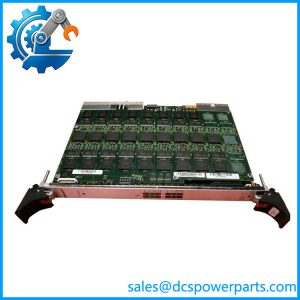
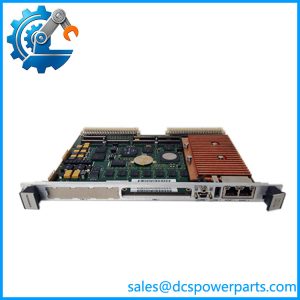
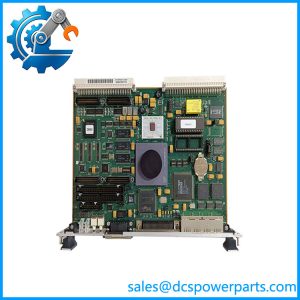
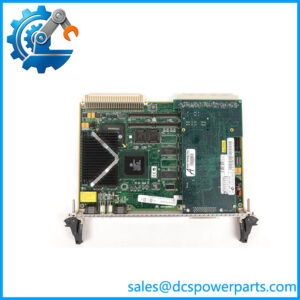
The Motorola MVME162-212 is an embedded processor board built for VMEbus-based computing systems. Its MC68LC040 processor provides the computing platform for application-specific control software, while onboard memory supports program execution and system data storage. The Ethernet interface and four serial communication ports provide connectivity for external equipment and host systems.
Two IndustryPack interfaces allow additional I/O or communication functions to be integrated through compatible IP modules. This architecture makes the MVME162-212 suitable for legacy industrial computers, machine control equipment, test systems, and specialized embedded applications. The exact application depends on the installed software, IP modules, and VME rack configuration.
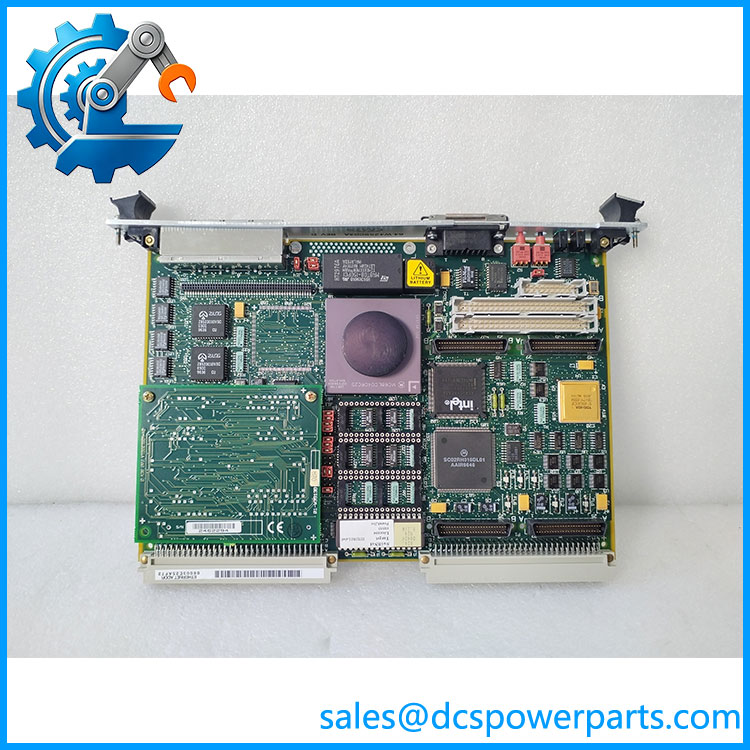
VME162-212
Major Features and Advantages
Motorola 68K processing architecture
The MC68LC040 processor operates at 25 MHz and provides a 32-bit computing platform for embedded applications. The LC variant should not be confused with the full MC68040, which includes an integrated floating-point unit.
Onboard memory resources
The documented -212 configuration includes 4 MB of DRAM, 128 KB of battery-backed SRAM, and 1 MB of Flash memory. These resources support application execution, retained system data, and onboard firmware storage.
Ethernet connectivity
The Ethernet transceiver interface supports network communication within compatible embedded systems. The exact transceiver hardware and physical connection should be checked on the installed board.
IndustryPack expansion
Two IndustryPack interfaces allow the controller to work with compatible expansion modules. This provides a way to add application-specific I/O and communication functions without replacing the main processor board.
Serial communication capability
Four serial ports support connection to external equipment and system peripherals. Confirm the actual connector and pinout arrangement through the transition module and board documentation.
VMEbus integration
The MVME162-212 is designed for installation in a compatible VMEbus system. Backplane configuration, address settings, interrupt assignments, and system-controller requirements must be checked during commissioning.
Application Scenarios and Field Pitfalls
Potential applications include:
- Legacy VME industrial control computers.
- Embedded machine-control platforms.
- Semiconductor and automated test equipment.
- Specialized data acquisition systems.
- Equipment requiring IndustryPack expansion modules.
- Industrial systems using Ethernet and serial communication.
Important replacement checks:
- Processor variant: Confirm MC68LC040 rather than assuming an MC68040 processor.
- Memory configuration: Verify the 4 MB DRAM and 128 KB SRAM configuration.
- Board part number: Compare the complete
MVME162-212designation and PCB assembly number. - Ethernet hardware: Check the installed transceiver interface and connector arrangement.
- Transition module: Verify the P2 transition module and associated cabling.
- Software compatibility: Confirm firmware, boot configuration, operating system, and application software.
- VMEbus configuration: Check backplane slot, address, interrupt, and system-controller settings.
A board that shares the family name is not automatically a drop-in replacement. Different model suffixes can indicate different processor, memory, Ethernet, SCSI, and VME interface configurations.
Related Products and Variants
| Model | Distinction |
|---|---|
| -210 | 4 MB DRAM LC040 configuration without the documented Ethernet option |
| -211 | 4 MB DRAM LC040 configuration with SCSI |
| -212 | 4 MB DRAM LC040 configuration with Ethernet |
| -213 | 4 MB DRAM LC040 configuration with Ethernet and SCSI |
| -220 | Full MC68040 processor configuration |
These model distinctions are documented in the board guide. They should not be treated as interchangeable configurations.
Procurement and Quality Control
For replacement procurement, request photographs of the front panel, PCB assembly number, processor marking, memory devices, and Ethernet interface. Check for battery leakage around the backup-memory circuit, corrosion, damaged connectors, and signs of previous repair.
A functional test should include power-up, firmware or debugger access, memory checks, VMEbus communication, serial-port operation, Ethernet connectivity, and both IndustryPack interfaces where the application requires them.
Procurement recommendation: Specify the complete model and verify the board assembly references. One documented configuration lists 01-W3866B 19C and 01-W38668B 42A, with daughtercard reference 01-W3913B 02A; compare these against the actual board before accepting a replacement.