Description
Product Introduction
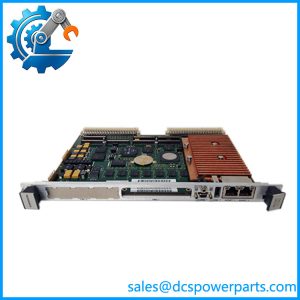
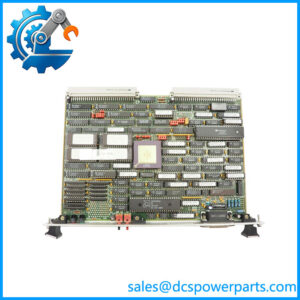
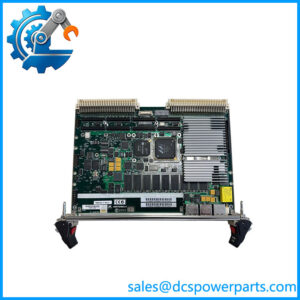
Embedded computing platforms installed in industrial environments often remain in service for decades because the surrounding hardware, application software, and control architecture are tightly integrated. The Motorola MVME2431 is a 6U VMEbus single board computer designed for demanding embedded applications requiring reliable processing, VME communication, and flexible expansion capability.
The Motorola MVME2431 belongs to the MVME2400 processor family and uses a Motorola MPC750 PowerPC processor operating at 350 MHz. The board integrates memory, Flash storage, Ethernet communication, serial interface functions, PCI/VME bridging, and PMC expansion support, allowing engineers to build complete embedded control systems around a single VME slot.
The Motorola MVME2431 is frequently found in long-life automation, inspection, simulation, and industrial computing systems where replacing the complete platform would require significant software redevelopment. When replacing an existing unit, engineers should verify the exact front panel version, memory configuration, boot firmware, operating system image, PMC modules, and application software compatibility.
Technical Specifications
| Parameter | Value |
|---|---|
| Product Model | MVME2431 |
| Manufacturer | Motorola Computer Group |
| Product Series | MVME2400 |
| Product Type | 6U VMEbus Single Board Computer |
| Processor | Motorola MPC750 PowerPC |
| CPU Frequency | 350 MHz |
| L2 Cache | 1 MB backside cache |
| SDRAM Memory | 32 MB ECC SDRAM |
| Flash Memory | 9 MB total Flash configuration |
| Bus Interface | VMEbus / PCI bridge architecture |
| VME Form Factor | 6U VME |
| PMC Expansion | Supports PMC mezzanine modules |
| Ethernet Interface | 10/100 Mbps Ethernet |
| Serial Interface | Asynchronous serial debug port |
| Memory Protection | ECC error detection and correction |
| Timer Functions | Watchdog timer and programmable timers |
| Operating System Support | Embedded RTOS and VME operating environments |
| Mounting | Single VME chassis slot |
| Applications | Industrial computing, automation, test systems |
Application Scenarios & Pain Points
The Motorola MVME2431 is designed for systems where deterministic computing and long-term availability are more important than consumer-style computing performance.
Industrial Automation Controllers
The MVME2431 can serve as the processing core in industrial systems requiring:
- Real-time data handling
- Machine coordination
- Custom control software execution
- Communication with VME-based I/O modules
Test and Measurement Systems
Many automated test platforms use VME architectures because of their modular design. The provides processor resources for:
- Instrument control
- Data collection
- Test sequencing
- Signal processing
Defense and Aerospace Equipment
The VME standard has historically been used in mission-critical embedded systems because of its modular hardware architecture and long support cycles.
Legacy Automation System Maintenance
Facilities operating older VME-based equipment often face challenges finding compatible processor boards. Replacing an requires preserving:
- Boot firmware
- Application software
- PMC expansion cards
- VME addressing configuration
Field note: A legacy inspection system experienced random processor resets after years of operation. Diagnostics showed memory-related faults rather than application software problems. Replacing the aging processor board and transferring the original boot configuration restored normal operation.
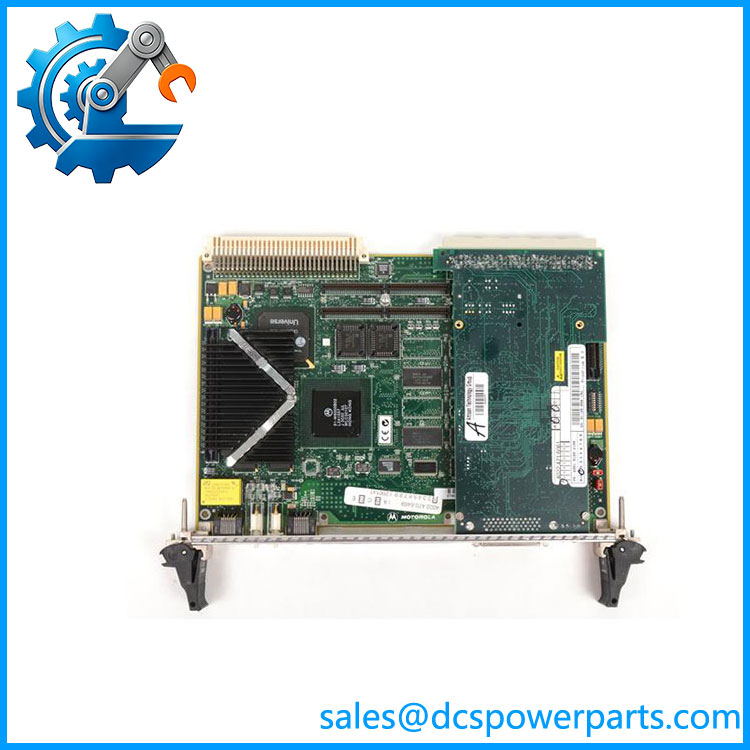
MVME2431
Related Products
- Motorola MVME2432
Similar MVME2400 processor board with 64 MB ECC SDRAM configuration. Hardware substitution requires memory and software verification. - Motorola MVME2433
Higher memory version with 128 MB ECC SDRAM. - Motorola MVME2434
Higher-capacity version with 256 MB ECC SDRAM. - Motorola MVME2401 / MVME2402
Lower-speed MPC750 versions using the same MVME2400 architecture. - Motorola PMC Modules
Expansion modules used with MVME2400 boards for additional I/O, communication, or processing functions. - GE Fanuc VMIVME Series Boards
Related VMEbus industrial computing products used in automation and control applications. - Motorola MVME6100 Series
Later-generation VME processor family used for upgraded embedded systems.
Engineer’s Guide: Field Pitfalls to Avoid
⚠️ Replacing Without Checking Boot Environment
The processor board itself may be healthy, but the system may fail to start if the boot parameters are different.
Verify:
- Boot ROM version
- Flash contents
- Operating system image
- Environment variables
- Application startup files
⚠️ Ignoring PMC Compatibility
The supports PMC expansion modules.
Before replacement, confirm:
- PMC module type
- PCI resource allocation
- Driver availability
- Operating system support
A processor replacement with different firmware can affect PMC initialization.
⚠️ Confusing Variants
boards may differ by:
- Front panel handle style
- Memory configuration
- Factory option code
The -1 and -3 versions use different mechanical handle configurations.
Frequently Asked Questions (FAQ)
What is the Motorola used for?
The is a 6U VMEbus PowerPC single board computer used for embedded industrial computing, control, and data acquisition applications.
Is a PLC CPU module?
No. It is an embedded VME computer board. It may perform control tasks in custom systems but is not a conventional PLC CPU.
What processor does use?
The board uses a Motorola MPC750 PowerPC processor running at 350 MHz.
What memory configuration does provide?
The standard configuration includes 32 MB ECC SDRAM, with other MVME2400 variants available with larger memory sizes.
Can replace another board?
Only after checking:
- Exact model number
- Memory requirements
- Front panel style
- Firmware version
- PMC expansion hardware
- Application software compatibility
What are common failure symptoms?
Typical symptoms include:
- No boot sequence
- VME communication failure
- Memory diagnostics errors
- Ethernet communication loss
- Watchdog resets
- Application startup failure
Is a refurbished Motorola suitable for industrial systems?
A tested refurbished unit can be suitable when processor operation, memory integrity, Flash contents, VME communication, and installed software compatibility are verified before deployment.